
I Worked the Returns Hotline and a Man Tried to Return His Wife
I worked a furniture chain's returns hotline, and one gray afternoon a man called and calmly said he needed to return his wife. It was not the call I was trained for.

Welcome to the wild front desk of humanity, where patience meets entitlement, awkwardness, and the occasional pure absurdity. Here you’ll find first‑person retail horror stories and customer service horror stories from call centers, retail counters, support chats, and help desks: late‑night hotline confessions, bizarre returns, terrifyingly observant callers, and managers who care more about metrics than people. Each account drops you behind the register or on the headset, right into the chaos of complaints, policies, and the strange limits of “the customer is always right.”
Every narrative on this page is submitted by readers and told exactly as they remember it—no corporate spin, no fact‑checking labs, just raw memories from the other side of the counter. After reading each recollection, the community decides: did this really happen, or is it too outrageous to be true? Dive in, trust your instincts, and cast your vote.
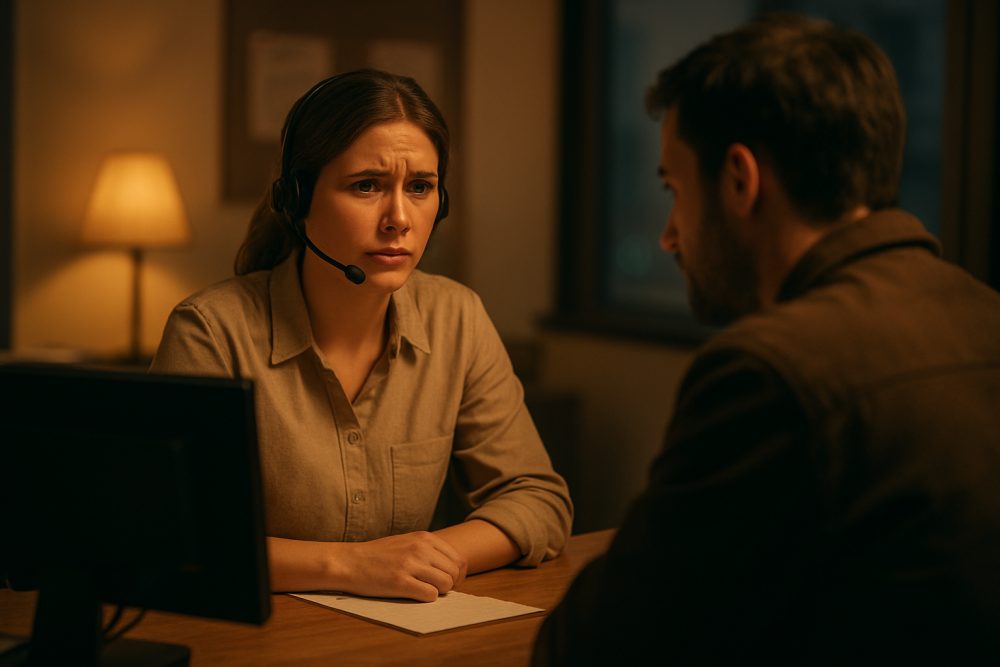
I worked a furniture chain's returns hotline, and one gray afternoon a man called and calmly said he needed to return his wife. It was not the call I was trained for.
A tall man in a gray coat only ever came into my bookshop during thunderstorms, always to the poetry corner. The day I moved the Whitman, he noticed -- and he was not happy.

Every night at exactly 2:17, the same number called the roadside line and said nothing but wind and breathing. Then my supervisor pulled the account, and I wish she hadn't.

Our store ran out of bananas for four hours because a truck broke down. One man took it as a personal catastrophe, and I said the one thing you must never say to an angry customer.

My call-center boss timed my bathroom breaks to the second and left sticky notes about it. Then a quiet coworker took his frowny-face note straight to HR, and everything changed.

Most shoplifters at least pretend to be sneaky. This one loaded a cart with power tools, looked me dead in the eye, and asked me to help him carry it out the door.

Overnight at a security company, a caller with no ID described my hoodie, my flickering light, and told me to check the lobby camera. Someone was sitting inside our locked building.

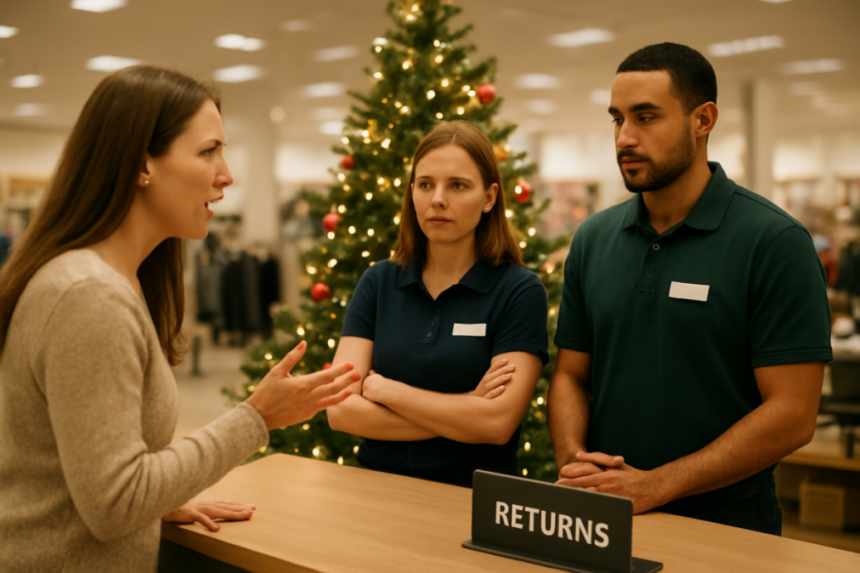
She wheeled a fully decorated, still-lit Christmas tree up to my returns desk in March and demanded her money back. There was tinsel. There was a candy cane. There was no receipt.
The company script forced me to say every caller's full name three times a call. Then Richard Bottomley phoned to cancel, and I said his whole name nine times while he slowly lost his mind.

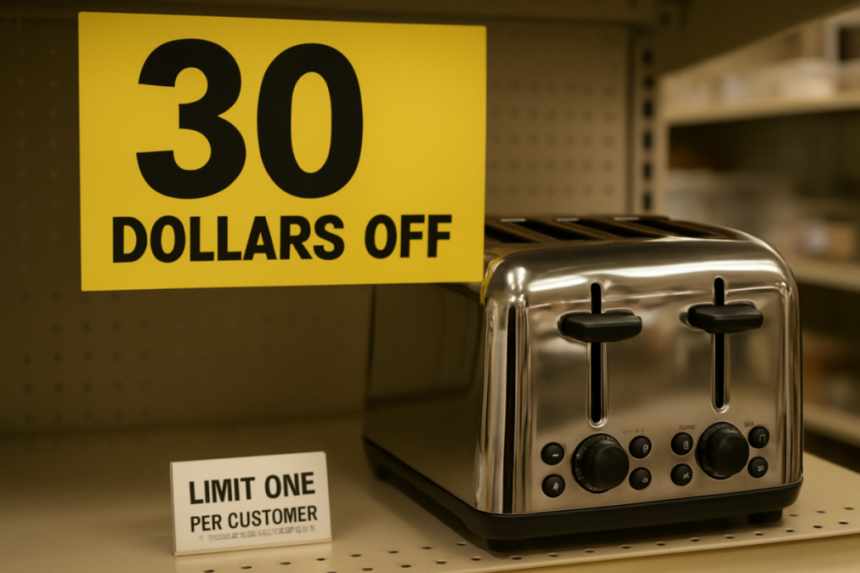
Eleven Black Fridays in, I thought I'd seen it all. Then a woman in slippers swung a boxed toaster at my head over a purchase limit, and my manager appeared out of thin air.
The hall of fame: the best Customer Service Stories of all time
Sort these tales from retail by what actually set them off and the list is short. A refund without a receipt. A voucher that expired on Sunday. A queue of six people watching. The incident almost always begins at the exact seam where a written rule meets somebody who has already spent the money, and it escalates through the same three stages: disbelief, volume, and the demand for a manager who turns out to be twenty-three. What marks the genuine entries is vocabulary — real staff quote the policy wording, the till code, the phrase they are obliged to say four times an hour. Invented ones skip straight to the shouting.
Shop-floor accounts are collected under retail horror, while the ones told entirely down a headset sit with the angry customers. Jurors on customer service stories are mostly ex-staff, which makes them generous about the incident and merciless about any detail a real shift would never produce. If you have a closing-time story you still think about, hand it over.
They’re first-person accounts submitted by readers, but the point of the site is that a jury votes on whether each one feels credible. Some stories may be fully true, others may be exaggerated, misremembered, or impossible to verify from the page alone. Reading the story and the jury’s reaction together is usually the best way to judge it.
Front-line jobs put people under stress, so small misunderstandings can turn into dramatic scenes very quickly. You also get a constant mix of strangers, rules, deadlines, and emotions, which makes odd behavior more visible. That’s why these workplace anecdotes can sound unbelievable even when they come from ordinary shifts.
Look for specific details, a consistent timeline, and reactions that match the situation. Stories that include realistic workplace procedures and ordinary human mistakes often feel more grounded than ones that rely on one wild twist after another. On this site, the jury votes can also give you a sense of whether other readers found the account convincing.
They mix frustration, suspense, and humor in a way that feels familiar to anyone who has dealt with the public. A lot of readers enjoy them because they show how surreal everyday jobs can become. The reader-voted format adds another layer, since people can compare their own instincts with the jury’s decision.
Often, yes, at least in broad terms. Late-night calls, difficult customers, confusing policies, and overbearing managers are all common themes in service jobs. The details may vary from one account to another, but the underlying pressure is very recognizable.
Real life can produce unusual behavior, especially when people are tired, angry, embarrassed, or acting impulsively. That said, a story sounding strange does not automatically make it false. The best approach is to read it closely and see whether the details hold together, then check how the jury voted.