
The Coworker Who Only Ever Existed on Fridays
Dale sat with us every Friday for a year. Friendly, funny, part of the team. Then we realized none of us had ever seen him Monday through Thursday, and it got very strange.

From suspiciously absent office mates to oddly devoted desk buddies, this tag is where workplace legends collide with everyday grind. Here you’ll find first-person accounts of crazy coworkers, bizarre colleagues, unsettling cubicle companions, and mysterious new hires who don’t show up in any HR system. Expect strange break-room encounters, supernatural-feeling incidents after hours, and corporate mysteries that turn routine jobs into something closer to an urban myth. None of these tales are confirmed; they’re all told by the people who swear they lived them.
Every narrative on this page is put on trial by the audience. As you scroll, you’ll join a crowd of skeptical readers deciding whether each narrator is sharing a real experience or spinning an elaborate office yarn. Read closely, trust your instincts, and cast your vote on which stories you believe actually happened.

Dale sat with us every Friday for a year. Friendly, funny, part of the team. Then we realized none of us had ever seen him Monday through Thursday, and it got very strange.
A twenty-year-old summer intern built a dashboard that made my whole team look redundant. Three weeks later four of us were gone and he had a full-time offer and my parking spot.
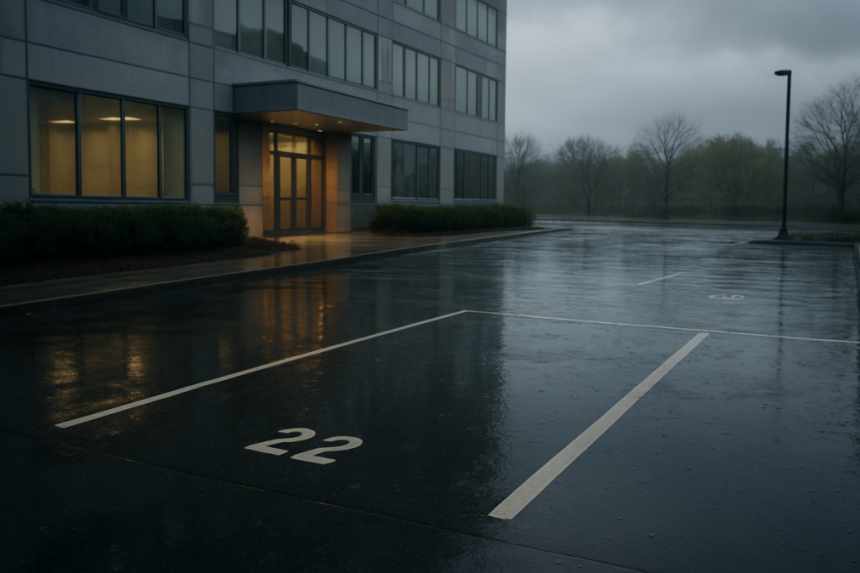
Every floor plan showed it. Nobody had a key. Facilities said it was HVAC, HVAC said it was storage, and once a month, something inside it hummed for exactly one hour.
He sat two feet from me for a year with a jam jar of human teeth on his desk. When I finally reported it, I was the one who got a talking-to about being a team player.

A payroll glitch terminated me on a Friday. By Monday a recruiter from my own company was cold-calling me about my exact old job, with no idea who I was.
Our petty cash was always exactly forty dollars over. Every month, no matter what we spent. Someone was putting money in, and figuring out who nearly broke the whole office.

A man showed up at our office in a grey cardigan, took the empty desk by the window, and worked there for three months. HR had no record of him. Neither did payroll.

A surprising number of stories about crazy coworkers hinge on paperwork rather than atmosphere. Somebody remembers a colleague — the name, the mug, the specific way they held a door — and then finds no leaving card, no group photograph, no trace in the shared drive. Others describe the opposite problem: a desk mate whose presence is documented everywhere and whose behaviour nobody will discuss on the record. Sceptics point to churn, contractor arrangements and the ordinary fog of an office where two hundred people pass through in a decade. What the stronger reports have in common is a second employee who remembers the same person and the same unease, usually years after both of them left.
Behaviour that comes from above rather than across sits under horrible bosses, and the wider run of shift-floor and cubicle material is filed in workplace stories. If you write up coworkers of your own, keep the small verifiable things: the building, the shift pattern, what you actually said at the time. Those details do more for an account than any amount of atmosphere.
Each story is told in the first person by someone claiming it really happened, but we don’t ask for proof. Instead, a reader jury votes on whether they believe the events are real, and you can see the verdict on every page. Think of it as a cross between memoir and urban legend, where you decide what feels believable.
Offices mix different personalities, power dynamics, stress and unclear boundaries, which can create odd or tense situations. Miscommunication, poor management, and unresolved conflict all add fuel. Reading through the stories here (and how the jury reacts) can help you recognize patterns and think about how you’d handle similar behavior.
Most employees are ordinary and just trying to do their jobs, but almost everyone has at least one tale about an unsettling or eccentric teammate. Our collection naturally highlights the most extreme and memorable cases, so it’s not a balanced sample of all workplaces. Treat it as a showcase of outliers, not a picture of every office.
First, focus on your safety and boundaries: keep interactions professional, document incidents, and avoid escalating things on your own. If someone’s behavior is disruptive or threatening, consider talking to a supervisor or HR, following your company’s policies. The stories and jury comments can give you ideas about what others might do, but they’re not a substitute for local guidance.
Modern workplaces often have closed doors, opaque decisions, and rumors that fill in the gaps when information is missing. When people don’t explain what’s happening, our brains make up narratives, which can turn a normal mystery into something that feels eerie. The site leans into that feeling, and the jury votes highlight which tales feel most like real-life hauntings versus pure fiction.
One eccentric or difficult person doesn’t automatically mean a toxic environment; what matters is how leadership responds and whether problems can be addressed. A truly harmful workplace usually shows consistent patterns: disrespect, fear of speaking up, and no real consequences for bad behavior. Comparing your situation to the stories (and how jurors judge them) may help you gauge whether you’re dealing with the usual quirks or something more serious.
These accounts are close enough to everyday life that we can imagine ourselves there, but exaggerated enough to feel like suspense or comedy. They let us explore worst-case scenarios at a safe distance, and the jury’s “real or not” vote adds a game-like element. It taps into the same curiosity that makes us swap stories about the strangest person we’ve ever shared a workspace with.