
Somebody Built Cairns on the Wrong Ridge, and I Followed Them
In one sentence: A solo backpacker encounters unsettling signs and sounds off the trail that challenge his skills and sense of reality in a remote wilderness.
I chart for a living: times, facts, what I did about it. So here is my chart of four days alone in the Winds - the stacked stones that were on nobody's map, the thing that said my name at a normal indoor volume from four feet away, and how I walked out.
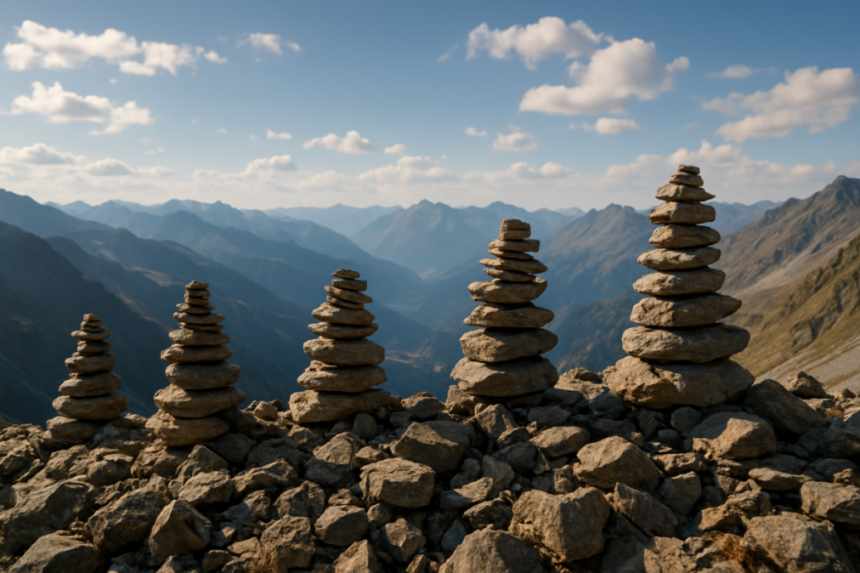
* AI Illustration
First impression: judge by the title and the picture alone — you get the real verdict after reading.
Swear It Happened — CASE FILE #561
JURY PENDING
Some context on me, because I think it matters for how you weigh this. I'm 33, male, ER nurse at a large hospital in the Denver metro that I'm not going to name because we were in the middle of some union stuff at the time and I don't need this post showing up in anybody's search results next to my employer. I've been backpacking solo since I was 24. Not casually. I plan the way I chart. Every trip gets a sheet: route by day, mileage by segment, water sources with a confidence rating, bail points with the mileage to each, expected camps with alternates, sunset and civil twilight times, and a gear list with weights to the tenth of an ounce. Base weight for this trip was 17.4 pounds. I can still tell you that without looking.
The trip was five days in a wilderness area in western Wyoming, September 2022. I'm not going to name the wilderness or the trailhead. Partly that's the usual thing where you don't blow up a quiet place, and partly it's that I don't love the idea of anyone going and standing where I stood, which I recognize is not a rational sentence, and I'm writing it anyway. I'll call the trailhead Burnt Meadow, because there's a meadow and it burned. The route was a lollipop: up a creek drainage I'll call Tepee Creek, over a divide on a talus ramp, three high lakes basins, down a second drainage, back to the car. About 41 miles total. I'd done pieces of it in 2019 with my friend Marcus, who matters to this story zero percent, I just want it on record that I wasn't navigating blind. I knew the country.
September was late for that elevation but 2022 was a dry fall and the forecast was stable high pressure, cold nights, warm days. I took the trip dates off a block of PTO I'd had approved since June. I'd been off for four days before I even drove up. My last shift before the trip was a Tuesday and it was boring, which in my line of work is a gift. One ankle fracture, two chest pains that were reflux, a psych hold that transferred out smooth. I went home and packed and my pack sat by the door for three days like a dog that knows.
My wife Erin and I have a system, and the system also matters. I carry a Garmin inReach Mini 2. Every evening at camp I send a preset check-in that hits her phone and email with my coordinates. The preset says OK CAMP ALL GOOD. If plans change I type a custom message. If she doesn't hear from me by 2100 she waits until 0800 the next morning, and if there's still nothing she calls the county sheriff, whose non-emergency number is on a card on our fridge along with my route sheet. We built this protocol together after a trip in 2017 where my SPOT device ate batteries and she spent a night thinking about widowhood. We don't improvise on it. Neither of us. I want that established early because of what happens on day four.
I drove up on Sunday, September 11. I remember the date because gas in Rawlins had a 9/11 memorial thing on the marquee under the price. I slept in the back of the 4Runner at a dispersed site about six miles from the trailhead, ate a gas station burrito I had no business eating, and was at Burnt Meadow by 0730 Monday morning. Frost on the split-rail fence by the stock ramp. Three vehicles in the lot: a newer Tacoma with Idaho plates, a Subaru with a cracked windshield and one of those oval 26.2 stickers, and a horse trailer with no truck attached to it.
There was a couple at the trailhead when I got there. Late fifties, maybe. Matching trekking poles, the man in a cotton hoodie I judged him for. They had a blue heeler mix that came over and leaned on my leg while I was signing the register, and the woman said something like, he does that, he picks a person, and I said he picked right, and gave the dog my knuckles to smell. The dog's name was Banjo. I know that because they said it about nine times. Banjo, leave it. Banjo, water. Banjo, load up. They were doing an out-and-back to the first lake, one night. Nice people. Utterly ordinary.
The register at Burnt Meadow is the standard Forest Service kind, a metal lectern box with a hinged lid and a coil pen and a sheet with columns: date, name, group size, destination, nights out. I filled mine in. September 12. My last name, first initial. Party of 1. The lakes basin, 4 nights. I remember the pen skipped and I had to scribble in the margin to get the ink going, and my scribble is on that page. That page is in a Ziploc bag in a file box in my closet now, and we'll get to why, and I want to say here at the top that I know taking it was wrong. You don't have to tell me. I've been told.
Day one was clean. I want to give you a normal day first so you have a baseline, because that's how you read a rhythm strip. You need the normal beats to see the ectopy.
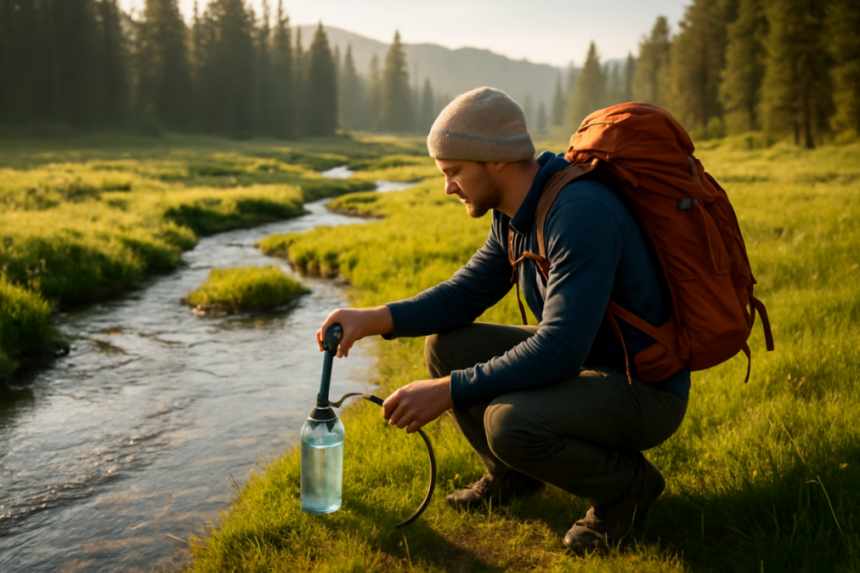
The Tepee Creek trail climbs gradually through lodgepole for the first four miles, then breaks into a series of meadows where the creek slows down and braids. I filtered a liter at the second meadow at around 1030, ate a tortilla with peanut butter standing up, and kept moving. Saw the couple and Banjo once more around mile three. I went upstream twenty yards and rock-hopped and waved and that was that. Two other parties passed me headed out, a solo woman with an enormous external frame pack who looked like she'd been out for weeks, and two guys my age moving fast with trail runners and running vests, the fast-and-light guys, one of whom said the ramp still had good weather on it yesterday. The horse party I never saw, though I saw their apples. Someone had been feeding cut apples to their stock and there were bright white-and-red slices in the manure line for a mile.
At lunch I did feet. This is procedure and I do it whether or not anything hurts. So: boots off, socks off, air the feet, check heel, ball, pinky toe, between toes. Day one I had one hot spot starting on the left heel. Leukotape over clean dry skin, sock seam rotated, done. Ninety seconds of prevention. I'm telling you this partly because it's what I do and partly because on day five I ran two miles on that ankle and the state of my feet became briefly relevant, and mostly because the blister care is the kind of thing that goes nowhere and I promised myself I'd write this the way it actually was, including the parts that don't pay off.
I made camp one at the head of the third meadow at 1610, small bench of dry ground above the creek, good drainage. I rigged my bear hang before dinner while there was light, which is my habit. There's grizzly presence in that country, not thick, but present, and I do a full PCT-style hang, and I finish the whole thing with the same sequence every time: marlinspike toggle on a clove hitch, then I back it up with two half hitches around the standing line because a ranger in the Winds watched me do a lazy hang in 2016 and shamed me so thoroughly that the shame became the system. My half hitches are ugly. I want that on the record now, it matters later. They hold, but they're ugly, I snug them with a little twist I picked up from nobody, it's just a bad habit with tenure, and if you showed me a photo of my own finished backup hitches next to a stranger's I could pick mine out of a lineup.
Dinner was the beef stroganoff Mountain House because I am a creature of habit and it's the only one that doesn't taste like packaging. Sent the inReach preset at 1902. OK CAMP ALL GOOD. The device shows the little swoosh when the message goes, and then Erin's reply came back about twenty minutes later, a thumbs up and the word stroganoff with a question mark, because she knows me. That exchange is in the Garmin app history with timestamps and I've screenshotted it, and the folder those screenshots live in is called WYOMING SEPT 22 and I open it about once a month.
I slept fine. That's a pertinent negative. No wind event, no animal activity, nothing on the line in the morning, frost on the fly, oatmeal. Packed up, policed the site, left at 0805.
I should say something about my phone, because it comes up. I keep it in airplane mode the whole trip, it's the camera. There's no service in that country anyway, except, and this is real, one spot on the divide where you can sometimes catch a single bar of LTE that sneaks up some corridor from the highway forty miles south, the fast-and-light guys had mentioned it like a landmark, the bar, ha. The reason I mention the phone is that back home the hospital was gearing up for a strike authorization vote that week. Our unit chat had been going off for a month, and one of the last texts I got before I lost service on the drive up was from my coworker Vic, who is a 25-year veteran of that ER and was going through a divorce at the time in the most Vic way possible, which is to say silently and then all at once, and his text said VOTE THURSDAY DON'T FORGET TO BE MAD, and I laughed out loud alone in the truck. I'm putting Vic and the vote in here because both of them were live threads in my head that week. Neither of them has anything to do with what happened. Vic's fine, by the way. He kept the Bronco, she kept the house, he seems okay.
Day two is where the chart starts.
The trail leaves Tepee Creek at about mile nine and climbs to the divide on what my map calls a ramp and what your legs call a punishment, a long rising traverse across a talus field maybe three quarters of a mile wide, big stable blocks, the kind of talus you can actually walk on if you keep your rhythm. The trail through it is obvious. The tread is beaten into the gravel between the blocks, there are old blaze posts at the top and bottom, and the line of it is visible from either end the way a scar is visible on skin. You could navigate it in fog. Nobody who has ever walked on a trail could lose this trail.
At approximately 1115, I noticed a cairn about forty yards upslope of the trail. Then another beyond it. Then a third, higher, near the base of a rib of broken rock. Three cairns, spaced maybe sixty or seventy yards apart, forming a line that left the trail at a shallow angle and climbed toward a notch in the ridge crest that my map did not name and my route did not use.
Cairns are normal. I want to be fair here, because I've spent two years being fair about this. High routes get cairned, bored people stack rocks, some drainages are practically sculpture gardens. What stopped me was three things, and I noted all three at the time, standing there with my thumbs in my shoulder straps.
First, they were well built. Not the six-stone piles day hikers leave. These were knee-high, tapered, big flat foundation stones with the load centered, the kind of cairn a trail crew builds when they mean for it to outlive them. Second, the trail there needs no cairns and has none, none on the tread itself, none marking the line, so someone had chosen to build serious navigation aids pointing away from an obvious route. Third, and this is the one I keep coming back to, the foundation stones were dark at the base. Wet. It hadn't rained in nine days, I knew that from the forecast history I check before every trip, but rocks that have sat in talus a long time have a bathtub ring of dust and lichen where they touch, and rock that's been freshly turned shows its underside, damp and dark, for a day, maybe two in that sun. These bases were dark. Somebody had built them recently. Possibly that morning.
Now, the honest version, since we're voting on my honesty: I was forty yards from the nearest one when I noticed the dark bases, and forty yards is far to be calling rock damp. I know that. I walked up to the first cairn to check, and up close, yes, the underside edges of the foundation stones were damp to the touch, I put my finger on it, cold and wet like the underside of a flowerpot. But the second and third cairns I did not walk to, and in my notebook that night I wrote all three wet based, which is exactly the kind of inference-dressed-as-observation I would flag in someone else's chart. So take that one at two-thirds strength. First cairn wet, confirmed by touch. Other two, presumed.
I took photos. Four of them, timestamped 11:21 to 11:24 on my phone, and one more where I put my trekking pole next to the first cairn for scale. Then I did the thing you do, I sighted along the line of them. The three cairns bore off at what I later measured on the map as roughly 310 degrees, up toward that unnamed notch. Consistent bearing. Not wandering, not decorative. A line with intent, the way an IV line has intent.
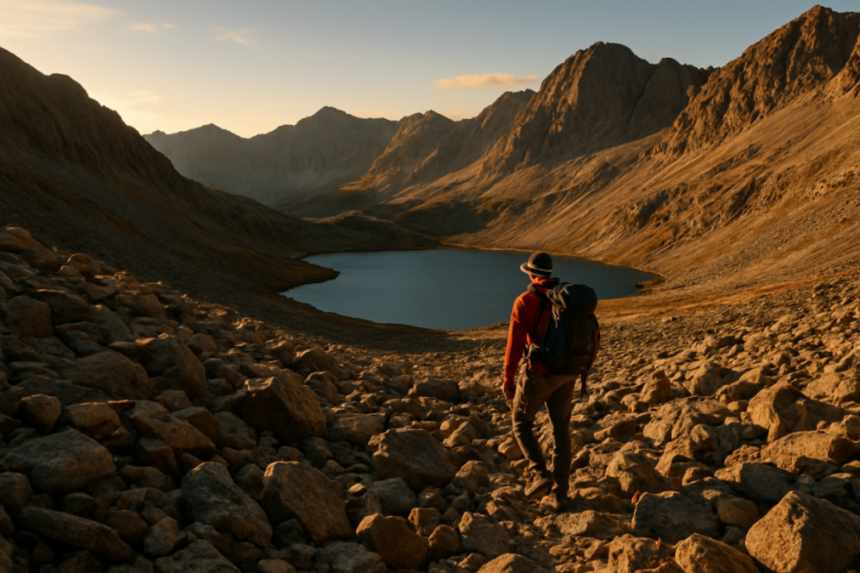
And then I ignored them, because the explanation was sitting right there and it was fine. Somebody is scouting an off-trail route to the notch. People do that. I remember actually saying out loud, huh, and then walking on, and I remember that the huh felt complete. Triage: not my patient. I made the divide at 1250, ate lunch in the wind with my back against a blaze post, and dropped into the first lakes basin on the far side, and the afternoon was so good it felt like a paid advertisement for being alive. Golden trout rising in the second lake. I don't fish anymore but I sat and watched the rings.
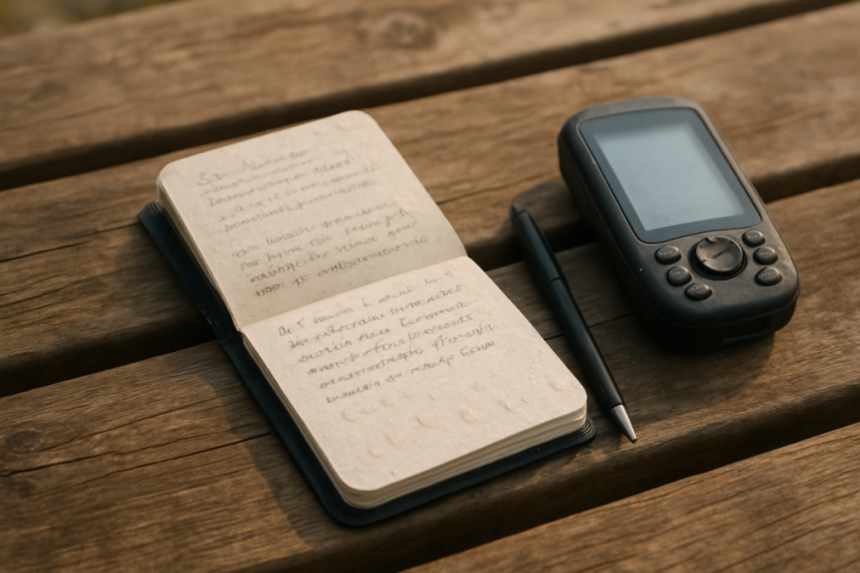
Camp two, 1545, on the bench above the second lake at about 10,600 feet. Hang went up at 1700 in the only decent tree, a whitebark a hundred yards east of the tent, my ugly hitches and all. Dinner, notebook, inReach preset at 1858. OK CAMP ALL GOOD. Erin thumbs-upped. The stars at that elevation in September are a medical event of their own. In my notebook that night, under the day's mileage and water notes, I wrote: 3 new cairns on ramp, well built, wet based, bearing ~310 toward notch, no cairns needed there. Photo'd. Weird but fine.
Weird but fine is a phrase I use at work. The heart rate that's 61 and then 91 and then 61 in a patient who feels great. You chart it, you don't act on it. The whole skill, the entire thing they can't teach you in school, is knowing the difference between weird but fine and the quiet front edge of a thing that has already decided what it's going to do to you, and the humbling truth of my profession is that sometimes you only ever find out which one it was in retrospect.
I slept fine on night two, mostly. I woke once, around 0200 I'd guess, to what I logged the next morning as rockfall, distant, single event. One clatter, somewhere up toward the divide, the sound talus makes when it shifts, which talus does all on its own, all the time, especially with freeze-thaw working on it. I listened for maybe two minutes, heard the lake lapping and nothing else, and went back to sleep. Freeze-thaw. Rocks fall. If you want a night sound to hang your vote on, I'd honestly rather you didn't pick this one.
Day three. I've written this part so many times, in my head and twice in a notes app I later deleted, that I'm going to slow way down and just walk you through it in order, because order is the only thing I have to offer against the other explanations, including the explanation that I'm lying, which, fair, that's the game here.
The plan for day three was the high traverse: leave the second lake, cross a low saddle into the middle basin, work around two more lakes, then over a second saddle and down into the head of the far drainage, which I'll call Slide Creek, camp at the top of it. Eight and a half miles, most of it above 10,000 feet, and the middle section crosses a series of benches and slabby shoulders where the trail goes thin. Not gone. Thin. It's marked on the map as a maintained trail and it mostly is, but on slickrock and short grass a trail doesn't hold a tread, so for maybe two miles the route is carried by cairns. Old ones. Proper ones. Lichen-covered, sunk into the ground on their own settled bases, some of them with a whitebark limb stuck in the top gone silver with years. That's normal country for cairns and I'd walked it before with Marcus in 2019 and never once thought about the spacing, because you don't think about the spacing, the same way you don't think about your own breathing until someone says the word breathing.
I left camp at 0750. Hang was untouched that morning, for the record. Crossed the first saddle around 0900, and the middle basin opened up below with the two lakes lying there like dropped coins, and I felt great. I want that in the chart too. No dread. I was eating a Snickers on a rock at 0915 with zero premonitions of any kind.
The first cairn on the traverse section came up around 0945, and it was new.
Same build as the ramp cairns. Knee-high, tapered, flat foundation, load centered. Sitting six feet off the line of the old route, next to the old cairn it was, I guess the word is replacing, the way a new fence post stands next to the rotten one. The old cairn was still there, gray-green with lichen, half its stones sloughed. The new one was clean. Clean the way a scrubbed incision is clean. And the base stones were dark at the ground line. I touched them this time, all of them, I made a point of it. Damp. Nine days no rain.
I stood there and did the reasonable thing, which was to be annoyed. Trail crew, I thought. Somebody's rebuilding the route markers. The Forest Service, a conservation corps, some Eagle Scout project with unusually good rockwork. I actually felt the annoyance resolve into that explanation with a little click, and I walked on, and the next new cairn came up, and the next, and somewhere around the fourth or fifth one the annoyance stopped resolving, and I stopped, and I want to try to describe the exact mechanics of what I noticed, because this is the center of the whole account and I've never once told it out loud without watching the listener's face do a thing.
The spacing was wrong. Not wrong like irregular. Wrong like regular. Each new cairn stood exactly at the limit of sight from the last one.
The terrain decides. Old cairns cluster where the route is confusing and thin out where it's obvious, they bunch at water crossings and junctions and vanish for a quarter mile where a shelf funnels you anyway, and their spacing is a fossil record of a hundred years of people getting briefly lost in the same six places. The old line, the lichened line, did exactly that. And threaded through it, six feet to the side, was the new line, and the new line had no relationship to the terrain at all. Whatever the ground did, whatever bench or dip or rise came, the next new cairn sat precisely where the last one stopped being visible. Never two in sight at once. Never a gap where you had to hunt. I tested it for most of a mile, I stood at a new cairn and found the next one right at the edge of seeing, a pale nipple of stacked rock at the exact range where detail dissolves, and then I walked backward away from a cairn, watching over my shoulder, and its next partner rose into view behind me at the moment the first one sank. Like they were counterweighted.
And on the rock at 1030, or 1040, somewhere in there, I had the thought that I have not been able to un-have since, the thought that made me sit down.
Spacing like that is not a property of the terrain. It's a property of the observer. The terrain doesn't know what I can see. Something had walked this line and stopped, each time, at the point where a person of about my height, with about my eyes, standing where I would stand, loses sight of the last marker, and had built there. The cairn line wasn't describing the route. It was describing me, or someone shaped like me, moving through. It was fitted to a body. And it had been built, the wet bases said, within the last day or two, meaning either just ahead of me, or just behind me, on the exact section of my exact route, in the exact window I was walking it.
I sat on the rock for a while. I don't know how long, I didn't write that down, which tells you something, because I write everything down.
Here's what I did next, and this is where the ER brain either saves you or embarrasses you, sometimes both. I triaged it. Out loud, actually, which is a habit from running codes, you narrate so the room stays organized, except the room was a thousand acres of granite and the room did not care. Airway breathing circulation, meaning, in this translation: am I in danger right now, is anything actually approaching me, do I have what I need. No, no, yes. Then differential diagnosis, most likely first, because when you hear hoofbeats you think horses. One: trail crew with a foreman who likes uniform spacing. Testable, sort of. Crews leave sign, boot tracks, tool marks, a spike camp, drill scars, and I had seen none, and a crew rebuilding two miles of cairns is six people and a mule string, not a ghost. Also crews don't build at the limit of sight, they build for bad weather, which means closer, denser, overlapping sight lines. I knew that from a volunteer weekend I did with a trail association in Colorado in 2017, we got a lecture about exactly this from a man named Dale with a clipboard. Intervisibility, Dale called it. You build for intervisibility in the worst conditions, not the best. Whoever built this line had built it for one specific set of eyes on one clear day.
Two: other hikers, the fast-and-light guys, someone playing a weird game. Possible. It's a free country and people are strange. But the rockwork was hours of labor. You don't gag-gift hours of moved stone to strangers you'll never see find it.
Three: I was wrong about the spacing, pattern-matching on noise, apophenia, the same wiring that makes people see rhythms in telemetry artifact. So I falsified it as best I could. I picked the next three new cairns in advance, predicted where each would appear based on nothing but my own sight line, said the prediction out loud, and walked. All three appeared where I said they would, at the range where my eyes run out. The old cairns, the lichened ones, failed the prediction constantly, they showed up close, far, doubled, absent. Only the new line tracked me. I wrote the test in the notebook that night, and reading it back now the handwriting in that entry is smaller than my normal hand, which is a thing my handwriting does that I hate.
Four: I did not have a four. Four was a shape with no name on it, and I left it blank the way you leave a line blank rather than write something you can't stand behind.
What I should have done at that point, per the route sheet, was consider my bail points, and I did, sitting on that rock with the map on my knees. Bail one was behind me: back over the saddle, past camp two, down the ramp, out Tepee Creek, sixteen and a half miles to the car. Bail two was ahead: finish the traverse, drop into Slide Creek, and the Slide Creek trail runs out to the same road at a different trailhead, seven miles of road walk back to the 4Runner, total maybe fifteen. So ahead and behind were roughly the same cost, and the country ahead was country I hadn't seen since 2019 and had paid for with four days of PTO and a five-hour drive, and the actual documented threat so far was: rocks, stacked. Write it that way and it's nothing. Rocks, stacked, recently, in a helpful line along a marked trail. Officers, he built navigational aids. The scariest sentence I could put in a report at that point was a sentence about masonry.
So I went on, and I'll tell you the truth, which is that going on felt fine for about an hour, because the new cairns stopped. Past the second lake the traverse rises onto a broad shoulder and the old lichened line carried on doing its old irregular thing and there was nothing new anywhere, and I ate lunch at 1215 by the outlet stream and the water was so cold it made the fillings in my teeth ring, and I remember thinking, there, done, whatever that was it's behind you, and Erin is going to love this story. The relief was real. I want to flag the relief, because relief is a symptom too. In the ED we have a saying, or Vic has a saying, about the patient who suddenly feels much better: sometimes better means better, and sometimes better is the lucid interval, and the whole trick of the shift is that they look identical from the doorway.
The second saddle went fine. Then the descent into the head of Slide Creek, and the smell.
The upper drainage of Slide Creek is a stepped gully, granite shelves with krummholz and little hanging meadows, and the trail switchbacks down through it next to the water. Approximately 1520, I dropped over a shelf into a pocket meadow maybe eighty yards long, still air, sun already off it, and walked into a smell so specific that my legs slowed before my head had processed anything. Sweet rot. And I don't mean generic bad smell, I mean the exact register of sweet that I know from work, the melena smell, digested blood, a GI bleed on contact precautions two rooms down, that dark sweetness with an edge under it that gets into the fabric of a shift. It's a smell I have a professional relationship with. My nose said room 14 and my eyes said alpine meadow and those two reports would not reconcile.
The obvious call is carcass. That's horses, not zebras, that country kills elk and deer all the time and a carcass in a still pocket of air will sit there smelling exactly like a Tuesday in the ED, and moreover a carcass means bears, which meant I made noise, got my spray on my chest strap where my hand knows it, and moved through slow with my eyes up. I never found the source, but I also didn't go looking under every krummholz mat for it, because you don't. I did find, and I photographed, a dead marmot on a slab well off the trail, dried out, weeks old, eyes gone, too old and too small to be the smell. The photo has a timestamp of 15:27. I mention the marmot mostly to show you I was looking, and that what I found didn't fit, which is the story of the whole trip in one sentence.
Here's the part I've never been able to file. As I climbed out the far side of that pocket, the sweet rot cut off, not faded, cut, like walking out of a room, and for maybe five steps the air was scrubbed granite nothing, and then there was ozone. That sharp bleachy electric smell. And my ER brain, which had just finished shouting GI bleed, said, without being asked: cautery. Bovie smoke, the smell when they cauterize a vessel, that mix of ozone and singe from an operating room or a bedside procedure. Blue sky. No storm within two hundred miles per the forecast, no storm anywhere I could see, and September's too late for that country's monsoon anyway. Dry air, dead calm, and a ribbon of ozone across the trail maybe ten feet wide, and then nothing again.
Ozone happens. UV, waterfalls, certain rocks after fracture, I've read genuinely stupid amounts of atmospheric chemistry for a nurse. Freshly broken granite can smell burnt, ask anyone who's drilled it. Maybe rockfall upslope had cracked something. That's my best offer. But smells in sequence like that, rot then clean then burn, in still air, in bands with edges, that's not how smell works outdoors. Outdoors smell smears. This was organized. It was like walking past rooms.
I made camp three at 1655 at the top of the big meadow on Slide Creek, planned camp, on my sheet, and here is where I have to chart my own vitals honestly: I was rattled in a way I hadn't admitted to myself, and I know I was rattled because of what I did with the tent. I moved it twice. First pitch was textbook, flat bench, water close, and I stood back and looked at the sight lines and moved it, tighter to the trees, and then I moved it again so the door faced the meadow, and I have been pitching tents for nine years and I do not move a pitched tent twice, and the third pitch had worse ground than the first. That's the chart. Behavior precedes insight. My hands knew before I did.
The hang that night went into a big Engelmann on the meadow edge, maybe eighty yards from the tent. I did the full system. I remember snugging my two ugly half hitches with the little twist and thinking, briefly, of Dale and his clipboard, and being comforted by the dumb human lineage of it, knots you learn from people who learned them from people.
The voice came at dusk. My notebook says 1934 for the first call, and that time is close to exact, because when it happened I was already writing and I looked at my watch, and the reason I looked at my watch is the reason I keep coming back to when people ask me if I panicked. I didn't panic. I timestamped. They trained the panic into a clipboard shape years ago.
From up the drainage, the direction I'd come, distant but clean the way sound is clean at altitude at dusk: hey! hey!
Two syllables, pause between the pair, bright, almost cheerful. The universal call of a hiker trying to raise camp. My first response was completely ordinary, I stood up, hands cupped, and answered, hallooo, and listened. Nothing for maybe forty seconds. Then again: hey! hey!
Identical. And I mean identical in a way I did not have a framework for. Same pitch, same interval, same little upward flip on the second hey. When someone repeats a call they change it, they get louder, longer, they add words, hey I'm over here, that's just what throats do. This didn't vary. It repeated. And underneath that was the other thing, which arrived in me slowly, physically, like cold water finding the low places: I knew the voice. Not like a friend's voice. Like a recording. You know how your own voice sounds wrong on playback, thinner, higher, a stranger wearing your accent, because you're missing the bone conduction you've heard all your life? It was that. It was my played-back voice, the one from voicemails I delete without finishing, the one from a wedding video I make Erin skip. Not my voice as I hear it. My voice as it actually is. Calling hey! hey! from a half mile up the drainage in the last blue light.
I counted, because counting is what I do. In a code, when it's loud and wrong and everyone's adrenal, somebody has to count compressions and watch the clock, and that somebody is me so often that counting has become where I go instead of fear, or maybe as the shape fear takes, I've stopped pretending I can tell those apart. Seven calls total. I wrote them in the notebook as they happened, tick marks, with directions. Three from up the drainage. Then, after a gap of a couple minutes, two from the slope east of the meadow, across the creek. Then two more from downstream, below my camp, from country I hadn't walked yet. Same voice. Same two syllables. Same interval, and I'd swear on anything that the interval between the two heys never changed by a quarter second, seven times, from three directions, the last one at 2004, full dark by then, and then nothing, ever again, that night.
I did not answer after the second call. I want credit for that. Whatever part of my brainstem handles this stuff, it shut my mouth early.
Let me do the explanations now, because I did them that night, in the tent, in writing.
Explanation one, another hiker. Somebody benighted, calling for their party, moving along the slope. This half-works and I gave it real weight. Sound at dusk in a drainage does travel strangely, and a moving person could account for the changing directions. What it doesn't survive is the sameness. Seven identical calls is not a person, people degrade, they get hoarse, urgent, sloppy. And it doesn't survive the voice being mine, though I'll grant that's the least checkable claim I've got, you have my word on it and nothing else, and I've asked myself a hundred times whether a stranger's call, thin with distance, got pattern-matched by a stressed brain into self-recognition. Maybe. I don't think so. There's a specific cringe you feel at your own played-back voice, it's involuntary, like a reflex arc, and I felt it seven times.
Explanation two, echo. One source, reflections off the canyon walls giving me false directions. This one half-works too, and honestly in the upper gully where the walls are close it might have fully worked, I tested it the next morning, actually stood in the trail and clapped and got a flat slap back off the east wall with a lag. So a call from up-drainage bouncing east, fine, plausible. But my camp meadow is open, the walls fall away, the last two calls came from downstream where there is nothing to bounce off but half a mile of grass and then trees, and an echo doesn't wait two minutes between bounces. I wrote half-works in the notebook and boxed it, and a boxed note in my handwriting means unresolved, keep on the problem list.
Explanation three, birds. There are corvids up there, Clark's nutcrackers, ravens, and ravens mimic. A raven can do a chainsaw, a car alarm, a man's voice, and identical repetition is exactly how mimicry works, playback of a sample. This is the best normal explanation I have ever had for that evening and I have leaned on it in the retelling many times, at parties, where I end the story here with the raven theory and everyone relaxes and someone says nature is metal, and we move on to somebody's kitchen remodel, and I take a drink knowing the parts I amputated to make the story fit in a kitchen. A raven. Sure. A raven that sampled my voice, though I hadn't spoken above a mutter in three days except one halloo, a raven flying a slow triangle around one man's camp at dusk, deploying the sample on a metronome. And ravens roost at dusk, is the thing. Ask a birder how much raven vocalization happens at full dark. The last call was 2004. Boxed note.
I sent the inReach preset that night at 1907, before the calls, so night three's check-in was already gone and normal. OK CAMP ALL GOOD. After the calls stopped I lay there and did the math on typing Erin a real message, and decided against, and my reasoning is preserved because I wrote it down: nothing actionable, she can't do anything but not sleep, reassess at daylight. I know, and knew then, that some of it was that typing the sentence would promote the thing from observation to event. You chart it, it happened. There's a version of me that kept it unwritten so it could stay unhappened. That version lost, obviously. You're reading the chart.
I slept in increments. No further sounds, one more distant single rockfall clatter around midnight from up-canyon, wind came up around 0300 and the fly ticked against the guyline all night in a way that was almost worse than silence, because every fifth tick sounded like a footstep for exactly as long as it took my heart rate to spike, and then didn't. Dawn took a long time. Dawns do.
Day four, morning. I want to be procedural about this because it's the part where the story stops being deniable to me, personally, whatever it is to you.
I went to retrieve the hang at 0705. Frost on the meadow, sun not down into the drainage yet, my breath going in front of me. The bag was there. Right height, right limb, silhouette normal against the gray. I got to the trunk where my line ties off, put my hand on the line, and stopped.
The backup hitches were wrong. Mine, the two ugly half hitches with the bad little twist that I have tied four hundred times, were not there. In their place, in the same position on the standing line, doing the same job, were two half hitches tied clean. Dressed, is the knot word. Flat, aligned, snugged with even tension, the tail laid parallel and trimmed to a tidy three inches. My tail had been longer, I leave a long tail, always, it's wasteful and I do it anyway. The toggle and clove hitch below looked like mine. The backups were not mine. Somebody, in the night, within eighty yards of my tent, had untied my bear hang backups and retied them correctly. Not cut. Not raided, the bag was untouched, contents complete, I inventoried twice. Retied. Improved. Like a note left in the margin of my work. Like the charge nurse who fixes your sloppy dressing and doesn't say anything, just leaves it there, better, for you to find, so that the finding is the message.
I stood with my hand on that line for a long time. The meadow was very quiet and very ordinary and I could hear the creek and a nutcracker somewhere doing its rusty-hinge call, and I remember with total clarity the two thoughts I had, in order. First thought: nobody died, nothing's taken, this is the friendliest possible violation. Second thought, right behind it, in my own internal voice which at least still sounded like me from the inside: get out of this drainage.
Ravens and squirrels. Let's do it now, because everyone offers it within ninety seconds of hearing this part, and I mean everyone, my father-in-law, a Reddit thread I lurked and never posted in, a psychiatrist I'll get to. Corvids pull knots apart, this is documented, and squirrels chew line constantly. If the hang had been loosened, dropped, frayed, chewed through at the tie-off, I would have shrugged and re-rigged and told you a story about mini-bears. But show me the raven that unties two half hitches and ties two better ones, dressed and snugged, with a trimmed parallel tail. Untying is destruction, animals do destruction. This was construction. There is no animal on that mountain with a construction habit and hands.
Which leaves people, and this is where I finally took the stalker theory out of its box and looked at it seriously, and for the next twenty-four hours the stalker theory was the comforting one. A person. A person who had been near my route since the ramp, building cairns, who had watched me long enough to learn my pace and my camps, who could move at night in grizzly country without a light, who had knelt at my tie-off tree in the dark eighty yards from where I slept and worked two knots by feel, and who wanted me to know it, because the whole point of retying rather than cutting is that the only one who could ever notice is me. A person like that is terrifying, and a person like that is a person, and I know what to do about people. People have budgets. They get cold and bored and they make noise and eventually they want something you can name. All that day I built the stalker, gave him a backstory, ex-military, lives out of a truck, fixates on solo hikers, and the building of him was almost pleasant, the way it's almost pleasant when a mystery diagnosis comes back as a bad but familiar disease. Treatable. Sort of. At least it's in the book.
The photo I took of the retied hitches is the worst photo of the trip, and I know exactly why. My hands. It's 0708, cold, low light, and the closeup is soft with motion blur and headlamp glare because yes, I still had my headlamp on in daylight, and in the frame you can see the hitches but you cannot, if I'm honest, see that they're dressed, you can see rope and shapes. The one photograph that would carry the whole account for a skeptical stranger, and it looks like rope. I've accepted this. The evidence for the strangest true thing I know is a blurry picture of a knot, which I understand is the oldest joke in this genre. I took the photo, I did not retie the hitches my way, I couldn't make myself put my hands on it longer than the inventory took, and that bag rode the outside of my pack the rest of the trip, hang system retired, and yes I know what an unhung food bag is in grizzly country. I decided I preferred the bears.
Day four's plan, per the sheet, had been a layover-ish day, an out-and-back to an upper lake, then one more camp lower on Slide Creek, then out on day five. I scrapped the out-and-back without ceremony and reorganized around egress. New plan: move seven miles down Slide Creek, camp at the last flat bench before the trail drops into the gorge section, which put me five and a half miles from the Slide Creek trailhead, then out early on day five, road-walk to the car, done, home a day early, apologize to nobody. I wrote the new plan in the notebook in block letters like a discharge instruction, and under it, and I'm just going to tell you the whole truth of what's on that page, I wrote: NOT BECAUSE SCARED. BECAUSE UNABLE TO CHART. Which was a lie about the first part, but the second part was the realer reason anyway. My whole system out there, the sheets, the weights, the times, it exists so that at any moment I can answer the question, what is happening and what do I do if it stops being fine. And I could no longer answer the first half. An instrument that can't read its inputs has no business being at altitude. That's not fear, or it's fear wearing its work clothes, and either way it walks downhill.
The walk down Slide Creek was, and I keep needing this word, ordinary. Warm, windless, fish in the beaver ponds, one moose print in trail mud that solved a half mile of snapped-twig anxiety by being so much more concrete than anything else in this account. No new cairns. I looked. I looked at every old cairn's base like a man checking IDs. Lichen, settled, dusty. Around 1300 I passed the junction where a spur cuts east over to the middle basin, and there was a moment there I should log: standing at the junction sign, whose lettering has been chewed illegible by porcupines going at the plywood for the glue, I got the feeling of being looked at, strong, specific, between-the-shoulder-blades, and I turned around slowly and did a full 360 of the hillsides, and there was nothing, and the feeling switched off mid-rotation, like a monitor alarm silenced by someone I couldn't see reaching past me. Feelings are data about the feeler, that's all I'll claim for that one. By 1520 I was at the bench camp. Good site. Fire ring from old use, water close, sight lines long in three directions, trees at my back. I'll admit the sight lines were now a selection criterion. The stalker theory does that, it turns you into real estate.
Now the inReach. This is the part with third-party corroboration, and it's the part I'd ask you to weigh heaviest if you're scoring at home, because it's the only part where something other than my own nervous system took a measurement.
At 1841 I sent the evening preset. OK CAMP ALL GOOD. Watched the little sent icon, put the device on the guyline loop where it lives, made dinner. Erin's thumbs up came back around 1910 with a text, one day early question mark, because the preset carries coordinates and she'd seen I was low on Slide Creek and off-script, and we had a short exchange. Yes coming out early. Story when home. All fine. I chose all fine deliberately, and this time it was more of a lie, and I typed it looking over the top of the phone at the tree line, which had gone to silhouettes.
Her screenshots, and I have them, she made them that night on her own initiative because she is better at evidence than I am, show what her end received. At 6:41 pm her time, my preset, OK CAMP ALL GOOD, with coordinates matching the bench camp. And then at 6:52 pm, eleven minutes later, the same preset again. Same text, OK CAMP ALL GOOD. Second copy. I did not send a second preset. I had the device in sight the whole interval, I never touched it, and the outbox on my unit that night showed one send, I checked when her confused reply came in, and I photographed the screen showing one send, and that photo exists, timestamped 1937, screen glare and all.
Here's the finding. The eleven-minute-later copy did not carry the bench camp coordinates. Erin's screenshot shows the map pin sitting five and a half miles southwest, at the Slide Creek trailhead. At the parking area. At, to be surgical about it, the spot where I would stand the next morning at the end of my run, next to the register, which is a location I had planned as the next day's exit, written in my notebook in block letters, and never entered into that device in any form. The inReach doesn't know your plans. It reports where it is. It reported, at 6:52 pm, that it was where I was going to be.
Satellite systems duplicate messages. This is true and I found it in forum threads within an hour of getting home, Garmin support confirmed to me on a call in October 2022, politely, that duplicate delivery of a preset is a known rare behavior. I asked the support guy, whose name was also Matt, how a duplicate acquires different coordinates from the original, coordinates five and a half miles away at a place the device had never been. He put me on hold for a while. The hold music was acoustic guitar. He came back and said he wasn't able to speak to that, and offered me a replacement unit, and I want to be fair to Garmin, a replacement unit is the correct corporate answer to a question shaped like mine. I still have the original unit. It's in the file box with the register page. It has worked flawlessly since, which I find I resent.
Erin's reply to the doubled message that night was, why two, and I looked at my one-send outbox and typed back, glitch, and that, charting honestly, is the single sentence of this whole affair I most regret, because she took the glitch to bed and I took the tree line, and marriages run on the accuracy of exactly these small reports. I told her everything two days later at our kitchen table and watched her redo the whole week's math with the corrected values, watched it land that she'd been thumbs-upping a man standing in the dark deciding not to say the word afraid, and she was angrier about the word glitch than about anything the mountain did. She was right to be. If you chart it, it happened, and if you chart it wrong, that happened too.
Night four I did not really sleep, and I'm not going to pretend otherwise for pacing reasons. I lay in the tent with my boots on. Nobody who has slept booted will mistake it for a neutral act. I listened to the creek reorganize itself hour after hour into voices and out of them again, which running water genuinely does, that part's just auditory pareidolia and I knew it even then, the creek had been talking all trip and only now was I assigning it lines. Around 0200 something walked through the far edge of camp with the frank heavy crunch of an animal that owes no explanations, deer or elk almost certainly, moose possibly, it browsed, it moved off, ordinary as furniture, and my body treated it like a code stroke anyway, full dump, forty minutes to come down. At some point I surfaced from a shallow drift absolutely certain someone had just finished saying my name at a normal indoor volume from about four feet away, one syllable, matter-of-fact, Matt, the way a colleague flags you passing in a hallway. Hypnopompic. There's a word for it, I know the word, the word is load-bearing in my life now. First light I was already packed. I'd been packed, functionally, since 0300, when lying still stopped being tolerable and organizing gear by headlamp became a form of prayer.
Day five, and the dumb part, and I'm going to itemize the dumb part because itemizing is the only apology I know how to make to myself.
I left the bench at 0641. The gorge section of the Slide Creek trail is rough going, blowdown and rubble where an old burn came through, and I moved through it fast but sane, and came out the bottom onto the last easy miles at maybe 0820, and it was on flat, kind, gravelly, beginner-friendly trail, two-point-something miles from the trailhead, that I rolled the left ankle. Stepped on a round rock the size of a grapefruit that every version of me from every other day of my life would have seen. Full inversion roll, the crunch you feel in your teeth, and I went down onto one knee and knelt there in the middle of the trail doing my own exam like it was a stranger's ankle, and the exam said grade two sprain, lateral, weight-bearing barely, and standard operating procedure says wrap it, offload the pack weight you can, and limp it out slow. Two hours, maybe two and a half at limp pace.
And here is where I stopped being a clinician and became a discharge AMA. Because kneeling there, doing my nice little exam, I heard, from the burn slope north of the trail, one clatter of rock. Single event. Talus shifts, I have said so myself in this very account, freeze-thaw, gravity, marmots, physics, and it was a warm morning after a cold night which is exactly when talus lets go, and none of that reasoning reached any part of me that had a vote. I looked at that slope, and the whole trip stood up in me at once, the cairns fitted to my eyesight and the rooms of smell and my own flat recorded voice at three points of a triangle and the hitches dressed neat in the dark, and my body said, in the oldest language it has, we are not going to be out here slow.
I took off my pack and opened it and started making a pile, and the pile was everything heavy that wasn't documents, keys, water, phone, spray, or the notebook. Tent, 38 ounces. Sleep system, quilt and pad, call it 30 ounces and 340 dollars replacement, though I'd bought both used, so the honest number is what I paid, about 180. Stove, pot, fuel can with maybe half left, 14 ounces, 65 dollars. Water filter, 3 ounces, 30 dollars. The food bag with two days of margin food in it, which come to think of it made it the first bear-baiting cache of my entire careful life. I stuffed the pile into the tent's stuff sack and the food bag, wedged both into the lee of a granite boulder ten feet off the trail, stacked three flat rocks on top, and I am fully aware, thank you, that my last act in that wilderness was building a small, well-made cairn. And then I ran. Grade two sprain, pack down to maybe nine pounds, and I ran the last two-point-whatever miles on it, and the ankle screamed for the first half mile and then went to static, and I am an emergency professional who teaches people not to do what I did, and I did it while narrating to myself, out loud, between breaths, that I was being ridiculous, and not slowing down at all. Fear doesn't care that you can name the bones it's loading. I know exactly what I looked like coming into that trailhead, because I've triaged what I looked like a hundred times from the other side of the desk. Wild-eyed solo male, gait antalgic, story rehearsed. We have a tone we use with that guy.
The Slide Creek trailhead was empty. Mid-morning on a Friday, one horse trailer, possibly the same one, still no truck. And there's a register there too, same Forest Service lectern box, and I want to be exact about the sequence: I did not go to the register for any spooky reason. I went because it's habit, you sign out, it's the system, and my legs took me there while my head was still doing ankle math. I flipped the sheet to find a blank line, and the sheet on top was the Burnt Meadow style sheet, and I noticed, the way you notice a wrong-color IV cap, my own name. Which stopped me, because I had signed in at Burnt Meadow, not here, these are different trailheads with different boxes seven road-miles apart. But there it was, my last name, first initial, in the entry rows: dated September 12, party of 1, the lakes basin, 4 nights, my margin scribble where the pen skipped. My entry. The one I had written five days before at a different lectern in a different parking lot. On this box's sheet. And directly under it, on the next line, same date, no name, no destination, no party size, just, in the comments column, in handwriting that anyone else on earth would accept as mine, the same slight backward lean, the same open-topped a's I've had since nursing school, two words and two exclamation points: hey! hey!
It was not quite my writing. I want this exact. It was my writing the way the voice was my voice. Ninety-some percent, and the missing percent was not error, nothing shaky, nothing traced. It was cleaner than mine. My h's close up when I'm tired, everyone's chart writing degrades by hour ten, and these h's were open and patient, like mine written by someone with all the time in the world. My writing played back through better equipment.
I stood there in an empty gravel lot with my heart doing its thing, holding the clipboard lid up with one hand, and then I did the thing I said at the start I'd own. I tore the page out. Folded it into my hip pocket with the notebook. That register page is federal property, I assume, it is at minimum the commons, it is data for the exact search-and-rescue systems I rely on, and I have given actual lectures at work about not breaking the chain of documentation, and I stood there and tore it out, because the alternative was leaving something that knows my handwriting out there in a metal box, being read. That's not a reason, I understand. It's what I had.
The road walk to the 4Runner took a little over two hours and was the sanest part of the whole week, pavement shoulder, hay trucks, a man in an irrigation ditch who raised one glove. At Burnt Meadow, my truck sat where I'd left it. The Subaru with the 26.2 sticker, gone. The Tacoma, gone. The couple with Banjo, who were doing one night and would have been out four days by then, obviously gone, obviously home in whatever tidy split-level they kept, and I know that, and yet I stood in that lot wanting badly to see that dog trot over and lean on my leg, wanting the ordinary continuity of it, and their absence, which meant nothing, felt like the lot had been struck and re-dressed by a crew that got every detail right except the extras. That's not evidence. That's just where my head was by Friday. I checked the Burnt Meadow register before I left, I made myself, and its top sheet was a normal sheet with normal entries and a torn edge deep in the coil where some page or another was missing, and whether it was my page, the original of my page, the page my page had been copied from, I could not tell you, because I did not stand there and study it. I got in the truck.
Phone came off airplane mode at the highway junction and lit up like a monitor. Forty-one texts, most of them the union thread, VOTE PASSED 94 PERCENT, solidarity emojis, Vic: WE'RE MAD OFFICIALLY. The strike stuff ate the following month of my life, informational picket in October, we settled in November, staffing ratios in writing, none of it is relevant here and all of it was strangely medicinal, a big loud human problem with meetings. I drove five hours, told Erin a version that got more complete over about 48 hours, as noted. In late September I did go back for the cache, I went with Marcus, told him it was a fun errand, kept him talking the whole approach, and the cache was exactly where I left it, untouched, my three flat rocks on top, and I have never been so unhappy to recover 300 dollars. Marcus thought the whole arrangement was hilarious. Marcus, to be clear, has been told the raven version.
Where it sits now. I saw a counselor for a while that winter, hospital EAP, mostly about the pandemic backlog everyone in my job carries, and I gave her the trip in the last ten minutes of a session like a kid showing a broken thing at a bad time, and she was decent about it, and the vocabulary she had for it, hypervigilance, pattern-completion under stress, was vocabulary I'd already used on myself, and it covers the voice if you squint and the smells if you squint, and it does not cover the hitches, and it does not put my entry in a box seven miles from where I wrote it, and to her great credit she didn't pretend it did. She said something like, you don't have to close every chart. Which I think about a lot. Some charts stay open. The patient leaves and you never learn the ending and you go be competent for the next one, that's the job, that's most of the job, honestly.
I still backpack. That surprises people. Twice since, once with Marcus, once with Erin, established trails, other humans around, and both trips were fine and I checked the base of every cairn I passed and both times Erin or Marcus caught me doing it and said nothing, which is its own kind of love. I have not been back to that wilderness and I don't currently intend to go, though I notice I keep the route sheet.
The register page lives in the file box in my closet, in its Ziploc, under the inReach and the notebook. I know what I should have done, handed it to a ranger, at least scanned it. I've photographed it exactly once, the January after, one shot on the kitchen table under the good light, and the photo is fine, sharp, and I deleted it off the cloud and kept it local on one drive, and I could not tell you the logic of that except that it's the same logic as the tearing. Fewer copies. The once is because of a thing I noticed through the viewfinder and have not tested again, and I'm aware of how this sounds, and I've run out of trip to hide it behind, so here it is and then I'm done. My entry, my actual entry, the one I wrote with my own hand at Burnt Meadow on September 12, has the h in my last name closed up, tired, hour-ten handwriting, always has. On the page in the box, that h is open. Patient. I have looked at the page itself many times and it reads fine, my writing, my scribble, my skipped ink. It was only through the camera, that once, that it looked like that. I'm sure there's a name for that too. I haven't gone looking for it. Erin asked me that night what I wanted for dinner, and I said stroganoff, and she looked at me, and we ordered Thai.
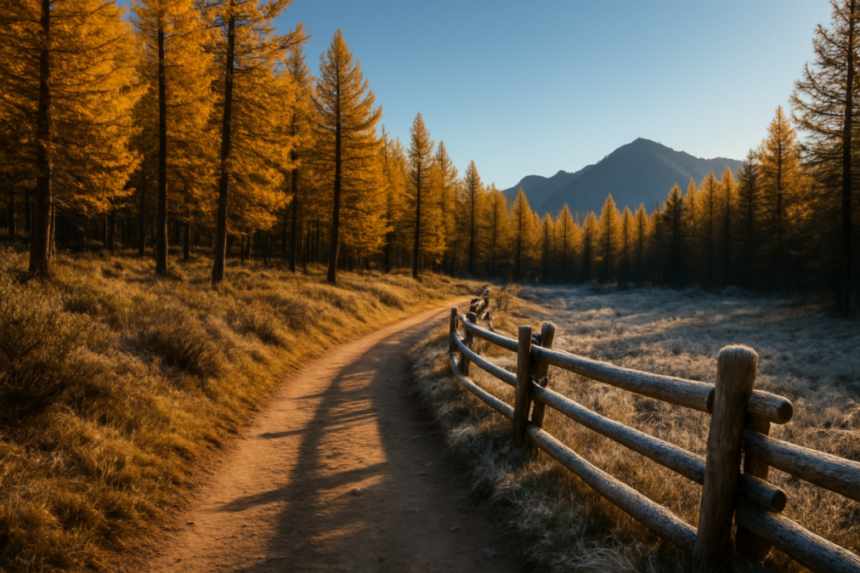
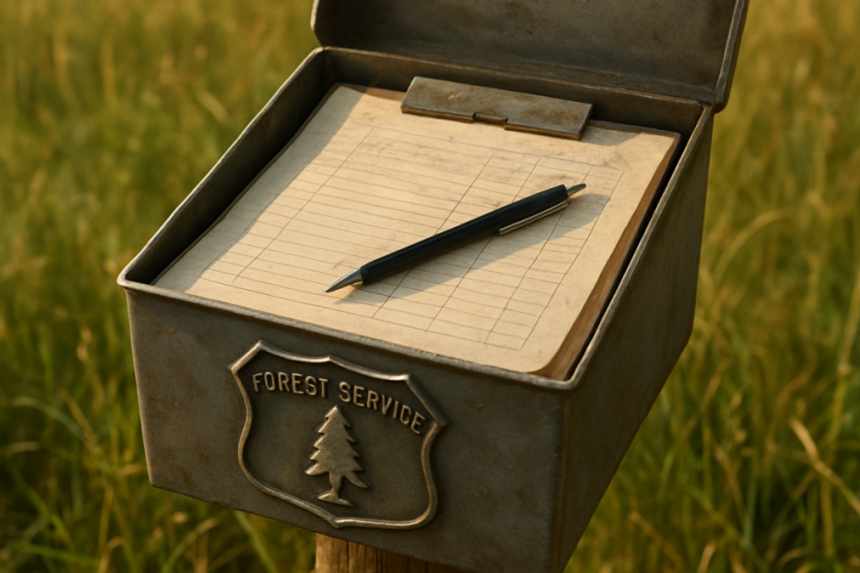
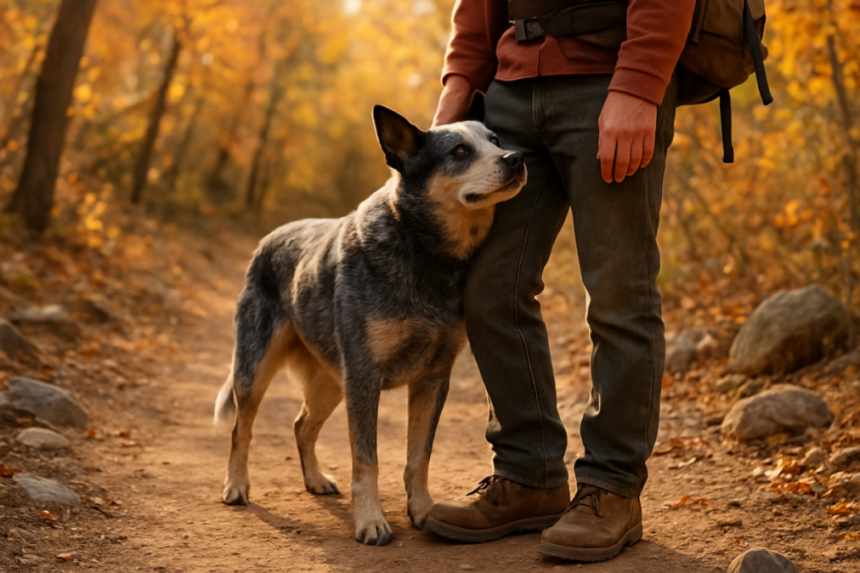

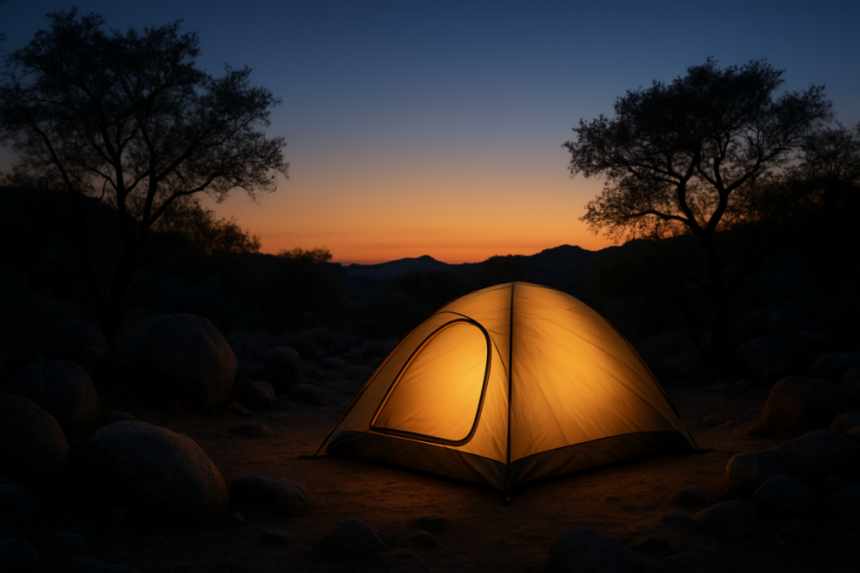
AI illustrations. Please judge the story itself. About AI images.
Filed by its author.
Before you peek: what share of readers believes this story?
50%
No votes yet
Total verdict votes: 0
Guess first! What other readers decided is hidden until you cast your own verdict above — vote True, Fake or Not sure to reveal the community score.
Changed your mind? Read the strongest arguments of the other camp below. If they convinced you — change your verdict (once).
Your new verdict:
Why did you vote that way? Pick up to two:
Noted — thank you, detective.
My case notes (private — stored only in this browser)
Saved in this browser.
True or Fake? — play the detective
How it works: cast your True/Fake verdict above and see whether you matched the reader majority. Then hit "Next case" for a random story and keep your streak going. Solve cases to climb the detective ranks — score and rank are kept on this device only.
Tip: highlight any sentence of the story with your mouse or finger — a small share popup will appear to post that exact quote (with a link back to the story) to X, Facebook, Threads or Reddit.
Something similar happened to you? Tell your version — the jury is waiting. Tell your story
Keep investigating
- More Survival Stories cases
- More Camping at Night cases
- A case the jury believes: We Found A Perfectly Made Bed Of Moss Nine Miles From Any Trail
- A case the jury believes: The Woman At The Trailhead Warned Me And The Car Park Camera Says She Was Not There
- A case the jury believes: Our Tent Was Moved Eight Feet While We Were Inside It
- The full Wilderness Encounters archive
- Cases the jury cannot settle
Comments (0)
Comments here are case materials: pick a role — ask the author a question, or file your evidence FOR or AGAINST the story — and it lands in the right column. Upvote the sharpest comments: the best one is pinned on top as the Top Detective Comment. Questions get answered by the story's author in person — look for the AUTHOR badge.
No comments yet. Be the first!