
Our Farmhouse Swallows Sound, and We Taped Out Where
In one sentence: A man renovating an old farmhouse discovers strange spots where sound just disappears, leading him to investigate the house’s hidden past.
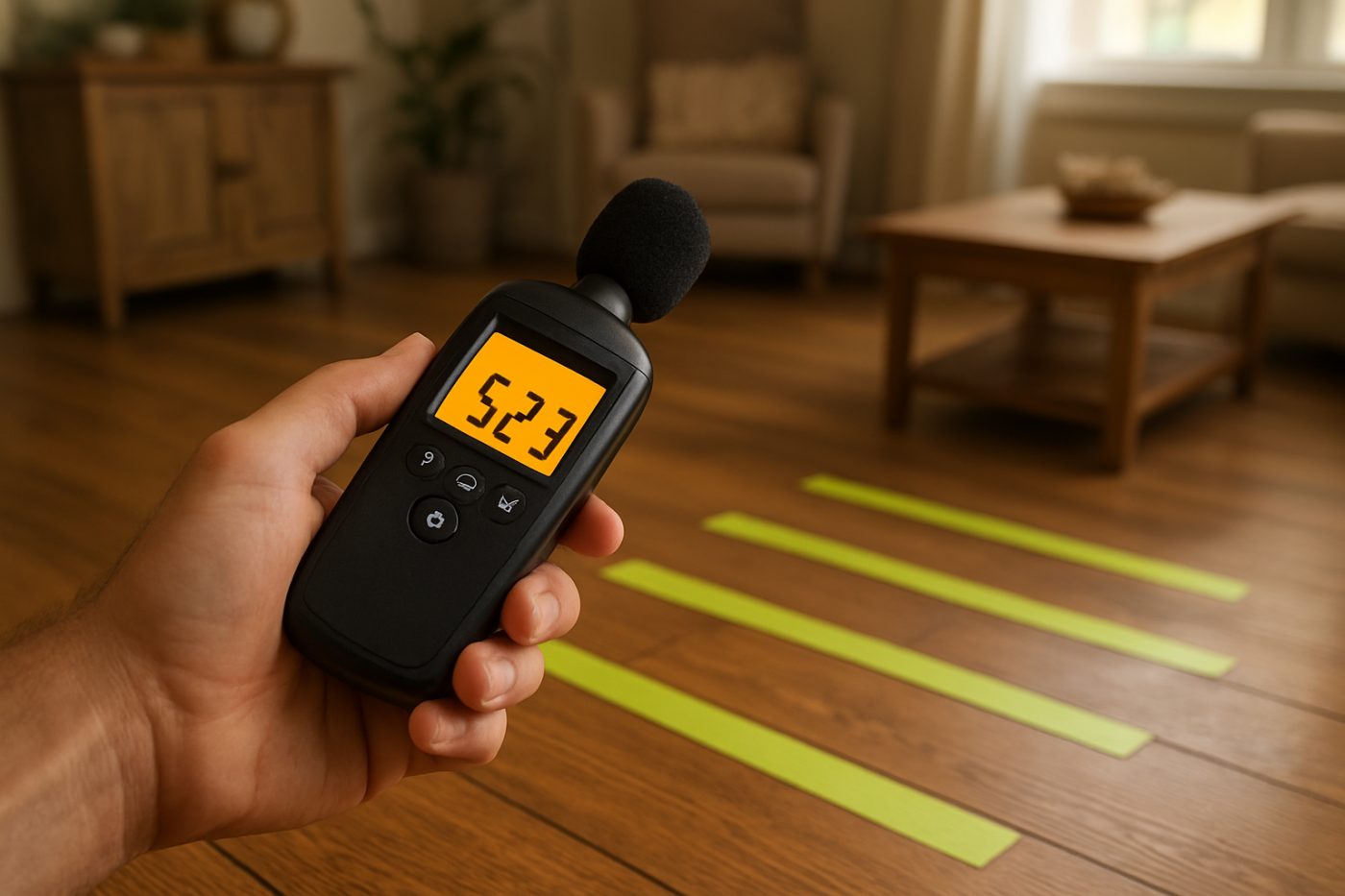
We bought a 1911 Michigan farmhouse and I renovated it with a spreadsheet in one hand. Then rooms started eating sound mid-sentence. I mapped the dead spots with painter's tape and a borrowed decibel meter, and the map drew a floor plan that isn't ours.
* AI Illustration
First impression: judge by the title and the picture alone — you get the real verdict after reading.
Swear It Happened — CASE FILE #560
JURY PENDING
COLD CASE — this file never got enough jurors. Your verdict counts double here (morally).
So when I tell you I have a spreadsheet with 340 rows in it tracking the acoustic behavior of my house, I need you to understand that the spreadsheet came first, before I believed anything. The spreadsheet was me trying to make it go away. That's how I handle everything. My kid brother went through a bad divorce in 2019 and I made him a spreadsheet for that too, custody schedule, asset split scenarios, the works. He didn't want it. People mostly don't want the spreadsheet. I make it anyway.
We bought the house in 2020. Everyone bought a house in 2020, or tried to. We were in a two-bedroom in Royal Oak, both of us suddenly working from home, taking calls in closets, and Ana's company announced permanent remote in June and mine followed in July, and by August we were driving around west Michigan on weekends with a preapproval letter and a thermos of coffee, looking at farmhouses like every other couple in a Subaru that summer. I'm 44 now, I was 38 then. Wait, that math doesn't work. I was 39 then, I think. Whatever, I was late thirties and I'd never owned a house older than myself.
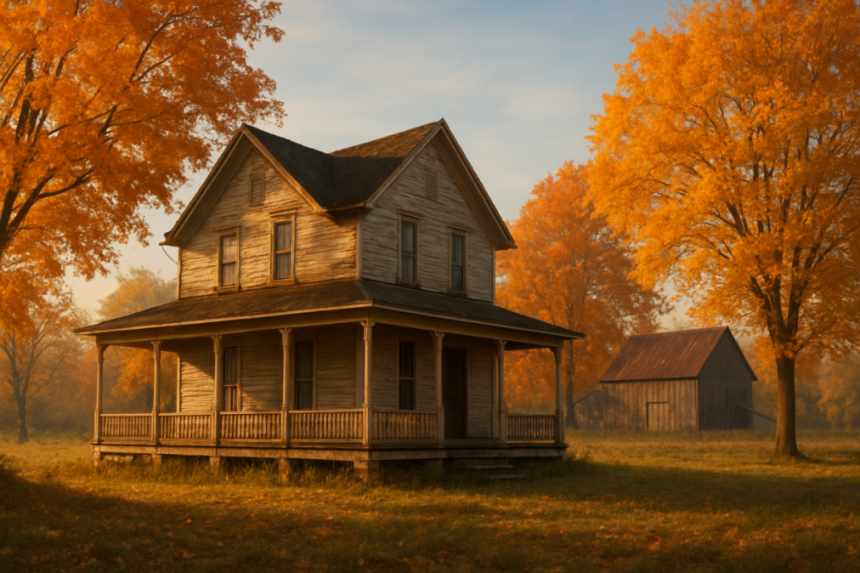
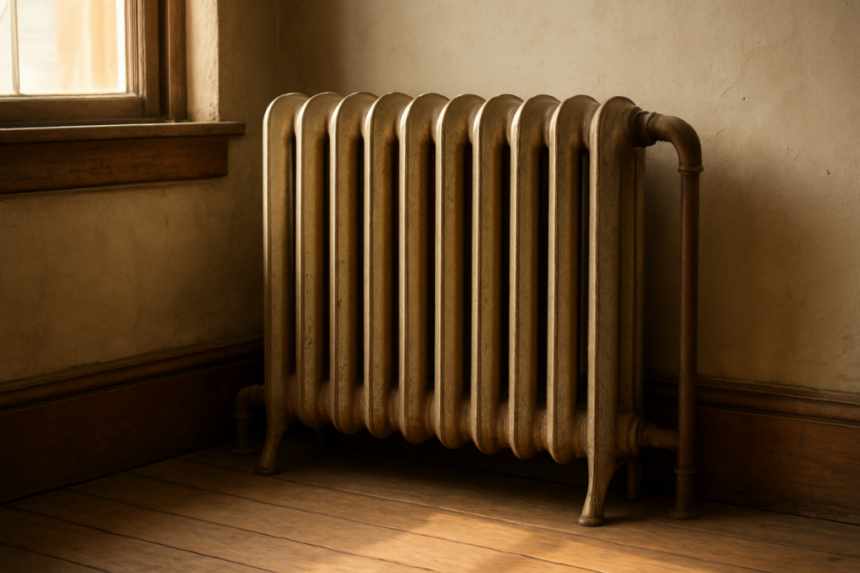
The one we bought is on Puttman Road outside a little unincorporated place called Larch Corners, about fifty minutes northwest of Grand Rapids, in farm country that's half corn and half people who commute to Rockford. Built 1911, according to the county card. Four bedrooms, which sounds grander than it is, because two of them you can touch both walls of. Foursquare-ish shape with a kitchen ell off the back that was added sometime in the forties, a wraparound porch on two sides, a barn we were told was "a project" by a realtor who I now understand was being extremely kind to that barn. Lath and plaster walls, original in most rooms. Steam radiators that bang like someone throwing wrenches down a stairwell.
We paid 285, which felt insane to me for something with knob-and-tube in the attic, and Ana had to talk me off the ledge in the car outside the inspection. She's the sensible one. That's not modesty, it's an operational fact of our marriage. I catastrophize in detail; she assesses. She read the inspection report once, said the bones were good and the rest was labor, and asked me if I was going to be a person who did the labor or a person who paid other people to do it. And I heard myself say I'd do most of it myself, which was a wild thing for a man who at that point owned one screwdriver with a bit set in the handle.
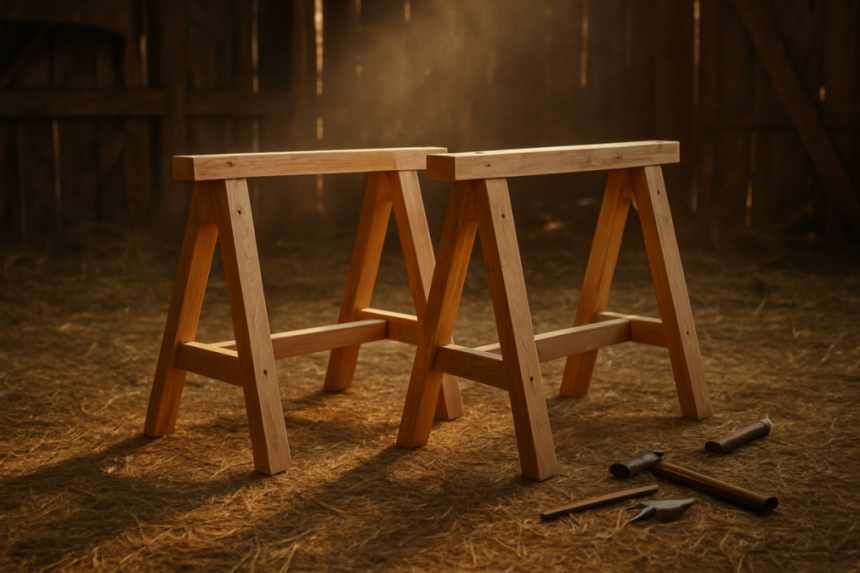
I want to be honest about the tool thing because it's embarrassing in a specific way. I bought a DeWalt table saw before we even closed. Before. It sat in the apartment in Royal Oak in its box for three weeks like a dog we'd adopted in advance. I watched probably two hundred hours of YouTube. This Old House, then the guys with worse production values who actually show you the mistakes. I made, and I'm just going to say it, a binder. Tabbed. Ana called it my Boy Scout manual. First year in the house I built sawhorses before I built anything useful, because the YouTube guys all said build your sawhorses first, and I stood there looking at my two sawhorses in the barn feeling like I'd homesteaded the Dakota Territory.
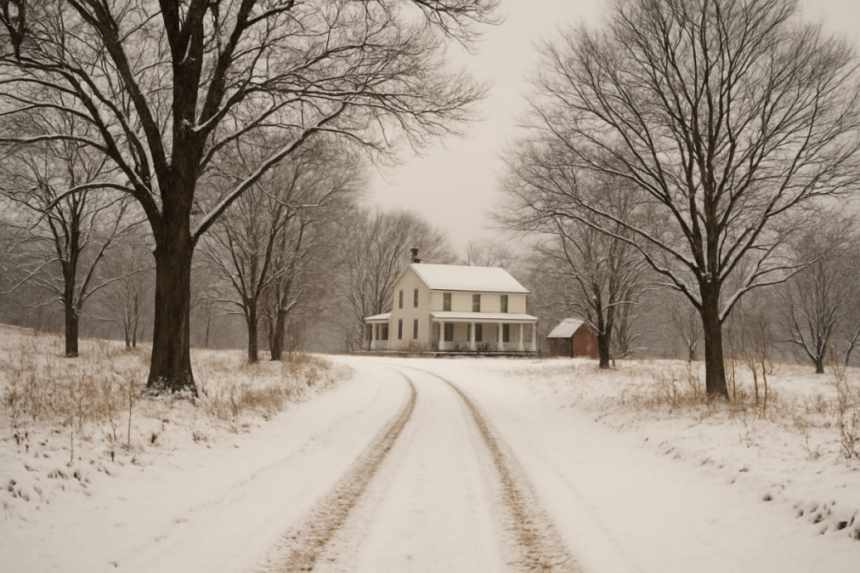
We closed the first week of October 2020 and moved in on a Saturday it snowed, which in west Michigan in October is not an omen, it's just Tuesday. First frost had already come and gone. I remember because the closing got pushed twice, once for an appraisal thing and once because the sellers' agent got COVID, and Ana kept saying we'd be eating Thanksgiving off a moving box, and we almost did.
The first winter was normal. I want that on the record. Whatever I've come to think about the house, it gave us a completely normal first winter. Frozen pipe in the mudroom, mice in the pantry wall, a furnace guy named Dale who talked us into a service contract we absolutely needed. I stripped wallpaper in the small east bedroom, seven layers in one spot, and the bottom layer was a print of little brown geese that I actually felt bad covering. Normal old house stuff. The house creaked and ticked and banged like old houses do, and honestly it was loud. That's the thing people ask me now, was it quiet from the start, was it spooky quiet, and no. It was a loud house. Radiators, wind in the storm windows, the porch roof popping in the cold. Loud.
The renovation plan lived in a Google Sheet called HOUSE_MASTER, which by that spring was HOUSE_MASTER_v7 because I version instead of overwriting, another headstone candidate. Every room had a row. Every row had columns for scope, budget, actual, status, and a notes field that started polite and degraded over time into things like "WHY IS THERE CONCRETE IN THIS WALL." I photographed everything before and after, and honestly during, because the YouTube guys said document your walls before you close them up so future you knows where the wires run. That habit, photographing everything, is the only reason this account has anything you could call evidence in it. I didn't develop the habit because of the weirdness. The weirdness walked into a house that was already under surveillance, is what I'm saying. It picked the wrong guy, or the right one, I still can't decide which.
I should introduce Randy here because Randy matters and also doesn't, which makes him exactly like most things in this story. Randy Vandermeer was the contractor half the town recommended for plaster work. Third generation, did churches, did the courthouse in the county seat supposedly. He came out in March of 2021, walked through with a flashlight, tapped walls with two knuckles like a doctor, and said something like, this plaster's better than what I could put back, keep it, skim it, don't gut it. I liked him a lot. He quoted us the two upstairs ceilings and the parlor, gave a start date in April, called once to push it to May, and then never contacted us again. Ever. I called, texted, emailed. I drove past his shop in June and his truck was there. I know contractors ghost people, everyone I told this to shrugged, apparently it's the most normal thing in the world in the trades, but it bugged me for a specific dumb reason: he'd left his tapping hammer on our porch rail, a little wooden-handled thing, and I kept it by the door for two years waiting to give it back. It's still in the junk drawer. I have no reason to think Randy's disappearance had anything to do with anything. People keep wanting it to. He's fine, by the way, I saw him at the Meijer in Cedar Springs last year buying dog food, and I didn't say anything, and neither did he, and that's the whole Randy story.
Also, and I'm including this because Ana said if I'm going to tell it I have to tell it like it actually was, which includes the stupid parts: 2021 was my sourdough year. Late to it, I know, everybody did sourdough in 2020, I got there a year behind like a true project manager. I had a starter named Gordon. I weighed flour in grams on a jeweler's scale. There is a period of about four months where my house documentation is interleaved with crumb shots, and when I go back through the photo roll to reconstruct dates for this account, I have to scroll past a lot of bread. The bread is relevant to nothing. Gordon died when we went to Ana's mother's for ten days that Christmas and I never restarted him. I'm told that's also the most normal thing in the world.
The first thing happened in August 2021, and I know it was August because of the bread, actually, because the photo I took twenty minutes later has a loaf cooling on the counter and the photo is timestamped August 14, 2021, 4:52 p.m. Although I should flag, and I'll flag stuff like this throughout because I'd rather you hear it from me than figure it out yourself, that in an earlier version of this account I wrote that it happened around ten months after we moved in, and October to August is ten months. So either my sense of when we moved in is off or my sense of the gap is, because we moved in October 2020 and August 2021 is ten months, no, see, I'm doing it again. It's ten months. Fine. The math works. I've stared at that sentence too long. Moving on.
I dropped a spoon.
That's it. That's the first event, row 1 in the spreadsheet, though the spreadsheet didn't exist for another eight months. I was carrying a mixing bowl and a metal spoon from the counter to the sink, the spoon slid off, and it hit the kitchen floor, which is maple, hard maple over a board subfloor over a Michigan basement, and it made no sound. None. I saw it hit. It bounced, that little skittery bounce a spoon does, hit twice more, spun, settled. Silent. Like watching a video with the sound icon crossed out.
And here's what I actually thought, in the moment, because I think it tells you what kind of witness I am: I thought something was wrong with my ears. Instantly. I did not think anything was wrong with the kitchen. I stood there and snapped my fingers next to my right ear, then my left, heard both, normal. Said "hello" out loud, heard it, normal. Picked up the spoon and dropped it again from about waist height.
Bang. Loud as anything, that horrible cutlery clatter, and our dog, well, we don't have a dog, that's not true, I don't know why I typed that. No dog. The clatter was loud and normal and I felt the specific relief of a glitch that won't reproduce, which if you work in IT you know is not actually relief, it's a down payment on a future problem. I told Ana at dinner that my ears had done a weird thing, and she said swimmer's ear, and I said probably, and that was the entire discussion, and neither of us thought about it again for six weeks.
The six weeks part I'm confident about because the next event has a work anchor. It was the last week of September 2021, because we were in UAT for a warehouse management rollout and I was on back-to-back calls in the room I'd claimed as an office, the small east bedroom with the goose wallpaper under the paint. I was talking, headset on, mid-sentence, walking a vendor through a cutover checklist, pacing, because I pace on calls, it drives Ana nuts through the floor. And as I crossed the middle of the room my own voice went thin. That's the best word I've found and I've had years to shop for a better one. Thin. Like the room took the bottom half of my voice away and left the top. You know how your voice sounds different in a closet full of coats than it does in a bathroom? It was like walking from the bathroom into the coat closet in one step, mid-word, and then one more step and I was back in the bathroom.
The vendor didn't notice anything, which matters. My voice into the mic was apparently fine. It was my voice in the room, in the air around my own head, that thinned out. I stopped pacing and did the thing where you retrace your steps, like you do for a smell, walking back and forth through the middle of the room while a man in Ohio explained inventory sync to me. And there was a spot. Maybe two feet across, a little left of the room's center. Inside it, my footsteps went soft, my voice went thin, and the sound of my own breathing in my headset seemed louder because everything outside my head got quieter. Out of it, normal. In, quiet. Out, normal. I did that probably fifteen times. On the recording of that call, which I still have because we recorded UAT calls, you can hear me stop responding for about ninety seconds, and the vendor says, you still there? and I say, yeah, sorry, my heater kicked on, which was a lie, and also it was September and the heat wasn't even on, so that lie has bothered me for four years on pure craftsmanship grounds.
I know how the spot behaved because I tested it that evening with actual objects, once the calls were done. Keys dropped inside the spot: a dull click, like keys dropped on carpet, except it's a wood floor with a rug nowhere near. Keys dropped two feet away: normal jangle. Phone speaker playing a podcast, moved slowly across the room at arm's length: the host's voice dimmed like someone was rolling a volume knob down and back up over about eight inches of travel. Not muffled like a pillow, which cuts the highs and leaves the lows. This cut everything evenly and it cut it fast. I didn't have the vocabulary then. I'd get the vocabulary later, which is its own part of the story, because learning the right words for what your house is doing to you is a strange kind of homework.
I did not tell Ana that night. I want to be honest about why. It wasn't protectiveness. It was that she'd said swimmer's ear about the spoon, in the tone you use with a hypochondriac you love, and I have a documented history, and I mean documented, she keeps receipts, of finding one weird thing and building a cathedral of concern on top of it. In 2018 I heard a click in our car's front end and did four hundred dollars of preemptive suspension work on a noise that turned out to be a pen rolling around under the seat rail. She brings up the pen a lot. So my plan, and this felt very reasonable, was to identify the mundane cause first and then tell her the whole thing as a funny anecdote with the answer included. Present the postmortem, not the outage. That plan lasted seven months and by the end of it I was a man alone in his house at lunch hour dropping the same steel washer on the same floorboard forty times and noting the results in a phone app, so, you know. Grade my plan accordingly.
The mundane causes, in the order I tried them. First, insulation. Old houses get blown-in insulation retrofitted into wall and ceiling cavities, it settles, it clumps, and a dense clump can deaden a room's acoustics unevenly. I'd read about dead spots in concert halls, standing waves, phase cancellation, rooms have geometry and geometry has math. This was by a mile the best theory and I rode it for months. Problem one: the spot was in the middle of the room, and the middle of a room is air. There's no cavity there to insulate. Phase cancellation can absolutely create a null in the middle of a room, but a null in what? A null needs a source. Standing waves cancel a specific frequency from a specific source, a hum, a fan. This canceled everything from any source, a spoon, my voice, a podcast, broadband, as I'd learn to say. Problem two, and this is the one that ended the theory, though not for months: the spot moved. I'll get there.
Second theory, active noise cancellation. I know how this sounds. But some new fridges genuinely have compressor systems marketed as noise-managed. I unplugged things. I want it noted that I unplugged things methodically, whole circuits at the panel, one at a time, with the spot's behavior tested at each step against a dropped washer. Furnace off, fridge off, well pump breaker off, the works. One afternoon in February 2022 I had the main off and the whole house dead, no compressors, no transformers humming on the wall warts, nothing but me and a flashlight and a washer. Ana at her sister's, me in a coat in my office dropping a washer on the floor. Dull click in the spot. Jangle outside it. With the entire house electrically dead. I stood there with my breath fogging and I remember thinking, okay, and putting the washer in my pocket, and going down and flipping the main back on, and making coffee, and not writing anything down for eleven days. A colleague of mine calls that the null sprint, the period after a test fails where you just don't look at the project. It's very human and it's very bad practice.
The spreadsheet dates from March 6, 2022. First tab: LOG. Columns: date, time, location, test object, result, notes, and, because I couldn't help myself, a severity column, S1 through S4, like incident tickets. A silent spoon is an S2. You'll want to know what an S1 is. I didn't have an S1 until the following winter. We'll get there too.
Also in the spring of 2022, and I'm putting this here because it's when it happened, not because it connects: the oak thing started with Carl. Carl Hoekstra farms the parcel north of us, seventies, wears the same green jacket in July that he wears in January, decent guy underneath a permanent expression like you owe him postage. There's a white oak on the line between our properties, big one, probably predates both houses, and Carl had a guy come look at taking a limb that hung over his equipment path, and the guy said the tree's mostly on our side, and Carl said the survey his father had done in 1988 said otherwise, and what followed was fourteen months of the politest trench warfare you've ever seen. Certified letters. A stake with pink flagging tape that appeared and then disappeared and then appeared again three feet east. I paid $650 for a survey out of pure spite. The oak is 60/40 ours, for the record. The limb got taken down anyway, by a storm, in the end, which felt like the tree declining to participate. Carl and I are fine now. He plows the end of our drive when it's bad. The reason Carl earns his place in this account comes later and it's one of the more embarrassing paragraphs of my life, so, something to look forward to.
By April 2022 the log had thirty-some entries and had produced its first real finding, which is that there were three spots, not one. Office, center-left: the original. Upstairs hallway, close to the linen closet: found when Ana's humidifier, running on the hall floor, went quiet every night and we assumed it was cycling, and one night I got up at 2-something to pee and saw the mist still pumping out of a machine making no sound, and stood there in my underwear moving my head in and out of a column of quiet like a man bobbing for apples. And the parlor, southeast corner, at about chest height, which was the first evidence that the spots were three-dimensional, volumes, not floor patches, because the parlor one you could duck under. I found it because the mantel clock, which I'd wound faithfully since we moved in like the world's least necessary chore, ticked at the door and didn't tick from the armchair. I'd honestly assumed for weeks the clock was dying. I'd oiled it. There is a receipt in HOUSE_MASTER_v9 for clock oil, $11.40, under a column of expenses meant to fix things that were not broken.
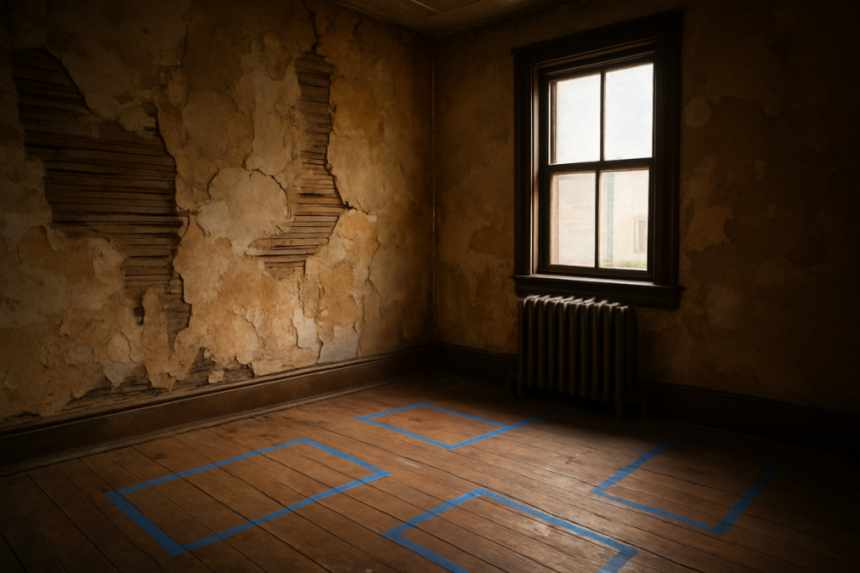
The painter's tape was Ana's fault, in the sense that it was her painter's tape, a fat roll of the blue stuff sitting on the stairs from the trim job neither of us was finishing. I want to be precise about what the tape was for, because when people hear this part they picture a crime scene or a seance and it was neither, it was facilities management. I couldn't hold three foggy spot locations in my head and I didn't trust my memory of whether the office spot was really where it had been in September. So I taped. A rough square around each spot, low-tack, lifted and re-laid whenever a test said the edge had drifted. And they drifted. That was the second real finding, April into May: the tape didn't stay right. The office spot went maybe eight inches toward the window over five weeks. The hallway spot slid along the hall, slow, like a stain spreading in wood. I have photos of the tape on the same floorboards weeks apart and you can count the board seams and watch the square walk. Eight inches in five weeks doesn't sound like anything. It's a house. Nothing in a house should walk.
Ana found out about the whole thing on May 21, 2022, and the way she found out is the first genuinely embarrassing thing I have to tell you, though not the worst one. She'd gone to the farmers market in Rockford. She came back early because they were out of the eggs she likes, and she came in through the kitchen quietly, not sneaking, just quietly, and she found her husband lying on his stomach on the upstairs hallway floor with his phone held above his head, dropping a steel washer over and over next to a taped square, saying, out loud, to nobody, in a flat voice, "trial nine. trial ten." She stood at the top of the stairs watching for what she says was a full minute. I never heard her. In my defense, I was inside the spot, and inside the spot you don't hear much of anything, which as defenses go did not, in the moment, have the exculpatory force I needed it to have.
The conversation that followed went in three phases which I can report almost verbatim because we've reenacted it at two dinner parties since, back when it was still a funny story. Phase one, she thought I was doing a bit. Phase two, when I showed her the log, the actual spreadsheet, severity column and all, she got quiet in the way that isn't good quiet, and said something like, you've been doing this since March, and I said September, technically, and that was the wrong thing to say. Phase three was her standing in the hallway spot while I dropped the washer, and her face changing, not to fear, nothing like fear yet, but to the face she makes at a rigged carnival game, and she said, do it again, and I did, and she took her AirPods out of her pocket like she was surrendering weapons, checked they weren't connected to anything, and said, again. Then she stepped out of the square, had me do it a fourth time, heard the jangle, and said, okay, there's a trick, and spent forty minutes looking for the trick. She checked my phone for a white noise app. She made me empty my pockets. I loved her so much that afternoon I can't even tell you. She was doing everything I'd done in September, in the same order, at 4x speed.
Her verdict that night, and for months after, was: it's real, it's weird, and it's physics we don't have. Which is a completely defensible position. Her working model was some interaction between the steam pipes, the plaster, the water table, whatever, a house is a big dumb machine with a hundred coupled systems and nobody understands their own house. Sound does strange things. Everyone's got the story about hearing the neighbors like they're in the room. And, she pointed out, we don't walk around dropping washers in most houses, so who's to say every old house doesn't have these, unnoticed, and I had built a whole measurement program around a thing that was maybe the acoustic equivalent of dust. She said we probably weren't even the first people to notice it in this house, someone probably noticed it in 1950 and said huh and died at 90 without mentioning it. She's good. When she argues a case you find yourself hoping she's right, and I hoped she was right, and for a while the two of us noticing it together made it feel almost like an amenity. We showed my brother at Fourth of July. He said, and this is a quote, "huh," and then wanted to talk about the barn.
The phone apps were my next escalation, in June. I tried three, settled on the NIOSH sound level meter app because a random forum said it was the least garbage, and started logging numbers instead of adjectives. Ambient kitchen with fridge running: 41, 42 dBA. My office, quiet afternoon: mid 30s. Inside the office spot, same afternoon, phone at arm's length: 26, 27. The hallway spot: 24 once, at night. I knew enough to know phone mics are lousy at the bottom end and the absolute numbers were suspect, but the deltas were consistent, ten to fifteen dB between one arm position and another, in still air, in an empty house. The app has a screenshot function. I have dozens. There's one from June 19, 2022 where you can see the level history graph, flat around 36, then a cliff, flat around 25, then a cliff back up, and the cliffs are me moving my arm through the boundary of the spot. The boundary was that sharp. There was no gradient like walking away from a fan, you were in or out, a few inches of transition, and I remember standing there moving my arm back and forth across an invisible line in my own hallway, watching a graph draw cliffs, and feeling the specific loneliness of having a fact nobody wants.
Around then I did buy, and Ana didn't find out until much later so this is a confession twice over, an $89 "EMF and paranormal detection kit" off Amazon at one in the morning. A K2 meter, basically a toy. I am an adult with a mortgage and a PMP certification and I hid it in my truck like contraband and walked the house with it one afternoon and it did nothing, of course, it flickered at the breaker panel and the microwave like it's designed to, and I put it back in its box and felt like a man who'd bought a decoder ring, and it went to Goodwill eventually in a bag with some jeans. The reason I include this humiliation is that it marks the only time in the whole affair I reached for the paranormal explanation on purpose, early on, and the woo tool gave me nothing, and the boring tools were the ones that kept insisting something was wrong. People assume it goes the other way. It doesn't. The Amazon ghost meter said my house was fine. The federal government's occupational noise app said my house was broken. Make of that what you will.
Marcus enters in August 2022. Marcus is my oldest friend from Lansing, we met working the AV cart in high school, and he stayed in sound when I went corporate. He plays bass in two bands you haven't heard of and runs live sound for a theater, and more to the point he owns real measurement gear, because his other hustle is treating home studios for guys with more money than rooms. I'd been sitting on the recordings for a while before I showed him, and I want to describe the recordings properly because they're the spine of the whole thing.
If you record a phone dropping a washer, or a voice, or anything, and look at the waveform in any editor, sound ends a particular way. It decays. Even a clap in a dead room has a tail, milliseconds of the room giving the energy back. Everything rings, everything trails off, that's what rooms do, that's what air does. On my recordings, sounds that crossed into a spot don't trail off. The waveform just stops. I have a recording of me saying the phrase "testing the hallway, one two three four five" while walking, and between "three" and "four" the waveform drops to the floor of the file, and it drops in what the editor's ruler says is about six milliseconds. Not to lower, to gone. And then "five" comes back at full level when I clear the far edge. No fade, no filter sweep. It looks, and Marcus said this before I'd said anything leading, it looks edited. It looks like somebody selected a region and hit delete. Except it's a continuous file off a continuous mic and I have the metadata and you can hear my footsteps do the same thing, present, present, gone, gone, present.
I sent Marcus three files with no explanation beyond "recorded on my phone, one take, no processing, tell me what you think happened." He called me forty minutes later. He did not say hello. He said, what's your noise floor. I said which one. He said the room, man, what's the noise floor of the room, because I'm looking at the quiet section and it's reading like nothing, that can't be your noise floor. And I said numbers from the NIOSH app and he talked over me, phone numbers don't mean anything, and then he stopped and said, wait, this is the farmhouse? and I said yes, and there was a silence with him breathing in it, and he said, I'm coming Saturday, don't touch anything, which is a funny thing to say about a house where the whole problem is that nothing you do touches it.
He came with two hard cases. A calibrated measurement mic, a UMIK-1, which is nothing exotic, a couple hundred bucks, but calibrated, with its own correction file, plus his laptop with REW, which is free software acousticians and hi-fi people use to measure rooms, plus an honest-to-god SPL meter, an NTi thing from the theater that costs more than my table saw, on loan without the theater exactly knowing. Marcus treats gear the way I treat spreadsheets, which is why the next part carries weight with me. He ran his own calibration first, in our driveway, before he'd even come inside. Checked the meter against a 1 kHz calibrator, checked the mic against the meter. He was not going to get got by my house. He'd decided in advance, he told me later, that the files were a processing artifact, some phone voice-isolation feature I didn't know was on, and he'd come mostly to catch it in an afternoon and stay for dinner.
Here is what his equipment said, from his notes, which he typed up after because by evening he'd become the second-most obsessive documentarian in the county. Ambient in the upstairs hallway, HVAC off, 3 p.m., birds outside: 33 to 34 dBA. Inside the taped square, meter at the same height, same conditions: 19 dBA. Nineteen. He said the meter's own self-noise spec is around 17, meaning the spot was within a couple dB of the quietest thing the instrument could report at all. He moved the meter in and out on a boom so his body wasn't near it. Same cliff. He played pink noise through a speaker across the hall, 65 dB at one meter, and walked the mic through the spot, and the RTA display just fell, all bands together, lows and highs alike, which he kept saying was the impossible part. Absorption is frequency-dependent, he said, everything absorbs highs easier than lows, that's just physics, wavelengths, that's why you hear the neighbor's bass and not the vocals. Whatever this is, it doesn't care about wavelength. It's not absorbing, he said, and then he didn't finish the sentence, and I watched my most competent friend put down a $2,000 meter, sit on my stairs, and say, I want to go outside for a minute.
We drank beers on the porch and Marcus worked through the candidate explanations out loud, ticking them off on his fingers, and it was the best conversation I'd had in a year because he was doing it forward, at speed, with expertise, the whole road I'd crawled in ten months. Destructive interference: needs coherent sources, cancels narrow bands, doesn't do broadband, and anyway what's the source. Some freak absorptive structure in the floor: absorbs from a surface, has a frequency slope, doesn't hang at chest height in a parlor, doesn't move. Psychoacoustics, both of us fooling ourselves: doesn't survive the instruments. Instrument error: two instruments, different technologies, his and mine, agreeing. A hoax by me: he looked at me for a second longer than was strictly flattering, and I reminded him I'd sent the files with no framing, and he said, yeah, and also you cried when you showed me the tape map, which I had forgotten and would have preferred he had too. I hadn't cried cried. My eyes had done a thing. It had been a long ten months.
Marcus left that Sunday having recorded about four gigabytes of measurements, and his parting professional opinion, delivered in the driveway in the tone he uses for club owners with wiring he can't fix, was: your house has regions where the air stops carrying sound, that's not a thing air does, and I can't help you, and also, and he said this carefully, I don't think I want to come back for a while. He said being inside the hallway one gave him a feeling in his ears like the pressure change before a storm, which I'd honestly stopped noticing by then, the way you stop smelling your own house. He calls it the anechoic feeling now. He did come back, eventually, twice, so don't read too much into that, but I remember his taillights at the end of Puttman Road and the specific deflation of realizing that the outside expert had validated the problem and then driven away from it, which anyone in IT could have told me is what outside experts do.
The audiogram was September 2022 and it was Ana's requirement, not mine, which tells you where she still stood. Her position had hardened into a two-track thing: the phenomenon was real, the instruments proved that, but she wanted my perception audited anyway, because I was the common denominator in every anecdotal report, the thinning voices, the pressure feelings, and if we were going to be data people we'd audit the sensor too. Completely fair. Hearing and balance clinic in Grand Rapids, a booth, the beeps, press the button. My hearing came back normal, actually slightly better than normal for my age in the left ear, small notch at 4k on the right that the audiologist said was textbook for a man who mows his own lawn. Her name was Dr. Pham and I liked her, and because I am who I am, I had asked when booking whether I could bring recordings of an acoustic anomaly in my home, which is a sentence that gets you a certain look from a receptionist.
Dr. Pham listened to the hallway walking file on real headphones in the booth. Twice. Then she pulled the file into some software and looked at the waveform, and she got very still, and she said, mostly to herself, something like: there's no offset transient. When a recording cuts, she explained, an edit, a dropout, a mute, you get a click or at minimum a discontinuity, the wave gets chopped mid-cycle and your ear catches it even if you don't know what you're hearing. My file didn't have one. The wave rides down to nothing inside a few cycles, smoothly, like the sound was, her words, driven to zero rather than cut from the tape. She asked what plugin chain I'd used. I said none, phone voice memo. She asked if she could keep a copy and I said yes, and she never contacted me about it, and when I followed up months later the front desk said she'd moved to a practice in Ohio, and no, that's not sinister, people move to Ohio, it's right there. But I think about her saying driven to zero. Of everyone who touched this, she found the scariest three words for it and she found them in ninety seconds.
Now Carl, and the paragraph I promised, and I'd skip it if Ana would let me. One of my test protocols, October 2022, was maximum-amplitude vocalization inside versus outside the hallway spot, which is a spreadsheet way of saying I stood in my house and screamed. For science. Repeatedly. As loud as an adult man can scream, which turns out to be around 105 dB at a meter, and inside the spot the meter across the hall read 71, my full scream arriving across nine feet of hallway air with less energy than a normal conversation. That result made the hair on my arms stand up, and I was recovering from it, sweaty, wild-haired, in a house I thought was empty, when I became aware of Carl Hoekstra standing inside our kitchen door in his green jacket holding, and I want you to picture this, the certified letter about the oak, which he'd decided to hand-deliver, and he had knocked, apparently, and heard a man screaming rhythmically upstairs, and let himself in, which in his generation's rulebook is what you do, you go toward the screaming. And there was no possible sentence. I stood at the top of the stairs and he stood at the bottom, and he looked at me and said, I'll leave it on the table, and left, and we did not make eye contact for four months, through the entire remaining survey dispute, and to be honest the survey dispute got noticeably less adversarial after that, which Ana says is because you can't fight a man you pity.
The kitchen thing with Ana was November 2022, and it's the hinge of the whole account, so I want to get it right, and getting it right means admitting we were fighting about money and I was losing because I deserved to lose. The renovation was 40 percent over my own budget, and the overage was not lumber prices, the overage was that I'd stopped renovating and started investigating, and the line items had names like acoustic foam, calibration, second SPL meter, USB mics, a borescope, and meanwhile the parlor Randy never skim-coated still had test patches on the wall from March 2021. Ana had the spreadsheet open on the laptop, my own weapon, and she was going down the column and she was right, and she was getting louder the way you do when you're right, and she was mid-sentence, and I truly don't remember which sentence, something about the borescope, when her voice thinned.
We were nowhere near a taped square. That's the part. The kitchen had never had a spot, the kitchen was clean, fourteen months of logs said so. But I watched it happen from four feet away, watched her hit the word and the word go thin, the bottom fall out of her voice mid-syllable, and I saw her hear it happen to herself. She stopped. Her hand was still up in the air from making a point. And the thing I'll carry is that she didn't look scared, not at first, she looked embarrassed, like her voice had cracked in front of a class, and she took a small step back, one tile, and said, quietly, in a voice that worked again, "it's in here." And then she was scared. We stood in our kitchen listening to the fridge, which hummed like normal, everything like normal, and Ana pointed at the middle of the room, at nothing, at air over the butcher block, and said, and this is verbatim, this I will not soften: "I felt listened at." Not listened to. Listened at. And I knew exactly what she meant, and I'd known for a year, and hearing it come out of the sensible one, hearing my own crazy handed back to me in her voice, in her grammar, was worse than every silent spoon and cliffed graph put together, because it meant the phenomenon had jurisdiction over both of us, and one of us had been the control group.
She didn't sleep that night. That's not a figure of speech, I mean I woke at three and the bed was empty and she was sitting in the den, lights on, with her AirPods in playing, she told me later, a podcast about tax law, chosen deliberately because it was the most human, boring, wordy thing she could find, a voice to hold in her ears where nothing could get between it and her. She slept in the den with sound in her ears for most of that winter. The white noise machine came in December, and it worked until the night in January when she came and got me, calm in a way that was not calm, and had me stand in the den doorway, and the machine was on its shelf hissing, and one step into the room it wasn't. The spot had come to the den. Or a new one had opened. By that point the distinction had stopped mattering, and the tape roll came out again, and Ana, who had never once touched the tape, tore off the piece herself and squared the corners with her thumbnail like she was dressing a wound.
That winter is also when the map turned into a map. I'd been plotting the tape squares all along on a floor plan I'd drawn of the house in Visio, because of course I had, every position update logged with a date, little polygons with timestamps, and by February 2023 there were nine spots, past and present, and something about seeing the ninth one drop onto the drawing made me do the thing I should have done a year earlier, which was turn on all the historical positions at once instead of just current state. Show the trails, not the dots. Every project manager knows this and I'd sat on the data for a year, and in my defense, no, I don't have a defense. I toggled the layer. And the trails weren't wandering. Eighteen months of drift, all nine spots, every position I'd ever taped: they were distributed along lines. Straight lines, corners, a long run down the upstairs hall with a gap in it, gaps at intervals in the others. The office spot hadn't been drifting toward the window so much as patrolling, back and forth, a few inches a week, along a line that continued past where it had ever been, if you extended it, into the wall, and met another line coming from the parlor spot downstairs, almost directly below, at what would be, if you were drawing a building, a corner.
I sat looking at the screen for a long time, and then I did the thing you do, I dragged the opacity of my Visio walls down to 30 percent and looked at both floors overlaid, and the lines the spots had been tracing were walls. Not our walls. A smaller set of walls, sitting inside our walls, rotated maybe two degrees off our grid, rooms nested inside our rooms, and the gaps in the lines came at regular widths, and the width was thirty-two inches, and I got up and measured our bedroom door, because I suddenly had to, and a door is thirty-two inches, a door is thirty-two inches wide.
The gaps were doorways. The spots were tracing a floor plan, and it wasn't ours, and the doorways in it stood open where our studs run solid, and I want to tell you I handled that discovery like an analyst, and the truth is I closed the laptop like it was hot and went and found Ana and made her come look, because past a certain point the difference between an analyst and a man alone with a drawing at 11 p.m. is one other person saying they see it too.
Ana looked at the overlay for about a minute, and she reached past me and rotated the phantom plan with the mouse, two degrees, until it snapped square with something in her head, and she said, that's not random, that's a building. And then she said the thing that sent us to the county, which is that buildings have paper. Her whole career is compliance. Paper is her native habitat the way spreadsheets are mine, and she said if there was ever a different floor plan in this house, a house this old, then somewhere there's paper, and honestly I think being handed a research task saved her that winter. It gave the fear a job. We were both much better once the fear had a job.
The county part I'm going to tell carefully, partly because it's where the story stops being just ours, and partly because when I told a shorter version of this at a barbecue, a guy I barely know turned it into something ugly within two sentences, ha, haunted deaf people, and I went inside and was angry about it for days, and Ana said if you ever write it down, write it so nobody can do that. So. Facts first, in the order we found them.
The register of deeds gave us the chain of title in an afternoon, which was the first surprise, how easy this stuff is, you just go and a woman named Sherri pulls ledgers. The parcel history: the land was part of the Aldrink farm through the 1800s, and in March 1910 four acres were deeded to something called the Gilead Fellowship Trust, and the house was built across 1910 and 1911, and the trust held it until 1954, when it sold to a family called Prosser, then two more families, then the couple we bought from. The 1954 deed is the one with the remodel: the Prossers pulled permits that year for, quote, removal of interior partitions and modernization of dwelling, which is the paper trail of somebody gutting the original layout, which by then I knew, I mean I knew, was the layout my tape had been drawing, but knowing and having documents are different tax brackets of knowing, and we did not yet have a drawing of the original interior. Deeds don't have floor plans. Sherri suggested the historical society, which in our county is four rooms above a bank in the county seat, open Tuesday and Thursday afternoons, run by volunteers whose average age I would put respectfully at 79.
It took three Tuesday visits. The Gilead Fellowship wasn't in the indexed collections, but a volunteer named Marjorie, who moved through those shelves like a woman finding things in her own kitchen, came out of a back room on our third visit with a gray archival box, the kind with a ribbon tie, labeled in typewriter capitals GILEAD FELLOWSHIP (DEAF CONGREGATION), PUTTMAN RD, 1910 TO 1937, and set it down in front of us and said, they were lovely people, my grandmother knew them, nobody ever asks about them. And Ana untied the ribbon, and I'm not sure either of us took a full breath for the next hour.
What was in the box. A photograph, the one I think about most, of maybe twenty people on our porch, our porch, the rail post with the chamfered corner that I have repaired with epoxy is in the frame, dated 1919 on the back. Men in collars, women in Sunday hats, a couple of kids down front, and nobody is looking at the camera because they're all looking at each other, and most of the hands in the photograph are up, caught mid-sign. A whole porch of conversation, frozen, in a photograph that is, by nature, silent, and I know that observation costs nothing, but I bought a print of it from the society for eight dollars and it hangs framed in our stairwell now, and I'll get to why.
Letters, some in English, mundane and warm, arranging rides from the interurban stop, a dispute about a stove. A 1922 program from a regional gathering, printed in Grand Rapids, listing the Gilead Fellowship of Larch Corners among a dozen deaf congregations from around the state, which was the afternoon I learned, standing in a room above a bank, that Michigan had a whole world of deaf churches and deaf farm communities in those decades, schools, newspapers, a society, an entire life running parallel to the hearing one and almost never written into the local histories. Marjorie's grandmother had boarded two Gilead women during a hard winter and corresponded with one of them for thirty years after the fellowship dissolved. The letters are in the box. They are the opposite of spooky. They're about raspberries and a sewing machine and somebody's son in Detroit.
And a floor plan. Not blueprints, nothing formal. A pencil drawing on brittle paper, folded into eighths, labeled in a careful hand: MEETING HOUSE, ARRANGEMENT OF ROOMS, with measurements, because it had been drawn for a purpose, an insurance assessment in 1928 according to the note clipped to it. Both floors. The house as built. Ana had the Visio overlay on her phone. She laid the phone on the table next to the 1928 drawing, and honestly, I keep trying to write down what that moment was like and everything's too big or too small, so I'll just say it plainly: they matched. The pencil walls sat where the tape had walked. Rooms my spots had been outlining for eighteen months were on the paper with names on them. The upstairs hall spot's long run with the gap: a corridor wall with a doorway, labeled DORMITORY. The parlor spot at chest height in the southeast corner: inside a small room labeled STUDY. And the office spot, the original, the September spot, the one I'd found while pacing on a vendor call, its patrol line matched the wall of the largest room on the plan, front of the house, and the room was labeled, in that same careful hand, SILENT PARLOR.
I asked Marjorie about the label, expecting nothing, and got the second thing I think about most. She said the fellowship's services were signed services, obviously, no preaching aloud, no organ, and by the accounts her grandmother had passed down, sound wasn't shunned in the house, most of the members had hearing family, some spoke, there was a piano at socials. But the silent parlor was kept as, and she used the phrase like a proper noun she'd inherited, the quiet room. A room where you didn't speak, where the practice of the congregation, whatever it precisely was, prayer, rest, respect, was silence, held on purpose, together. She said her grandmother sat in it once in 1931 after her own husband's funeral, because a Gilead woman invited her, and told her granddaughter fifty years later that it was the only place she'd ever been where the quiet felt like it was for her. Where the quiet felt like it was for her. I wrote it on the back of a parking receipt in the stairwell of that bank and I have the receipt in the folder with the survey documents, between the oak dispute and the audiogram, which is exactly where it belongs, filed under things that are true whether or not I can do anything with them.
I want to be careful here, and this is the part Ana made me promise to say outright rather than imply. Nothing we found, then or since, suggests anything bad happened in that house. We looked. God help me, I looked, I did the thing you do, newspapers, death records Sherri could pull, waiting for the tragedy that explains the haunting, because that's the story shape everyone's been trained on, including me. There isn't one. The fellowship shrank through the thirties as members died or moved to the city for work, held its last recorded meeting in 1937, dissolved the trust, and the house sat mostly empty, caretaken by a neighboring farmer, until the 1954 sale. No fire, no scandal, nothing but time doing what time does to small congregations. Whatever is in our house, and I've had years to consider this, it is not a wound. Every horror instinct I had pointed me toward finding out who suffered, and the paper kept answering: nobody, they grew raspberries, they argued about a stove, they held a room quiet the way other churches hold a room lit, and then they were gone, and the Prossers knocked the walls down and made it a modern farmhouse, and the walls, I don't have a better way to say this, the walls seem not to have entirely agreed to that.
Because that's the shape of it, once we had the 1928 drawing. The house wasn't generating dead spots at random. The quiet was patrolling the old plan. Walking the walls that weren't there anymore, pooling in the rooms that had held it, passing through doorways that are now solid stud bays, thirty-two inches at a time. I had eighteen months of data and it all sat down inside that pencil drawing like it had been waiting for a chair. And I know how I sound. I have read this paragraph to myself in my most skeptical internal voice, the voice I use on vendors, and the skeptic in me has exactly one comeback, which is that I taped the map before I ever saw the drawing, and the tape photos have timestamps, and the box had a ribbon on it that hadn't been untied in years, Marjorie said so, and either I am lying to you right now, which I can't disprove from here, or the sequence is what the sequence is. That's the whole case. One drawing, eighteen months of tape, and the order they happened in.
The center of the silent parlor, on the 1928 plan, falls inside the west wall of my office. Not near it. In it. The 1954 remodel moved the front rooms around such that a chunk of the old parlor's middle got swallowed by a new partition wall, a lath and plaster wall, and when I laid the plans over each other that swallowed volume glowed on my screen like a held breath, and every line of drift in my log bent around that wall the way, and Marcus is the one who said this when I showed him the overlay that spring, remotely, he still wasn't coming over, the way currents bend around something submerged.
So in June 2023 I told Ana I wanted to open the wall, and the sensible one, the control group, my wife who eleven months earlier had been hunting for the trick in my pockets, looked at me for a while and said, okay, but we do it like a procedure, we document everything, we agree before we start what we'll do with whatever's in there. And I said what do you think is in there, and she said, I don't know, and I want to already know what we're doing when we find out. If you want to know the exact moment our marriage changed shape, it's that sentence. She'd crossed all the way over, not to believing, she'd been past believing since the kitchen, but to planning. The fear had a job, and the job had a change order, and the change order said open the wall.
We opened it on June 24, 2023, a Saturday, both of us, tarps down, respirators on, shop vac staged, GoPro on a tripod because if you think I opened that wall without video you haven't been listening. Lath and plaster demo is miserable, slow, filthy work, and for the first hour it was only that. Then my oscillating saw, about four feet up, right where the overlay said the old room's center was, went quiet in my hands. Still cutting. Full throttle, teeth in wood, sawdust jumping, and the sound of it dropped away like the tool had been unplugged from the air. Ana saw me freeze and turned the GoPro toward me, and on the footage you can hear the saw scream, cut to almost nothing for eleven seconds, and come back. The camera was six feet away, outside the spot. It heard what I didn't. I have watched those eleven seconds more times than I'll admit.
Behind the lath there, sitting on a nailed-in cross piece like a shelf built for it, was a bundle. Wrapped in plaster-stiffened cloth, the burlap-and-horsehair stuff they scrimmed corners with, tied with string gone brown. Inside, and we unwrapped it on the dining table with cotton gloves Ana had bought in advance because she'd meant it about the procedure, was a paper cone. A horn. About fourteen inches, wound from heavy paper in a spiral, shellacked, the way early gramophone horns and cheap hearing trumpets were made, and we still don't know which it was, or if it was either. The small end was crimped closed around a little wooden plug. Not a working anything, is my point. A shape. And here's the detail I'd sell the rest of the story to be rid of: it had been set into the wall with the wide mouth facing inward. Into the cavity. Into the sealed dark inside the wall, the swallowed center of the silent parlor, the way you'd point a horn at a stage. Somebody, and given the plaster it was somebody in 1954, either the Prossers' crew or someone among them, closed up that wall and left a listening shape inside it, aimed at nothing, and I have exactly one fact to offer about why, which is that I don't have one. The 1928 drawing doesn't mention it. Marjorie had never heard of such a thing. A plasterer I emailed said tradesmen leave newspapers and bottles in walls all the time, time capsules, jokes. Sure. Maybe.
We photographed it from thirty angles, and then, this was the agreement, we drove it to the historical society, where it sits in the Gilead box with an index card, DONOR: PUTTMAN RD HOUSE, and if you're ever in a certain four-room museum above a bank in west Michigan, you've read its whole story now, which is more than the card says. We kept nothing. We rebuilt the wall that week, new studs, rock lath, and I skim-coated it myself, three coats, using, and I only realized this partway through the second coat, Randy's little hammer to sound the old edges. It came out of the junk drawer for that and went back in after. Wherever you are, Randy, your hammer has seen things.
And then the spots stopped moving. Not stopped, consolidated. Through that fall the log entries thinned, the office cleared, the parlor cleared, the den cleared, and by December everything I could measure had drawn itself into one stretch of the upstairs hallway, about nine feet, linen closet to the bathroom door, stable now for two and a half years. Same nine feet, every test. It sits, if you care, along the old dormitory corridor, centered on where its doorway was. The house pulled all its quiet into one hall and holds it there, and I genuinely cannot tell you whether we fixed something or concentrated it.
The phones started in January 2024, winter nights only, and I've showed my work on this to everyone willing to sit through it. Both our phones, charging in the bedroom, will sometimes have a new voice memo in the morning that neither of us made. Different models, her iPhone, my Pixel, different apps. The memos are 40 to 90 seconds of nothing, and I mean measured nothing, the files' noise floors sit below what those mics record in a sealed closet. Twice, once in February 2024 and once last December, both phones' files contain a single soft click, like a tongue leaving the roof of a mouth, and both times the click falls at the 40th second of each file. Not simultaneously by clock time, the recordings started three minutes apart. At second 40 of each. I've aligned the waveforms, I've checked the timestamps against carrier logs, I've had Marcus verify the files aren't copies of each other, they're different mics in different formats with different room tones, or would be, if they had room tones. Forty seconds in, one click each. I don't have a theory. I have a folder, named, because at some point you have to laugh, MEMOS_WE_DIDNT_MAKE, and a wife who no longer says there's a trick.
People ask why we stay. Money, honestly. We're 40 percent over budget on a house worth what it's worth in a town you've never heard of, and everything we have is in these walls, and also, and this took me longer to admit than the ghosts of the acoustic spectrum did, we're not scared the way you'd think. Nothing has ever escalated. The hallway takes sound the way a library expects you to lower your voice, and somewhere in year four we started lowering ours before we reached it, automatically, the way you slow for a speed bump on a road you know. We talk quieter in that house than we ever talked in Royal Oak. We fight quieter, when we fight, and the fights end faster, and I honestly don't know anymore how much of the gentleness our marriage found out here is us and how much is training, whether we got better or got taught, and Ana says it doesn't matter and I think it has to matter, and that's the one argument we still have, and we have it quietly.
Most winter mornings now I check the voice memos with my coffee, like checking a trap line. Usually nothing. Sometimes a new file of silence, and I log the length and delete it. Last Tuesday there was one, 41 seconds, and I logged it and deleted it without listening, first time in two years, and I've been sitting with that all week. Not with the file. With the fact that I didn't listen. Somewhere in this house is a spreadsheet-brained man who played every recording forty times, and the house has been quiet at him so long, so patiently, that last Tuesday he deleted one unheard, and if you want to know what living here actually does to you, it's that. I'm getting quieter too. I can hear it.


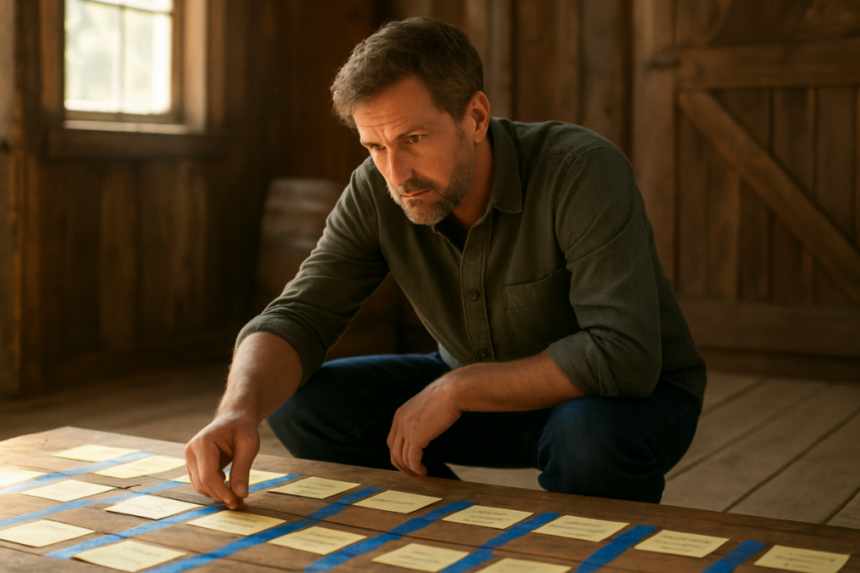
AI illustrations. Please judge the story itself. About AI images.
Filed by its author.
Before you peek: what share of readers believes this story?
50%
No votes yet
Total verdict votes: 0
Guess first! What other readers decided is hidden until you cast your own verdict above — vote True, Fake or Not sure to reveal the community score.
Changed your mind? Read the strongest arguments of the other camp below. If they convinced you — change your verdict (once).
Your new verdict:
Why did you vote that way? Pick up to two:
Noted — thank you, detective.
My case notes (private — stored only in this browser)
Saved in this browser.
True or Fake? — play the detective
How it works: cast your True/Fake verdict above and see whether you matched the reader majority. Then hit "Next case" for a random story and keep your streak going. Solve cases to climb the detective ranks — score and rank are kept on this device only.
Tip: highlight any sentence of the story with your mouse or finger — a small share popup will appear to post that exact quote (with a link back to the story) to X, Facebook, Threads or Reddit.
Something similar happened to you? Tell your version — the jury is waiting. Tell your story
Keep investigating
- More Unexplained Events cases
- More Old Houses cases
- A case the jury believes: The Shadow People Wait Until I'm Not Looking
- A case the jury believes: The Poltergeist Only Targets My Brother's Chair
- A case the jury believes: The Footsteps Stop at the Nursery
- The full Haunted Homes Stories archive
- Cases the jury cannot settle
Comments (0)
Comments here are case materials: pick a role — ask the author a question, or file your evidence FOR or AGAINST the story — and it lands in the right column. Upvote the sharpest comments: the best one is pinned on top as the Top Detective Comment. Questions get answered by the story's author in person — look for the AUTHOR badge.
No comments yet. Be the first!