
The New-Build Estate That Dreams the Same Man
In one sentence: A new housing estate’s residents start sharing unsettling dreams about a mysterious man from the land’s forgotten past.
Forty households on a two-year-old estate, no history, clean plots. Yet a third of us — comparing notes at a barbecue — have dreamed the same man, in old-fashioned clothes, asking the same question about his orchard.
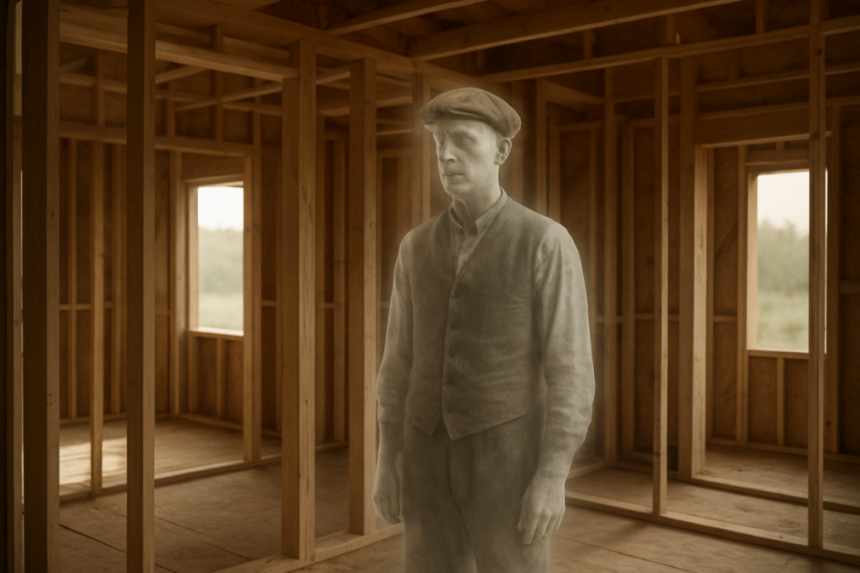
* AI Illustration
First impression: judge by the title and the picture alone — you get the real verdict after reading.
Swear It Happened — CASE FILE #193
JURY PENDING
COLD CASE — this file never got enough jurors. Your verdict counts double here (morally).
It came out, as these things do, at a residents' barbecue — the summer social where forty households pretend to know each other. Someone, a few drinks in, made a joke about a bad dream, an odd recurring one, and someone else stopped laughing and said, carefully, 'What man?' And the first person described him, and the second person went quiet, and within twenty minutes there was a cluster of us standing apart from the sausages, comparing a dream we had, it turned out, been having separately and saying nothing about, out of the ordinary reluctance to mention that you've been dreaming of a stranger.
The same man. In old-fashioned clothes — a labourer's clothes, someone said, from a long time ago, waistcoat, collarless shirt, a flat cap, boots. Standing at the foot of the bed, or in the garden, or once, chillingly, in the half-built frame of the house as it had been mid-construction, in the dreams of people who'd moved in after it was finished. And always, in every version, the same question, or something so close it was clearly the same: he asked about his orchard. Where was his orchard. What had they done with the trees. Who had taken the orchard. Patient, not angry, just endlessly, sadly asking a field full of new houses what had become of his orchard.
A third of the estate, we established that afternoon and in the weeks of comparing that followed — thirteen or fourteen households out of forty — had dreamed him. People who'd never met before moving in. Different rooms, different plots, the same man in the same old clothes asking the same question about trees none of us had ever seen, on a field the brochure swore was empty pasture.
It was one of the residents, a keen local historian by hobby, who found the answer, and it was the answer this site has taught me to expect: the 'empty pasture' had not always been pasture. Before the developer's field, before living memory, the land had been an orchard — a substantial old commercial orchard, cleared and grubbed out and forgotten decades before the developer bought a green field with no orchard on any of the paperwork it was legally required to check. Cleared so long ago that only the oldest map, which our historian dug up, still showed the neat rows of a hundred vanished apple trees, exactly where our streets and cul-de-sacs and turfed gardens now sat.
His orchard. We'd built forty houses on his orchard, and a third of us dreamed him asking where his trees had gone.
Nobody's moving; the mortgages don't dream. But the estate did a quiet, slightly self-conscious thing, once we knew: a group of us, that autumn, planted apple trees. One in each garden of the households that wanted to, and a little cluster of them on the scrubby communal green at the estate's heart, a small orchard reborn on the land of the old one. It felt faintly ridiculous, forty young professionals planting apple saplings to appease a dream. It also, and I can only report this, worked. The dreams thinned out over that winter and stopped by spring. Whether we quieted him or just talked ourselves calm, I can't tell you. But the man in the flat cap doesn't ask about his orchard anymore, and I think it's because, at last, after a developer took it and a brochure denied it, somebody gave it back.

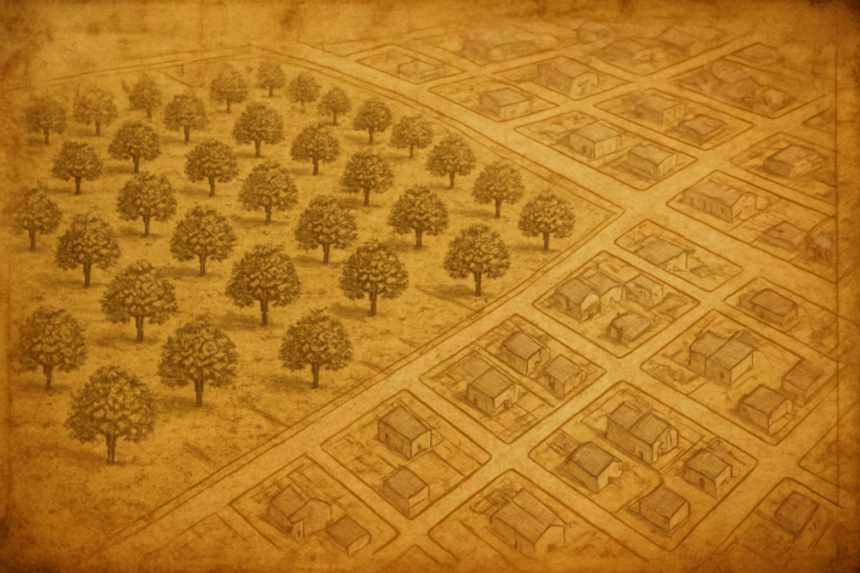
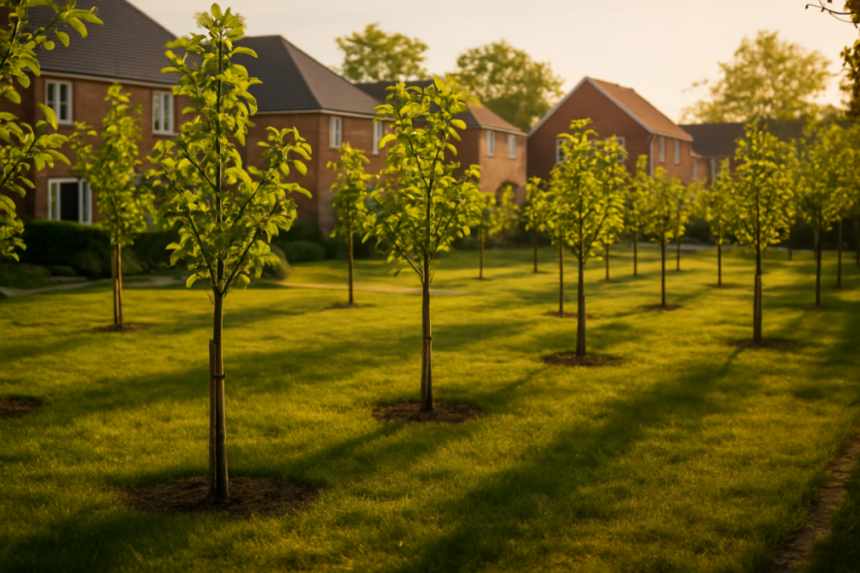
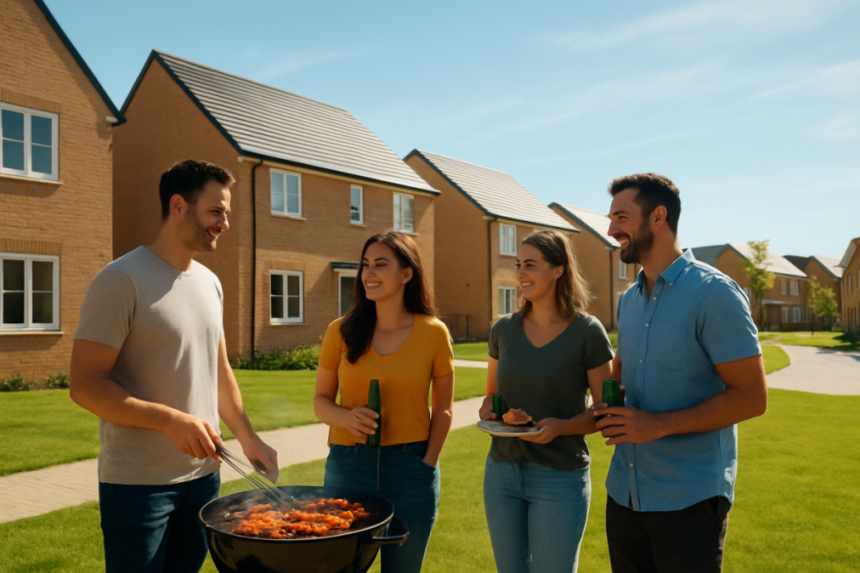
AI illustrations. Please judge the story itself. About AI images.
Filed by AI — launch archive.
Before you peek: what share of readers believes this story?
50%
No votes yet
Total verdict votes: 0
Guess first! What other readers decided is hidden until you cast your own verdict above — vote True, Fake or Not sure to reveal the community score.
Changed your mind? Read the strongest arguments of the other camp below. If they convinced you — change your verdict (once).
Your new verdict:
Why did you vote that way? Pick up to two:
Noted — thank you, detective.
My case notes (private — stored only in this browser)
Saved in this browser.
True or Fake? — play the detective
How it works: cast your True/Fake verdict above and see whether you matched the reader majority. Then hit "Next case" for a random story and keep your streak going. Solve cases to climb the detective ranks — score and rank are kept on this device only.
Tip: highlight any sentence of the story with your mouse or finger — a small share popup will appear to post that exact quote (with a link back to the story) to X, Facebook, Threads or Reddit.
Something similar happened to you? Tell your version — the jury is waiting. Tell your story
Keep investigating
- More Unexplained Events cases
- More Old Houses cases
- More Poltergeist Activity cases
- A case the jury believes: The Shadow People Wait Until I'm Not Looking
- A case the jury believes: The Poltergeist Only Targets My Brother's Chair
- A case the jury believes: The Footsteps Stop at the Nursery
- The full Haunted Homes Stories archive
- Cases the jury cannot settle
Comments (0)
Comments here are case materials: pick a role — ask the author a question, or file your evidence FOR or AGAINST the story — and it lands in the right column. Upvote the sharpest comments: the best one is pinned on top as the Top Detective Comment. Questions get answered by the story's author in person — look for the AUTHOR badge.
No comments yet. Be the first!