
We Logged Them as Weather, and I Typed the Entry Myself
In one sentence: A Navy radar operator shares a rare, unexplained series of eerie air contacts that challenged everything he thought he knew about his equipment and the skies.
Twenty-one years Navy, radar. One midwatch our scopes tracked returns dropping forty thousand feet in a sweep, three consoles agreeing with each other and with nothing else on earth. The order came down to reclassify them as weather, and I was the one who typed it.
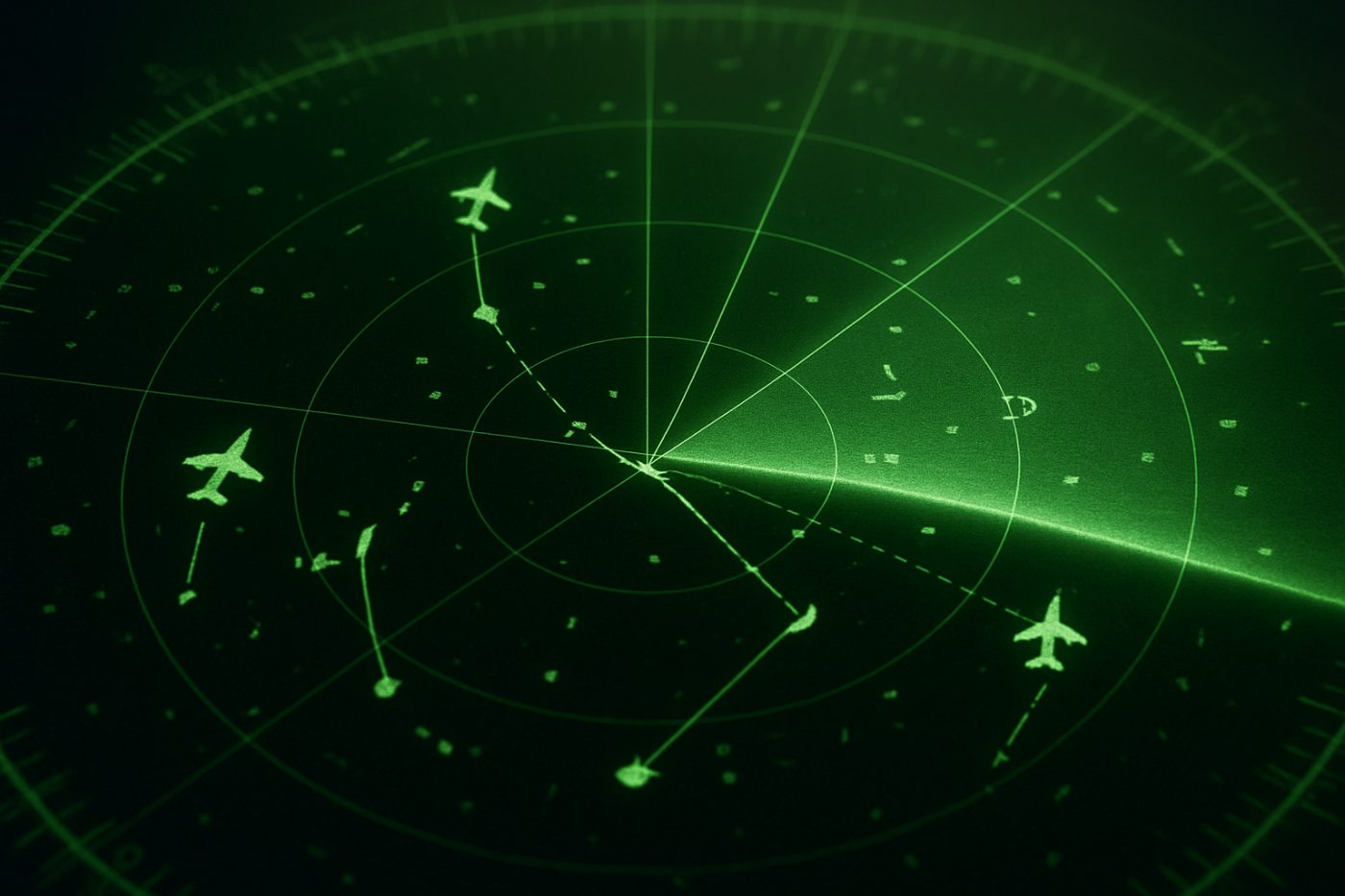
* AI Illustration
First impression: judge by the title and the picture alone — you get the real verdict after reading.
Swear It Happened — CASE FILE #556
JURY PENDING
COLD CASE — this file never got enough jurors. Your verdict counts double here (morally).
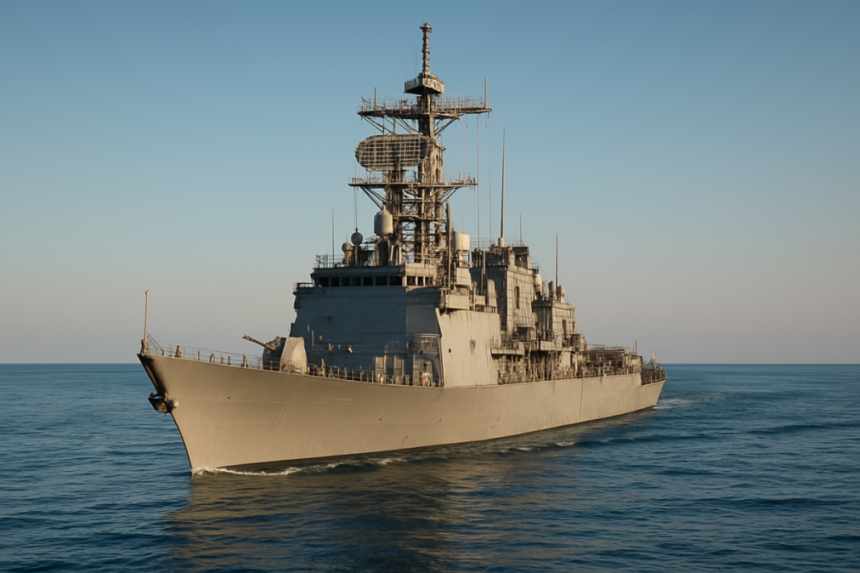
In the spring of 2003 I was an OS2, an Operations Specialist Second Class, on a destroyer out of San Diego, in the western Pacific. I'm not going to name the ship. Anybody who was aboard that deployment will know her by the end of the second paragraph anyway, and the ones who weren't don't need it. She was a Spruance-class destroyer, which means nothing to most people now because they're all gone, sunk as targets or cut up for razor blades, but in her day she was a big gray greyhound of a thing, five hundred sixty-some feet, gas turbines, and up in the superstructure a rotating air-search radar that swept the sky out past two hundred miles. That radar is the main character of this story, more than me.
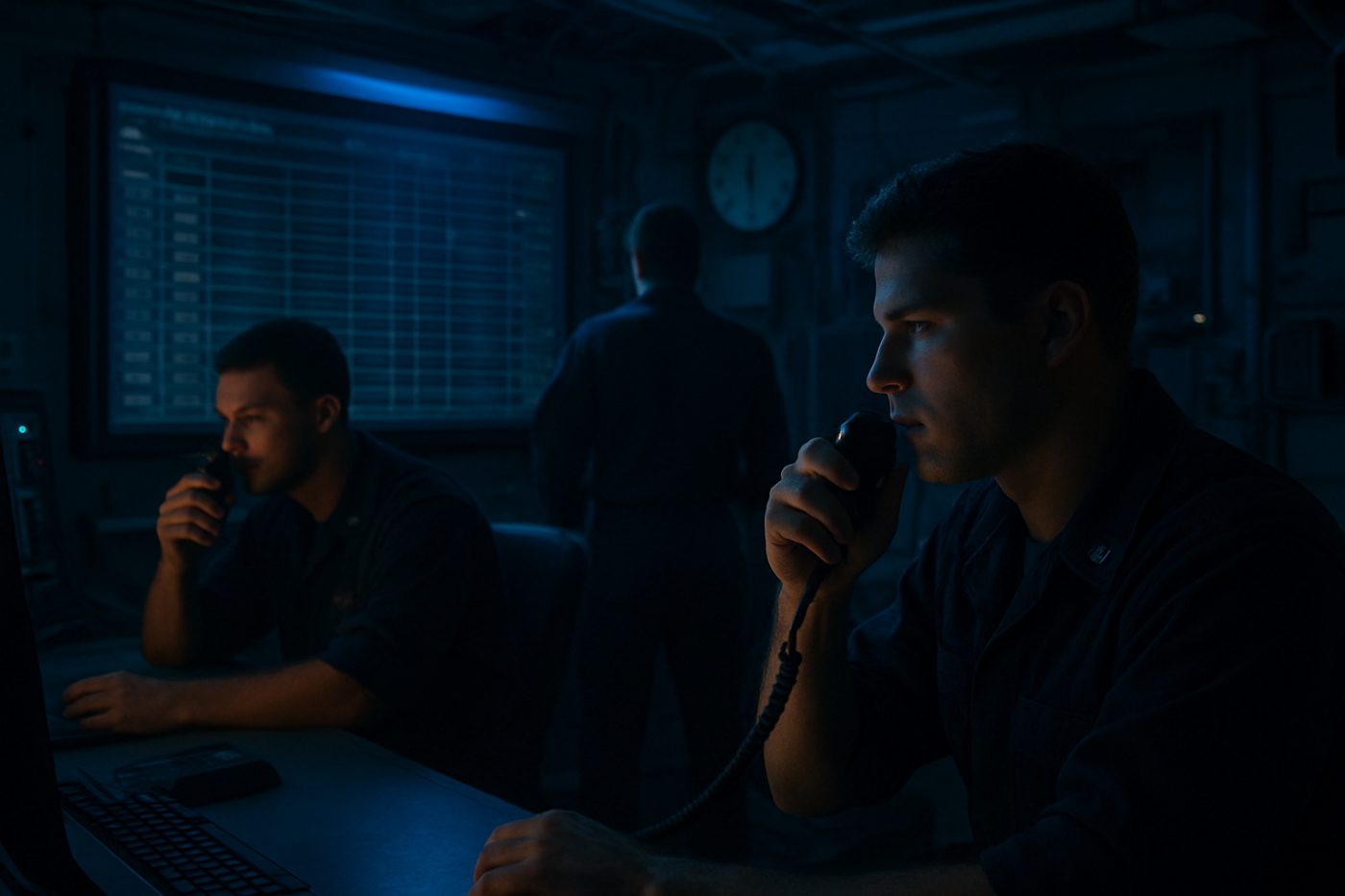
I was twenty-six that spring. I'd been in eight years, made second class on my second try, and I was what they call a track supervisor in the Combat Information Center, CIC, which everybody just calls combat. If you've never seen a CIC, picture a room the size of a doublewide with no windows, blue lights, maybe fifteen consoles with round and square screens, a big status board, the smell of old coffee and electronics and somebody's microwave popcorn from two hours ago. It is the least dramatic room you have ever been in, ninety-nine percent of the time. People do crossword puzzles between reports. That's not a scandal, that's the job; the job is boredom punctuated by radio calls, and you learn to love the boredom because the alternative is somebody shooting at you.
The reason I'm writing this now is that I told the story out loud, all the way through, exactly once, at a funeral in 2018, and the man I told it to had been there, sort of, in a way I'll get to at the end, and what he said back to me has been sitting in my chest for eight years like a swallowed stone. My wife says write it down or let it go. I can't let it go, so here we are.
Some housekeeping first, because the true-or-fake voting on this site apparently gets ugly and I'd rather you argue about the right things. I'm going to change every name, including the exercise name. I'm going to be deliberately fuzzy about dates inside a two-week window, partly because operational stuff from that era is still not mine to give away and partly because, honest to God, I don't remember which night was which anymore. I kept no diary. Personal electronic devices in CIC were prohibited, and I'll tell you later about the one time I broke that rule, which is the single dumbest thing I did in twenty-one years and which, in a beautiful twist, produced no evidence of anything. If you want to call the story fake because a man in his fifties can't line up five specific midwatches from twenty-three years ago, go ahead. The people who remember every detail perfectly are the ones I don't believe.
The deployment itself was ordinary until it wasn't. We left San Diego in January, did the usual transit, Hawaii, crossed the line for the chiefs to have their fun, pulled into a couple of ports I won't list, and by spring we were operating with a carrier battle group in a stretch of the western Pacific that I will only locate for you as deep water, far from any coast, the kind of place where the chart is just blue with tiny numbers in the thousands of fathoms. We were the air-defense picket a lot of the time, stationed out from the carrier, which meant my watch section owned the air picture. That's the phrase we use, owning the picture. Every contact that flew got a track number, a symbol, a history. The system that did this was called NTDS back then, Naval Tactical Data System, ancient even in 2003, symbology like an Atari game, but it worked, and the ships and the aircraft all shared their pictures over radio links so that in theory everybody saw the same thing. In theory. Hold onto that, because this whole story lives in the gap between ships that saw a thing and an aircraft that didn't.
The exercise was a multi-day, multi-unit thing, us and the carrier and a cruiser and a couple other smallboys plus aircraft, and the part that matters for you is that for about a week and a half we were more or less in the same patch of ocean, running the same watch rotations, with the same geometry night after night. Same stations, same radar horizon, same everybody. That's actually rare. Usually you're transiting, the picture changes daily. This was more like a laboratory, which is the only reason a pattern had a chance to show up at all, and believe me, I have thought about that. If we'd been moving, each night's weirdness would have been one sea story apiece, spread across five ships' worth of watchstanders, and nobody would ever have put it together. Instead it was the same dozen of us in the same dark room, five nights out of nine. Or eleven. I've had a guy tell me the exercise was nine days and I remember eleven, and neither of us would bet a paycheck.
I should also tell you what else was going on that week, because when people tell stories like this they clean out all the normal life, and the normal life is what I actually remember best. Our evaporator was broken. The evap is the machine that turns seawater into fresh water, and when it goes down you go on water hours, which means the showers get secured except for certain windows, and when you do shower it's a navy shower, thirty seconds of water, soap up dry, thirty seconds to rinse. By night three of water hours a destroyer full of two hundred eighty people smells exactly like you'd think, and the engineers walked around with a look that dared you to say one word to them. I remember the water hours better than I remember some of the radar stuff. That's just true, and I'm leaving it in because it's true.
Also my wife, who I'll call Renee, was mailing me cassette tapes. This was 2003, we had email on the ship, sort of, a slow trickle that came in batches, but Renee is a talker and not a writer, so she'd sit in the kitchen back in San Diego with a little tape recorder and just talk, forty-five minutes a side, about her sister and the neighbor's dog and the Padres, and mail them out, and they'd catch up to us in these lumpy padded envelopes weeks stale. I had a yellow Sony Walkman, the sports one, and I'd lie in my rack with the curtain shut and listen to my wife narrate a life I was missing. One of the tapes got eaten by the Walkman that spring, chewed the ribbon right out, and I sat on the deck of the berthing compartment winding it back in with a pencil like it was surgery. I mention the tapes now because they come back at the end of this story in a way I'm not proud of.
And there was a card game. Aft berthing ran a continuous spades game that deployment, quarter a point, which was against the rules and everybody knew about it including probably the captain, and about the time the strange stuff started, the spades game blew up into a feud because a seaman I'll call Prue accused my buddy Dagle of talking across the table, coded talk, mentioning cold drinks when he was long in clubs, that kind of thing. This became the dominant social issue on the mess decks for two weeks. Grown men not speaking. I want you to understand that on the same ship, in the same week, we had contacts on the scope doing things that I still cannot explain in 2026, and the thing the crew argued about at dinner was whether Dagle said the phrase ice cold on purpose. Ships are like that. It's the most human thing I know about the Navy and I miss it every day.
Okay. The radar. I promised I'd explain things, so let me build you the picture the way I'd build it for a new seaman, because if you don't understand how the equipment works, the story is just spooky noises, and the whole point is that it isn't.
Our air-search radar was a rotating antenna, up on the mast, sweeping in a circle. Ours went around roughly once every eight seconds. I'm rounding on purpose, and the exact rate was settable anyway, but call it eight. That number is the heartbeat of this entire story, so hold it. Every eight seconds, the beam comes back around to a given patch of sky and paints whatever is there, and the return shows up on my scope as a little slash of video, and the system, or the operator, marks it, and eight seconds later there's a new slash, and the distance between slash one and slash two tells you speed and course. That's it. That's radar. Everything else is refinement.
Two things follow from the eight seconds, and I need you to actually sit with them because internet people always skip this part. First, anything that happens in less than eight seconds is invisible to us. Not blurry. Invisible. The radar isn't a movie camera, it's a strobe light in a dark ballroom; you get one flash of where the dancer is, then darkness, then another flash. Between flashes the dancer could do anything, in principle, but real dancers, real airplanes, obey physics, so the flashes line up into smooth, boring lines, and that smooth boring line is what a track is. Second, when the flashes don't line up into a smooth line, the system and the operator both start from the assumption that the radar is lying, because usually it is. Radars lie constantly. They lie about rain, about flocks of birds, about waves, about each other's transmissions. Half my job, honestly the better half of my skill as an OS, was knowing the difference between a lie and a dancer.
One more piece and then I'll get to the first night. Our air-search set was two-dimensional. It gave range and bearing, meaning how far and which direction, but not height. This surprises people. On TV every blip comes with altitude in a neat little box. Not on our set, not in 2003. Height, for us, came from somewhere else, and in that exercise the somewhere else was the cruiser, who had a three-dimensional air-search radar and shared her picture with us over the link, the radio network that let the ships pool their tracks. So when I tell you, in a minute, that something was at sixty-plus thousand feet, understand what I'm actually claiming. I am claiming that the cruiser's height-finding radar measured that, and reported it on the link, and that my own two-dimensional set held a return on that exact bearing and range at the same time. I never measured the height myself. My gear couldn't. If you want a thread to pull, jury, there's your first one, and I handed it to you myself, because the guys on this site who pretend their gear did things it couldn't do are the reason I almost didn't write this.
The first night, and I believe it was the first night, though it might have been the second because the first one might have been the night the evap quit, I had the midwatch, which runs from about eleven at night to about three in the morning, and the air picture was almost empty. The exercise flying was done for the day. The carrier had a couple of aircraft up doing their own thing, all identified, all friendly symbology, all boring. Commercial air was a handful of tracks way up north on the great-circle routes, airliners crawling along at four-eighty knots at thirty-five thousand feet where they belonged.
At some point in the middle of the watch, my raw scope showed a paint at a range I remember as being about forty miles from us, roughly southwest, where nothing was scheduled and nothing had been. One slash of video. No big deal, at all. Single paints happen every sweep, somewhere. Sea return, a bird with a wet wingspan, a lie. You wait eight seconds. It painted again, same spot, maybe a hair different. Waited again. Third paint. Now that's a contact, so I hooked it and started a track, which took all of five seconds of muscle memory, and I remember being mildly pleased to have something to do.
The system tried to compute a course and speed and gave me garbage. Speed that jumped between basically stationary and several hundred knots, course spinning like a bad compass. That, also, is normal for a new track with junk video. What was not normal was the link. A few sweeps in, the cruiser's picture reached out and correlated with my track, meaning her radar held something at the same spot, and her track came across with height data attached. The readout said, and I am giving you the number I remember and have repeated to myself for twenty-three years, sixty-two thousand feet.
I looked at that the way you'd look at a gas pump that said your tank took ninety gallons. Sixty-two thousand feet is not a place airplanes hang out. Airliners live in the thirties. Fighters can zoom up through the fifties and low sixties for a minute if they're showing off, burning gas like a bonfire, but they don't loiter there. A U-2 lives up there, and we had no reason on earth to think anybody's U-2 was over that patch of empty ocean, and a U-2 does about four hundred knots, nice and smooth. This thing's speed solution was garbage precisely because it wasn't moving smooth. It sat, more or less, wobbling around a point, at sixty-two thousand feet, for I want to say four or five minutes. I called it out to the watch officer, the TAO, tactical action officer, who came over and looked, and said something like, is that real, and I said the forty's painting it and the cruiser's holding it with height, and he said huh, and that huh is the most honest thing anyone said all week.
Then it did the thing. And I want to walk through the thing slowly, because this is the part where I do the math for you, and the math is the whole story.
Sweep N, the paint is there, forty-ish miles out, cruiser height readout sixty-two thousand. Sweep N plus one, eight seconds later, the paint on my scope has stepped inward, toward us, by a little over a mile, and the cruiser's height on the link reads sea level. Zero. Not a lost track, not a dropped return. A return, at the surface, on the same bearing.
Now. On my two-dimensional scope alone, that inward step is odd but not crazy, and I need to be honest about that. My set measures slant range, the straight-line distance from my antenna to the target, like a string stretched through the air. A target forty miles away horizontally and twelve miles straight up is at a slant range of about forty-one and change. If it falls straight down to the water and the horizontal distance doesn't move, the string shortens to forty even. So a vertical drop shows up on my scope as the paint stepping about a mile closer in one sweep, which pencils out to something like five hundred knots inbound if you insist on reading it as horizontal motion, and five hundred knots inbound is fast but it's a Tuesday. If it had only been my scope, I'd have logged a jittery contact and gone back to my crossword, and I want that on the record.
But the height. Sixty-two thousand feet is a little under twelve miles. Twelve miles of vertical in one sweep interval, eight seconds, is a shade over five thousand miles an hour, straight down. That's around Mach 7, plus or minus, depending how you count, pointed at the ocean. And here's the part that I have never once heard a debunker engage with, in twenty-three years of occasionally, cautiously, floating this story around people who work with radar. It's not the speed. Things can go Mach 7; a reentering warhead does. It's the stop. The next sweep after that, and the one after, the return was still there, at the surface, at essentially the same spot. Whatever came down did not hit the water at five thousand miles an hour, because when things hit the water at five thousand miles an hour there is an event. A splash like a building. A datum, wreckage, disturbed sea that the surface-search radar chews on for minutes. The surface set held a small, calm return, like a fishing boat, for about a minute. Then nothing. Sea return. Empty ocean.
Eight seconds. I've done this math on napkins, on the back of a gas receipt in a parking lot in 2018, on my phone calculator at red lights. It doesn't improve. Either the cruiser's height finder told a spectacular lie at the exact moment my independent radar showed a range step consistent with the same geometry, or something went from the stratosphere to the surface of the Pacific in less time than it takes to read this sentence out loud, and arrived gently.
I logged it. I wrote, and I remember the wording because I got asked about the wording later, air contact faded, correlating surface contact faded, at time whatever. Faded. That beautiful Navy word. The TAO stared at the scope for a while and told me to note it in the pass-down, and the watch turned over, and I went down to the mess decks and ate a slider and listened to two guys argue about whether Dagle had said ice cold on purpose, and then I lay in my rack and did not sleep, and that was night one.
The next day I did what you do, which is mention it at chow like it was funny. Hey, anybody else's gear drunk last night? And the day-watch guys had the normal stories, the forty being the forty, and I let it drop. I want to be fair to myself about why I let it drop. Nobody hushed me, and I wasn't scared. Single-night weirdness is just genuinely, boringly common. If you stood a thousand midwatches, and I stood a lot more than that, you have seen the gear do things that would make a civilian call the newspapers, and there's almost always a reason, and the reason is almost always dumb. A tech with a screwdriver halfway through an alignment. Two ships' radars beating against each other. The atmosphere doing atmosphere things, which we're getting to. One night is nothing. I'd have forgotten night one by Guam.
Night two, or the night I'm calling night two, I wasn't even on watch when it started. I had the evening watch and got relieved before midnight, and I was in the berthing passageway in my towel waiting on the water hours window, and Dagle, who had relieved me, sent a seaman down to get me. The seaman, it was Prue actually, of the spades feud, said Dagle says come up, your friend is back. I remember being annoyed, because the shower window was only an hour, and I remember going up anyway in my flip-flops with my towel over my shoulder, and I stood in the blue light of combat in shower shoes like an idiot, which was not the dumbest I looked all deployment but was in the running, and there it was.
Same general area, southwest, different range, closer to fifty miles this time. Same behavior in a general sense. Paint, loiter, height from the cruiser in the high fifties this time, then a drop, though this drop I did not see with my own eyes on the sweep it happened; I got there a couple minutes after, and what I saw was the aftermath, the surface-track phase, the little calm fishing-boat return sitting where nothing should be, and Dagle talking on the coordination net with the cruiser confirming they'd held the same thing. So for night two, the actual drop, I'm telling you what Dagle told me across three feet of air thirty seconds after it happened, with his finger still on the scope. Believe him or don't. He's dead now, which is part of why I'm writing this, and I'd trade a lot to have him here to type his half.
Here's what made night two the night it stopped being funny. The E-2 was up. The E-2 Hawkeye is the Navy's flying radar, the prop plane with the big dish on its back that lives on the carrier, and its whole reason to exist is that a radar at twenty-five thousand feet sees over the curve of the earth in a way surface ships never can. The E-2's picture is supposed to be the best picture. When the E-2 and a ship disagree about a low contact far away, you believe the E-2, every time, because we're peeking over a curve and they're looking down from a balcony. Everyone in the business has this drilled into them from A school forward.
The E-2 held nothing. Not during the loiter at altitude, not during the surface phase. Their controller came up on the net, and I heard this part live, and said in that flat aviator voice, negative contact that posit, and then a beat and then, confirm your track, like maybe we'd fat-fingered the symbology. And the cruiser confirmed and we confirmed, two ships, two independent radars, and the balcony held empty air.
People who know radar are already leaning forward, because that's backwards twice. It's backwards for the surface phase, because a small surface target fifty miles from me is at or past my radar horizon, down behind the curve, exactly the thing I should struggle with and the E-2 should own. And it's backwards worse for the altitude phase, because a target at sixty thousand feet is above everybody's horizon for two hundred miles. There is no geometry, none, in which two ships hold a legitimate high-altitude target and an airborne early warning aircraft on station cannot. When the smart petty officers on my ship, and I flattered myself I was one, tried to build the story where our gear was right and the E-2's was right at the same time, the only way to do it was if the thing on the scope was not where the scopes said it was. Which is a real category. It has a name. And this is where I have to be honest in a way that the true-believers in the comments are going to hate, because the name is anomalous propagation, and it was absolutely, genuinely, no-kidding present that week.
Let me explain ducting like I'd explain it to my grandson, because it deserves a fair hearing. Radar energy travels in more or less straight lines through air that's all the same. But when the atmosphere gets layered, warm dry air sitting on cool moist air, which happens over oceans all the time, especially in the kind of high-pressure weather we were sitting in, the layers can act like a pipe. A duct. Radar energy that should have flown off into space instead gets bent down, trapped, and carried along the surface for absurd distances, and then it hits something real, a ship, an island, a rain squall, two hundred or four hundred miles away, and comes back down the pipe to your antenna. Your radar, honest machine that it is, reports a target at the bearing it heard the echo from, at a range based on the time delay, and it draws you a nice believable blip that corresponds to nothing at that location. Ghosts. Every OS has seen them. In heavy ducting the scope can look like a false armada. The meteorology guys measure the layers with a weather balloon and put out a report, and I pulled the reports that week, and yes, we had ducting conditions on and off the whole time. There it is. That's the jury's Exhibit A against me and I'm the one entering it into evidence, because if I hide it and you find out later, you'll throw out the parts of my story that deserve better.
And I'll go further, because fair is fair. Two of the five nights, I think ducting explains cleanly. Nights, I'll call them three and five, though I told you already I'm shaky on the order, we had surface-ish contacts at strange ranges that faded, no height data, no drops, nothing that a textbook duct doesn't cover, and if those had been the only nights, this story would not exist. I've been the chief myself since then, standing behind some excited kid pointing at a ghost, and I've said the words myself, that's ducting, log it and drink your coffee, and I was right every time I said it. Every time I said it, it was ducting.
But ducting is a surface phenomenon. The pipe hugs the sea. It makes false surface targets and false low-altitude targets. It does not put a steady return at sixty-two thousand feet on a height-finding radar, because the duct isn't up there; the whole mechanism lives in the bottom few hundred feet of air. And it especially does not make a high return become a surface return in one sweep in a way that two radars of two different types on two different ships agree about while a third, better-placed radar sees nothing and then, this is the part, also makes the E-2 wrong in the opposite direction. Ducting explains ships seeing too much. It has no mechanism for the E-2 seeing too little at altitude. I've drawn this on napkins for people. The napkin always ends up with two arrows pointing opposite ways and me saying pick one, you can't have both, and the honest ones go quiet and the other kind change the subject to swamp gas.
Our chief in 2003, I'll call him Chief Manzano, was one of the honest ones, which is why what he did next sat wrong with me for years before I understood it. Morning after night two, he read the logs, took me and Dagle to the little space behind combat where the coffee mess was, and said, in words I'll reconstruct as fairly as I can, we log what explains itself. That's not what he literally said. What he literally said was something like, the met report says ducting, so it's ducting, and when either of you writes anything down it says anomalous propagation, and if it does something ducting doesn't do, you call me, you don't editorialize in a legal log. And Dagle, who had watched the drop live, said Chief, and got one syllable out, and Manzano said, I know what you saw. Log it as AP.
I know what you saw. Not, you didn't see that. Not, knock it off. I know what you saw, log it as AP. I've chewed on that sentence for two decades. At the time it felt like a lie being ordered, and I was twenty-six and righteous about it in the privacy of my skull. Now, having been a chief, having written logs that got subpoenaed in a collision investigation, God forbid you ever live that, I hear it differently. A ship's log is not a diary. It's a legal document with no room for wonder in it. AP was the truthful available category, the way accident is a truthful available category on a death certificate. He wasn't telling us what was out there. He was telling us what the paperwork could carry. I resented him for years and I was wrong to, mostly. Mostly.
Somewhere in the middle of all this, and I genuinely cannot pin the night, the EW module got involved. EW is electronic warfare, and on our ship it was two guys in the corner of combat with a piece of gear everybody called the Slick, which listens. It doesn't transmit, on most days; it sits there with its ears open, and when any radar anywhere paints our ship, the Slick hears the pulse, measures it, and compares it against a library of every emitter the intelligence world has ever cataloged. Every radar has a fingerprint, and one of the main whorls in the fingerprint is something called PRF, pulse repetition frequency, which is how many pulses per second the radar sends. I am now at the edge of my actual knowledge and I want to flag that clearly. I was a scope man, not an EW man. What I know about PRF is what a first class I'll call Kohlmeyer told me across a coffee pot, and I'm passing you secondhand goods, marked as such.
What Kohlmeyer told me, the morning after one of the drop nights, leaning against the bulkhead with his coffee in one of those brown wardroom-reject mugs, was approximately this. During the window when we held the contact, the Slick took hits from an emitter on that bearing. Not continuous, a few intercepts, seconds each. The system went to the library and came back with nothing. No match. And a no-match is interesting but not alarming by itself; new emitters happen, libraries lag. What made Kohlmeyer stand there and drink coffee at me was the closest-match candidate the system offered, which was, and he laughed when he said it, a weather radar. Some commercial precipitation radar, the kind of thing that lives on top of an airport. Right family of frequency, he said, right general everything, except the PRF was wrong, and wrong in a direction he then explained to me twice and I did not fully get either time and I'm not going to fake it for you now. The gist as I retained it was, the pulse rate was way outside what that kind of set uses, so far outside that it changes what the radar could be for. He said something like, it's like hearing a heartbeat that matches a hummingbird, in a chest the size of a cow's. Then he said, or possibly I've added this over the years, whoever built that, I want their catalog. Kohlmeyer if you're reading this and I've mangled your physics, write your own account, I'll vouch for you.
Now, explanations, because this is the point in the story where every squared-away reader has three, and I promise you the ship had them too, and we worked them the way you work a casualty, methodically, because that's what the room is for. I'll take them in the order we took them.
First and best, exercise injects. This is the one that ALMOST works, and for about two days it's what I told myself, and I want to walk you through both halves, the almost and the kill, because this is the part of the story I'd want to hear if I were you. Big exercises use simulation. There are systems aboard whose entire purpose is to inject synthetic tracks into the combat system so the crew can fight pretend raids without any actual aircraft burning actual gas. A synthetic track looks real on the consoles; that's the whole idea. Speeds, altitudes, whatever the scenario writers dream up, and scenario writers get cute, they will absolutely fly something weird at you to see if you're awake. During that exact exercise we had scheduled inject periods. That's the almost. A cute scenario writer with a taste for theater could paint you a Mach 7 elevator and giggle from the carrier while your chief chews his mustache.
Here's what kills it, in three separate ways, any one of which would do the job alone. First, injects are tagged. The system knows a simulated track is simulated; it wears a flag in its data, the consoles can display it, and the after-action reports reconcile every synthetic track against the scenario script. Ours reconciled. I know because I asked, months later, a warrant officer whose job was exactly that, and he looked at me a little too long before saying everything scripted was accounted for. Second, and this is the one I'd stake my rate on, injects live in the computer. They exist as symbols and data. They do not exist as radio-frequency energy in the sky, which means they do not appear in raw video. Raw video is the actual analog return, the fuzzy slash of real echo, and I was watching this thing in raw video, paint after paint after paint. A simulation cannot put a slash of video on my scope any more than a video game can put a car in your driveway. And third, no inject explains the Slick, which listens to real pulses arriving through real air at a real antenna, and no inject explains what happened later with the fire-control radar, which I haven't told you yet. So, injects. Almost, and then no, three times over.
Second, balloons. I have no contempt for this one either; there is more junk floating in the stratosphere than anybody admits, weather balloons, science payloads, downright mystery trash, and a balloon at sixty thousand feet is a completely reasonable radar contact, and a balloon that bursts even gives you a version of a drop, the payload falls. But a burst balloon's payload falls at terminal velocity, call it a hundred-something miles an hour on a parachute, or a few hundred in a streamer, and it takes many minutes to come down twelve miles, which at eight seconds a sweep is dozens of sweeps of nice traceable descent. Not one. And payloads that hit the water don't then sit there returning radar like a calm little boat for a minute; they're a wet garbage bag in five-foot seas. And balloons drift with the wind, and the winds aloft that week were westerly, and the contacts kept showing up in the same general sector southwest of us night after night, which means our balloon fleet would have to be launched fresh nightly from somewhere upwind, in deep empty ocean, by someone with a boat we never detected and a reason I can't invent. Each night was hundreds of miles of drift apart in balloon terms. It doesn't pencil. I wanted it to. A balloon would have let me sleep.
Third, software ghosts, mutual interference, the forty being the forty. Two ships' radars on similar frequencies can interfere and make phantom returns, and old sets like ours had known ghost modes, second-time-around echoes where a pulse from two sweeps ago comes home late and draws a target at a false range. I've seen running rabbits, which is what we call the spiral pattern interference draws, a thousand times. This explains single-ship weirdness beautifully. It dies on correlation. The cruiser and us held the same contact at the same geographic position from two different angles. Interference ghosts are artifacts of each radar's own geometry; my ghost appears along my bearing lines, hers along hers, and they don't agree on a spot in the ocean unless the spot is real, the same way two people's floaters in their eyes don't land on the same word of a newspaper. When two radars cross bearings on a point, the point has something at it. That's not mysticism, that's surveying.
So that's ducting, injects, balloons, ghosts, each one tried honestly, each one buying some of the nights or some of the evidence and leaving a remainder. It's the remainder that ruins you. I could hand you any single night of the five and you could file it. It's the set that doesn't file.
Now the confession, since I promised. By the fourth or fifth night I had become, quietly, a little obsessed, the way you can only get obsessed on a ship, where there's no bar and no internet worth the name and the same eleven thoughts circle like gulls. And I decided, God help me, that I was going to get evidence. My plan, and I use the word loosely, was Renee's tape recorder, or rather its twin, a little handheld cassette job I'd bought in Hawaii to record replies to her. Personal recording devices in CIC were prohibited, flatly, for extremely good reasons that have nothing to do with any of this, and I knew that, and I brought it up anyway, in my coveralls pocket, on the midwatch, meaning to catch the net chatter if the thing came back, because I had this idea that if I had audio of the cruiser and us and the E-2 all disagreeing in real time, then whatever happened later, nobody could tell me it hadn't happened. Nobody meaning, if I'm honest, me. I was collecting evidence against my own future self, who I correctly suspected would try to sand this smooth.
I got maybe forty minutes of tape rolling in my pocket over two watches. And the contact did come back during one of them, and voices did say remarkable flat professional things into that little condenser mic, and then I took the tape back to my rack and lay there with it in my hand and thought about what it was. An illegal recording, made in the combat information center of a United States warship during an exercise, by a second class petty officer with fourteen months to his next advancement board. I thought about Manzano's face. I thought about the word court-martial, not even as a real risk at my level, probably, but as a shape in the dark. And over the next two days I did the cowardly thing in the most cowardly possible way, which is that I didn't even smash the tape or deep-six it over the fantail like a man in a movie. I recorded over it. I sat in my rack with the curtain shut and read a letter to Renee out loud over the whole thing, both sides, some dull newsy letter about port calls and the spades feud, and I mailed it to her, and it went into the shoebox in San Diego with all the others, and that is where the only physical evidence I ever held went, under my own voice describing water hours. If you want to know the exact weight of institutional loyalty, it's about an ounce and a half of magnetic tape.
The fire-control night. This is the one that cost the government money, which in my experience is the only kind of event the government reliably remembers, so somewhere in a records repository there is a maintenance action form that intersects this story at exactly one point, like a nail through a photograph.
Our ship had, among other systems, a gun fire-control radar, a dish that doesn't sweep the whole sky but instead stares, hard, at one thing, and measures it with a precision the search radars can't touch. Search radar finds; fire control tracks. Getting a lock means that dish has grabbed something physical enough to hold onto, pulse after pulse, hundreds of times a second. It is a fundamentally different kind of measurement than a slash of video every eight seconds, and this matters, so file it.
The FC on watch that night, fire controlman, I'll call him Barrera, was a serious, quiet kid from El Paso who kept a photo of a brown Labrador taped inside his console door, and I want it noted that of everyone in this story, Barrera is the one who behaved the most correctly throughout. When the contact showed up that night, closer than previous nights, inside thirty miles I believe, the TAO, different TAO this night, a lieutenant with more curiosity than the first one, told Barrera to slew his director onto the bearing and see if he could grab it. This was, I'd argue, a completely legitimate use of the gear, and also I have wondered since whether it was a mistake, not tactically. Just, whether some things are better left un-grabbed.
Barrera got a lock. Six seconds. I know it was six because he said so on the net in the moment, in the past tense, held lock six seconds, in that voice FCs use, and because he said it again afterward, several times, to several people, always six, and a man who watched it happen on his own gear gets to fix that number, so six is the number and I'll die with it.
What he described, and what I partially saw from across the room because heads turned, was this. Lock-on, solid, range and bearing and a rate, meaning the thing had a physical position and it was moving, slowly at that instant. Then the return did something Barrera called strobing. The video on his console went from a clean tracking gate to the whole screen pulsing, bright dim bright dim, several times a second, like the target had turned into a lighthouse aimed down his throat, and the received-signal-strength indication, and this is the detail Kohlmeyer got animated about later, pegged. Full scale. Now, radar returns get stronger as things get closer, by a law that even I can do, and nothing was closing fast enough to do that; the range readout barely moved during the six seconds. The energy coming back just rose, like something out there had noticed the interrogation and turned up its own porch light in reply. That's me editorializing. Strike it. The signal got very strong very fast without a range change to justify it. That's the version I can defend.
At six seconds the console let go of the lock on its own, and one of the cards in the signal-processing cabinet let go of being a functional card at the same moment. There was a smell, that hot phenolic electronics smell everybody knows, and a fan alarm, and Barrera did the correct things in the correct order and safed his gear, calm as church. The card was fried. Genuinely cooked, discoloration you could see, and the replacement, I know because I heard the chiefs grousing and later saw the supply paperwork lying on the log desk, priced out at a little north of forty thousand dollars, which in 2003 was a chief's annual take-home, roughly, and believe me that comparison got made out loud.
The casualty report and the maintenance write-up attributed the failure to a power transient. And here's where I'm going to do the thing I keep doing, and defend the paperwork, because a power transient is not a lie. Ships have filthy power, generators sharing load, big motors kicking on, and cards fry from transients all the time, and there was no category in the maintenance system for received emission exceeded design tolerance during lock on unidentified contact, and there never will be, and if I'd been the chief signing it I'd have signed power transient too, with a clear conscience, at the top of the form. It's the bottom of the form I think about, the remarks block, which is free text, where you can write anything, and where somebody, and I never found out who, wrote nothing at all. A forty-thousand-dollar card and the remarks block is empty. I've filled out a lot of those forms. Empty remarks on a big-ticket casualty isn't laziness. Laziness writes something sloppy. Empty is a choice.
It was either that same night or the next one that I saw the light, and I want to handle this with tongs, because this is the only part of my story that happens outside a display, in the actual air, with my actual eyes, and eyes are worse instruments than radar, and mine were tired.
I'd been relieved, and instead of going down to my rack I went up to the bridge wing, which enlisted guys from combat don't do much, but I knew the boatswain's mate of the watch and I wanted wind on my face, because combat air is refrigerated and dead and I'd been marinating in dread for a week. Water hours had just ended, incidentally; the evap was fixed by then, I think, because I remember I'd had a real shower, so this was late in the run of nights. The bridge wing at night in deep ocean is the darkest place most people will ever stand, no shore glow for five hundred miles, stars all the way down to the horizon like the sky doesn't know where to stop.
Low over the water, southwest, there was a light. Steady, not blinking. Aircraft carry blinking anti-collision lights; this didn't blink. Ships carry steady lights, and the honest first read of a steady white-ish light on the horizon is a ship, except that the exercise geometry meant I knew where every ship was, that was literally my job all night, and there was no surface track southwest inside forty miles, and a light on the visible horizon from a bridge wing is inside maybe ten or twelve. Color, since people always ask. Not white exactly. I've said off-white for twenty years and I'll stay with it. Warmer than a masthead light. I'm not going to say it was any color a light can't be, because it wasn't; it was within the family of lights, just not a match to the catalog my eyes carried, and yes, I hear the echo of Kohlmeyer's library with no match and the closest candidate wrong, and no, I'm not going to lean on that echo, it's cute and cuteness is the enemy of testimony.
I watched it, I'd guess ninety seconds. It did nothing. It sat. The boatswain's mate saw it too, said probably a fishing boat, and fishing boats do end up where they shouldn't, their radar returns are lousy in any seaway, and that is a fully adequate explanation and I want it to be true. Then I looked down to rub my eyes, one second, two, and looked back and there was no light. Gone isn't even the right word. There was just the horizon, doing what horizons do. A fishing boat's light can be occulted by a swell, and I stood there another ten minutes waiting for the swell to hand it back, and the horizon kept it. That's everything. A light that was there and then wasn't, seen by a tired man and a bored man, and I will not embellish it, and I have noticed over the years that this, the least of my evidence, is the part listeners like most, because it happened to a human being instead of an antenna. People trust eyes over instruments. In my professional opinion that's exactly backwards, and my professional opinion is the only thing of value I brought home from twenty-one years, so there it is.
The jury should also note a problem with my own account here, because I'd rather flag it than have you find it. I told you I knew there was no surface track southwest because the picture was my job all night. But I'd been relieved. The picture was current in my head as of maybe forty minutes prior, and forty minutes is enough for a low, slow contact to appear at the edge of a lousy radar horizon. When I tell this story out loud, I always say I knew the sector was empty, and every time I say it, a small honest voice says knew is strong, and I say it anyway. That's how testimony rots, one confident verb at a time. Consider it flagged.
The last night is the one I've been circling this whole time, the way you walk past a dog you're not sure about. The intercept. I'm going to tell it almost entirely in terms of furniture and silences, and you're going to be frustrated with me, and I'm going to let you be frustrated, because the alternative is me inventing things to fill a gap that the United States Navy deliberately left empty, and I promised you at the top which side of that line I live on.
The setup was simple. The contact appeared early that night, before midnight for once, during a window when the carrier had fighters airborne with gas to spare. Two of them, a section, somewhere overhead the force. And whoever was running air defense that night, the cruiser had the job, decided, reasonably, career-defensibly, that five nights of anomalous propagation was enough, and that the cheapest sensor left untried was a pair of human eyeballs at altitude backed by a couple million dollars of fighter radar. An intercept vector went out. I heard it go out. I was on the net. Committing actual armed aircraft against your own ghost story does something to a room, I'll tell you. The crossword puzzles went away.
You have to understand what fighter pilots sound like on the radio, because the entire content of what happened next is a change in sound. They sound bored. It's cultivated, it's practically a uniform item, this laconic drawl like the whole business of hurling themselves around the sky is beneath comment. Checking in, taking vectors, calling contact, all of it in the same voice you'd use to order coffee. The section took the vector southwest sounding exactly like that. Bored, crisp, couple of readbacks, standard as a Tuesday.
The contact did its step-down while they were inbound. I watched it on my scope, the little slant-range hiccup I'd learned to hate, and the cruiser called the drop on the net, altitude readout collapsing to the deck between updates, same obscenity as every other night, and the controller passed the fighters an amended vector, look low, and one of the pilots acknowledged, still bored.
And then the channel changed. I have tried for twenty-three years to describe this to people who weren't on it, and the best I've done is this. You know how a conversation sounds through a wall when the people are chatting, and how it sounds through the same wall the moment they start saying things they mean? You can't hear words either way. The wall doesn't get thicker. But something in the rhythm tightens, and your whole body knows. The transmissions got short. The drawl went away, and the readbacks came fast and clipped, and there was one exchange, and I will give it to you as accurately as human memory allows with the caveat that Dagle and I compared notes within the hour and disagreed already on the exact words. One of them said something like, confirm you're showing it there, because I'm not, and the controller confirmed, and there was a pause that I'd call four or five seconds, which on a working control net during an active intercept is a geological age, and then the same voice, and this is the part Dagle and I agreed on to the syllable, said, disregard. I have it. And nothing in his voice was bored anymore, and nobody said anything on that channel for what felt like a very long time but was probably forty seconds, and my scope showed the fighters make a turn. I want to be careful here. A hard turn, at their speed, at that range, paints as a couple of displaced slashes; I can't give you bank angle, I can't give you what they saw, I can give you two friendly tracks that changed heading abruptly, together, away, and a merged plot with nothing where the something had been, and then the contact was gone off my scope, and the cruiser's, and everywhere, and it did not come back. Not that night. Not ever, as far as I know.
The fighters checked in with the tanker afterward and their voices were back in uniform, bored again, and if you'd tuned in right then you'd have heard nothing in the world but a routine recovery. The net closed down the event with the phrasing everybody had agreed to days before without agreeing to anything, contact faded, resume stations. Faded. I logged it. AP. Per standing instructions. My handwriting, I noticed when I signed the log at watch relief, had gotten very small that week, and I don't know what that means but I remember noticing it.
The debrief happened the next afternoon. A helicopter came over from the carrier, which happens all the time, parts and passengers and mail, except this one brought three people I didn't know, two in flight suits and one in khakis, a commander, no name tape I could see, though khakis don't always have them and I refuse to make that sinister on its own. They set up in the wardroom, which is officer country, and by ones and twos, over about three hours, certain people got sent for. The TAOs from the relevant nights. Kohlmeyer. Barrera, who was in there a long time, poor kid. And, late in the afternoon, me.
Here is the entire classified-feeling scene, and I'm going to describe it exactly as flat as it deserves. The wardroom on a Spruance is a beige room with a long table and chairs upholstered in a blue vinyl that sticks to your forearms. They'd pulled one chair out and turned it to face three others, and someone had made coffee, and there were those white wardroom cups with the blue band, and I remember there were exactly two cups on the table in front of three men, and the commander wasn't drinking, just turning his cup a quarter turn at a time on the tablecloth, like a man checking a valve. There was a yellow legal pad in front of the near flight-suit guy, and it was face down. It stayed face down the whole time I was in the room. Twenty-three years on, that face-down legal pad remains the most classified thing I have ever seen.
They were polite. Nobody threatened anybody; whoever's expecting the scene with the sunglasses, I'm sorry, it's not coming. They asked me to walk through my logs, which were on the table, my actual log pages, and I did, and they asked exactly the kind of questions a maintenance officer would ask, was the set peaked, when was the last alignment, how much operator-initiated tracking versus automatic, did I personally adjust video gain, sensible dull questions with sensible dull answers. The commander asked one question the whole time. He asked whether, in my judgment as the track supervisor, the returns I held were consistent with anomalous propagation. And I looked at him, and I was twenty-six and I wanted to make chief someday, and I said, some nights, sir. And he nodded, once, like I'd confirmed a measurement, not like I'd said something interesting, and looked back down at his cup.
What they did not ask. They did not ask what I thought it was. In three hours of interviews, per every single one of us comparing notes on the mess decks after, not one man was asked what he thought it was. You have sat in meetings; you know how impossible it is for a roomful of humans to not ask the interesting question. That absence had weight and shape. It was the negative space of a question so present in the room that avoiding it took visible effort, like everyone stepping around a hole in the deck without looking down at it. And they did not ask a single question about the fighters. Not one. Two aviators flew over from the carrier to sit in our wardroom all afternoon asking about our gear, and the aircraft, the actual intercept, the disregard I have it, might as well never have happened. The hole in the deck, again. You map these people's interests by where they carefully don't walk.
And the last thing, which I heard secondhand from a mess crank and can't verify at all, so weight it accordingly. When they left, the commander supposedly thanked the captain at the quarterdeck and said something like, good logs. Good logs. If that's true, and I choose to believe it because it's too dull to invent, it's the only official verdict ever rendered on that week, and I think about the ruling. Not accurate logs. Good ones.
The exercise ended. The battle group scattered to its next business, the geometry broke up, and the contact never returned that I know of, though I stood another decade of watches with one eye on the southwest of wherever I happened to be, a private compass error I never told anyone about. We pulled into port eventually, and in a bar I could still walk to blindfolded, over cheap beer, Dagle started telling the story to some guys off another ship, and I watched it die in the air. He got two nights in and one of them said, brother, the forty on those old cans is a ouija board, everybody knows that, and everybody laughed, including, after a second, Dagle, because what else do you do, and I sat there and said absolutely nothing in his defense, holding my beer, nodding along at the ouija board line like it settled anything, and that was the second most cowardly thing I did that year, after the tape. The spades feud, in case you were invested, resolved itself the way ship feuds do, which is that Prue and Dagle got assigned to the same working party humping stores up a brow in the heat for six hours, and by the end of it they were friends again, and no one ever established whether ice cold had been code, and at the funeral in 2018 somebody brought it up and we argued about it again, twenty-three grown-man years later, and it was wonderful.
The funeral was Manzano's. Heart, in his garage, sixty-one years old, a shop rag still in his hand, which is the detail his wife kept telling people, I think because it proved he went out mid-task, which for a man like that is the same as going out happy. Guys came from everywhere. And in the reception line at the VFW hall afterward there was a tall gray-haired man in a good suit who didn't fit any of my sortings of the crowd, and when I got to him he shook my hand and said my name before I said his, said he remembered it off a log page, which is an alarming sentence to hear at a buffet, and then a name and, I flew off the carrier in oh-three. He'd known Manzano since, some connection through a later tour I never got the details of, and I never found out which of the two voices on that channel he'd been, and I want to be clear with the jury one final time that I cannot prove this man was in either cockpit, only that he knew what log page my name was on.
We ended up in the parking lot, the way the real conversations at funerals always end up in the parking lot, him with his suit jacket over his arm, and I told it. All of it, start to finish, the eight seconds, the height readouts, the empty E-2 scope, Barrera's six, the face-down legal pad, the first through-telling of my life, and he listened the way pilots listen, no nods, no reactions, eyes on the middle distance like he was flying formation on the story. And when I finished, and asked him nothing, because I'd promised myself I wouldn't, he was quiet for a while, and then he said, you saw where it went. I saw how it turned.
That's it. That's the whole payoff, and I've decided I'm not going to gild it. He said it evenly, the way you'd state a division of labor, and then he took out his phone and showed me his granddaughters at a swim meet, two little girls in goggles, and we talked about grandkids, his two, my three, for ten unhurried minutes, and he shook my hand and got into a rented Impala and that is the last I ever saw or heard of him. I have taken that sentence apart more times than any object I've ever owned. How it turned. Not where it went, he gave me that half, conceded it to my scopes like a gentleman splitting a check. How. A word about the manner of a thing. And every time I get that far I hear him pocketing the sentence and saying, how old are your grandkids, and I stop, because he stopped, and he had more right to the story than I do, and if his half stays told in seven words then my half doesn't get to sprawl either. Seven words. I counted them in the truck before I turned the key, on the back of a gas receipt, under the arithmetic I'd already done on it twice, twelve miles, eight seconds, and the numbers came out the same as always and explained the same amount as always, which is nothing, which is everything I have.
So here's where it all sits now. I'm retired, east Tennessee, I mow two acres and keep a garden Renee runs like a chief. The shoebox of cassettes made every move with us for twenty years, and the tape is in there, the one with my letter recorded over forty minutes of the truth. A few years back I dug it out, and I got as far as putting it in a yard-sale boombox on the workbench, and I sat there with my thumb on the play button for a while, and I want to tell you it was some deep feeling that stopped me, but honestly it was simpler than that. Tape heads erase sloppy at the edges. There could be a few seconds of the old audio still on there, at the front, before my voice starts. Eleven seconds, maybe. And as long as I don't play it, those eleven seconds are still the midwatch, still the net, still whatever we all sounded like when the picture stopped agreeing with the world. I put it back in the box. Renee thinks I'm saving it for the grandkids. Maybe I am.
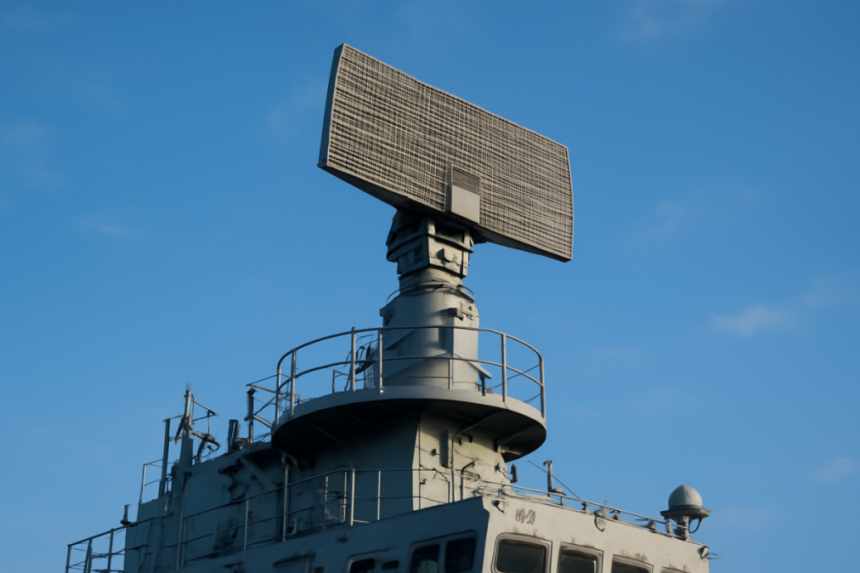
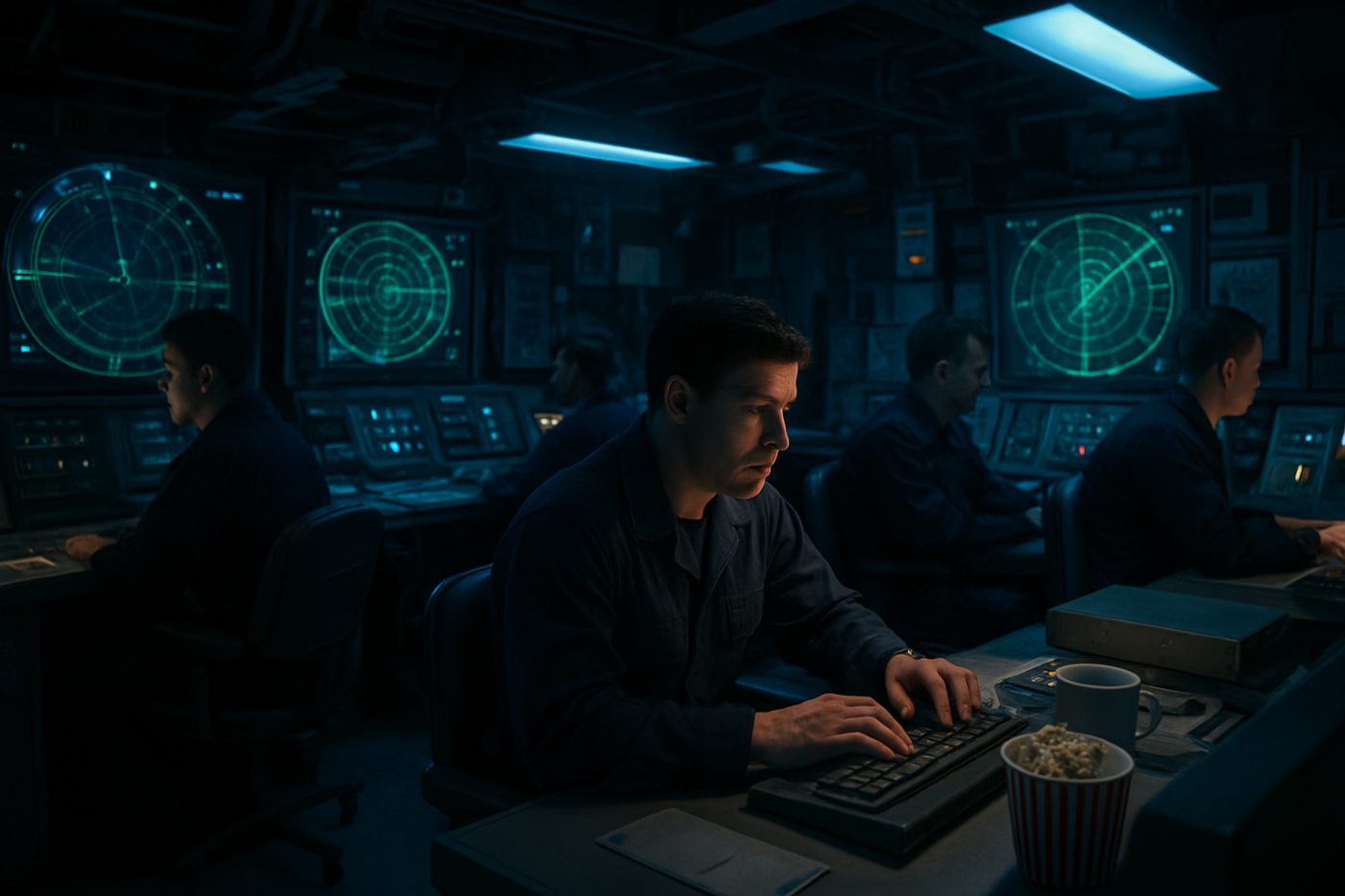

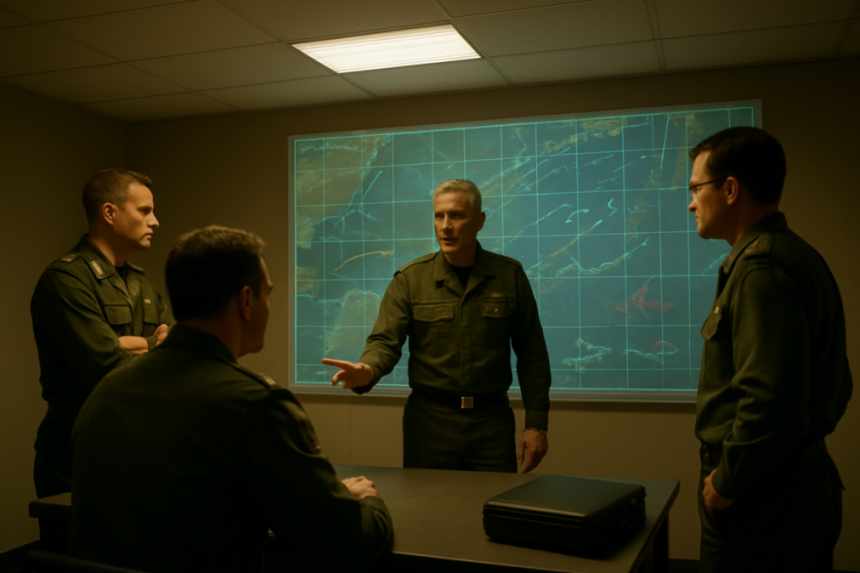
AI illustrations. Please judge the story itself. About AI images.
Filed by its author.
Before you peek: what share of readers believes this story?
50%
No votes yet
Total verdict votes: 0
Guess first! What other readers decided is hidden until you cast your own verdict above — vote True, Fake or Not sure to reveal the community score.
Changed your mind? Read the strongest arguments of the other camp below. If they convinced you — change your verdict (once).
Your new verdict:
Why did you vote that way? Pick up to two:
Noted — thank you, detective.
My case notes (private — stored only in this browser)
Saved in this browser.
True or Fake? — play the detective
How it works: cast your True/Fake verdict above and see whether you matched the reader majority. Then hit "Next case" for a random story and keep your streak going. Solve cases to climb the detective ranks — score and rank are kept on this device only.
Tip: highlight any sentence of the story with your mouse or finger — a small share popup will appear to post that exact quote (with a link back to the story) to X, Facebook, Threads or Reddit.
Something similar happened to you? Tell your version — the jury is waiting. Tell your story
Keep investigating
- More UFO Sightings cases
- More Deployment cases
- A case the jury believes: Gate Duty at Three in the Morning and the Car That Should Not Have Been There
- A case the jury believes: How the Whole Platoon Got Smoked Over a Single Rubber Duck
- A case the jury believes: The Barracks at the End of the Runway Were Never Empty
- The full Military Stories archive
- Cases the jury cannot settle
Comments (0)
Comments here are case materials: pick a role — ask the author a question, or file your evidence FOR or AGAINST the story — and it lands in the right column. Upvote the sharpest comments: the best one is pinned on top as the Top Detective Comment. Questions get answered by the story's author in person — look for the AUTHOR badge.
No comments yet. Be the first!