
The Previous Owner Left A Note In The Meter Cupboard: "HE ONLY WATCHES" Certified True by readers
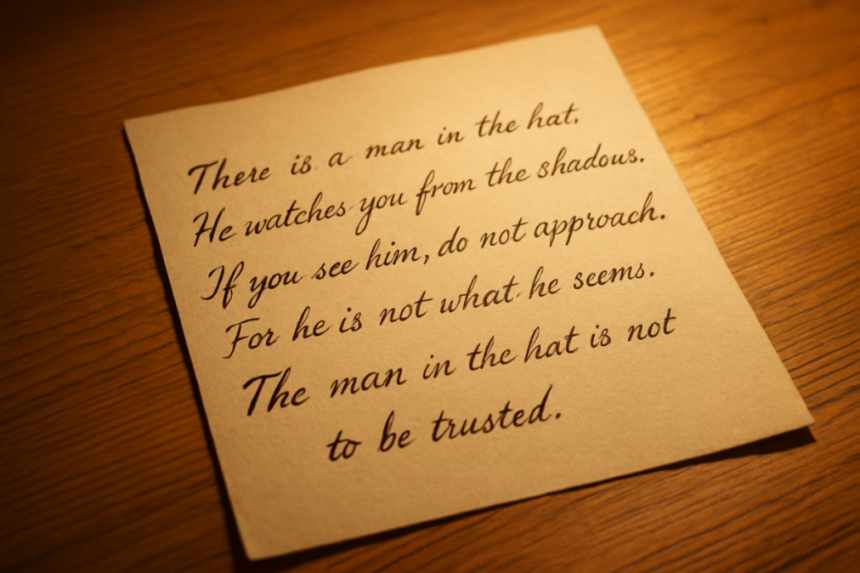
Laminated. Cable-tied to the pipe. Next to the stopcock instructions, in the same handwriting, like any other bit of household advice.

The hat man shadow is the one detail strangers describe identically: hat man stories from different continents agree on a brim, shoulders, and almost nothing else. Dim bedrooms, half-open doors, and the uncanny sense of being watched in the small hours – this tag collects first-person encounters with the mysterious figure in the wide-brimmed hat and his shadowy companions. From childhood visits at the foot of the bed to unnerving notes left by strangers who’ve seen the same dark silhouette, these are personal, unverified stories of a tall outline in the corner, a looming watcher on the stairs, a man-shaped shadow that seems aware you’ve noticed him.
Every account here is told directly by the experiencer and judged by a reader jury who votes on whether it feels real or imagined. You’ll find eerie coincidences between witnesses, recurring details about the same nighttime visitor, and unsettling glimpses of something that stands just inside the doorway and never quite steps forward. Read, decide for yourself, and cast your vote.
Laminated. Cable-tied to the pipe. Next to the stopcock instructions, in the same handwriting, like any other bit of household advice.
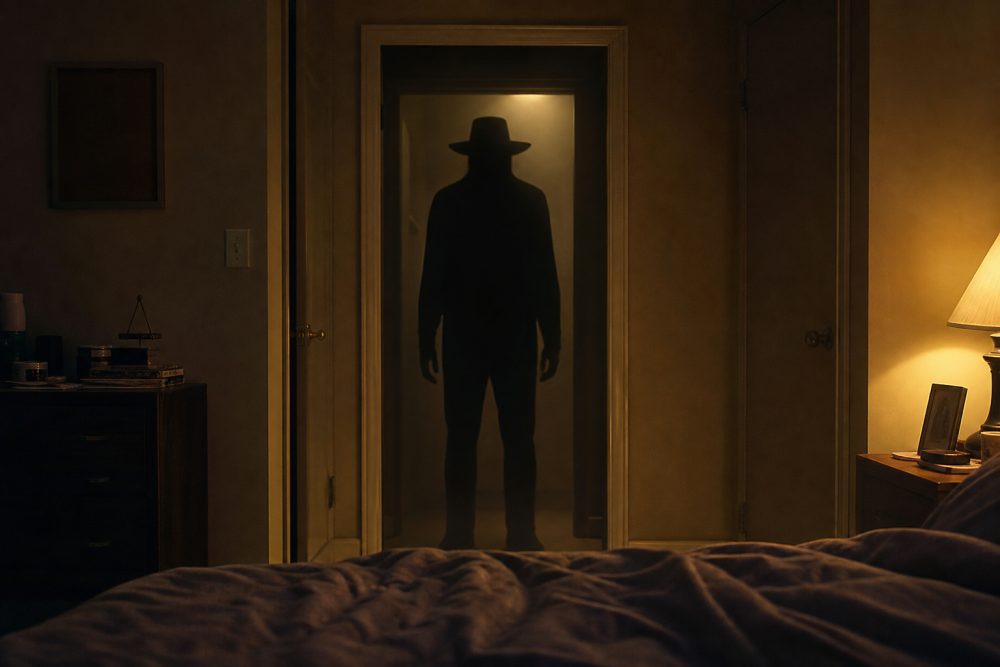
For three nights a tall figure in a wide-brimmed hat stood at the foot of my bed while I lay frozen. On the fourth night, my roommate described him before I said a word.
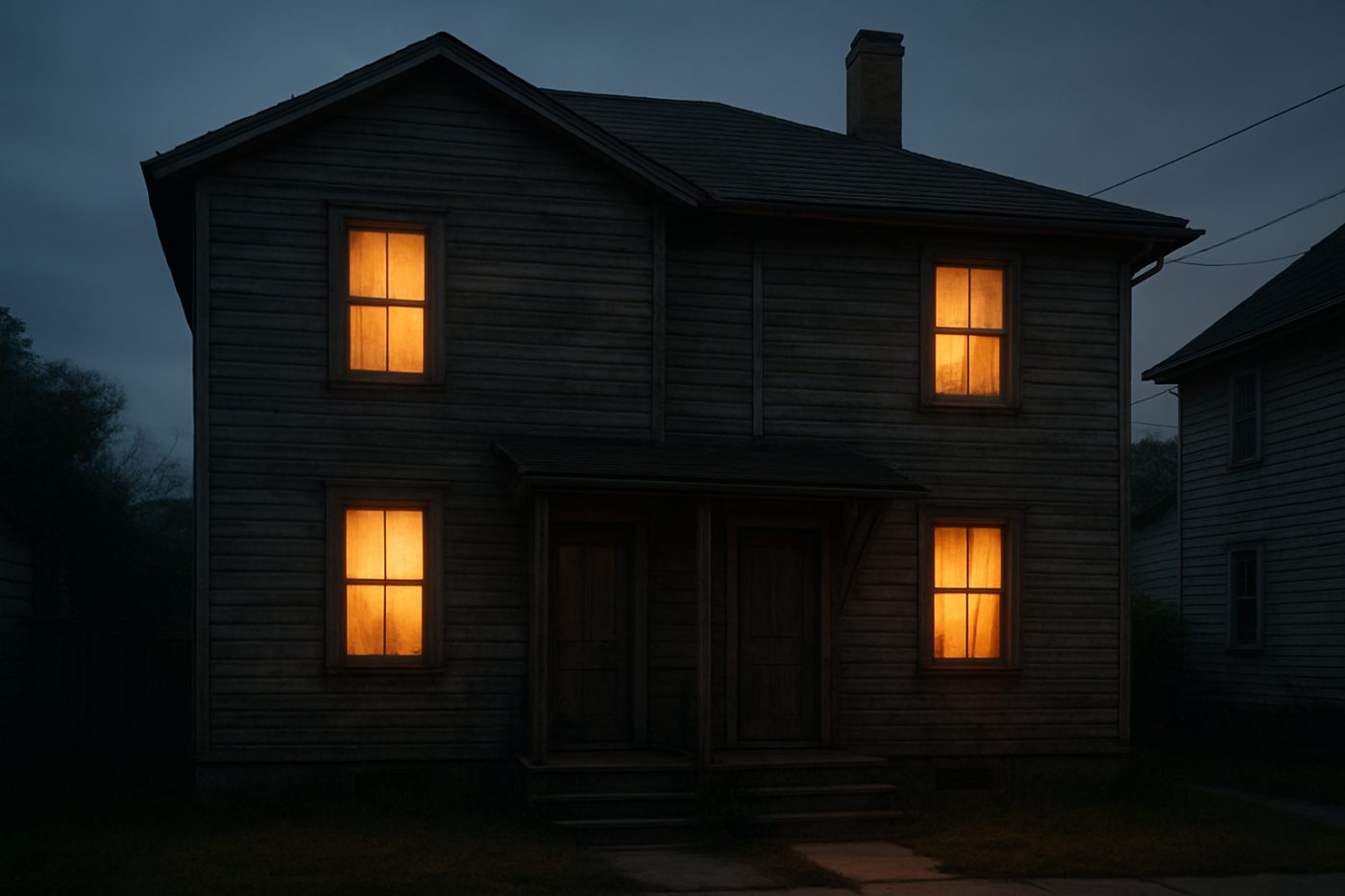
We came home at midnight. She was on the doorstep with her coat on, the door locked behind her, and our children asleep upstairs.
She sits at the bottom, ears up, tail still, facing the fourth step. Every evening at six. She has done it for three years.

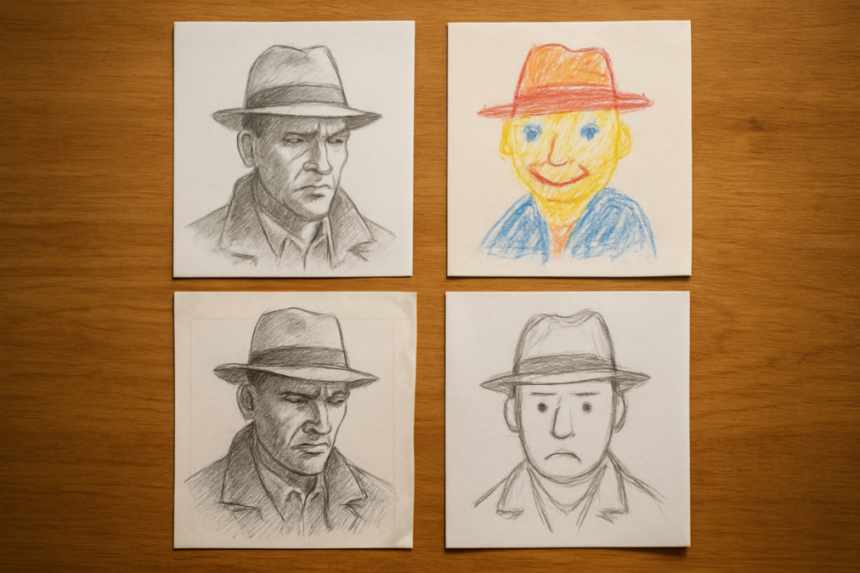
The landlord keeps the drawings. Four tenants, twenty years, four sheets of paper, one man in a wide-brimmed hat.
I was nine. I told my mother a man in a hat came at night. She went white and asked what kind of hat. I have never forgotten her face.
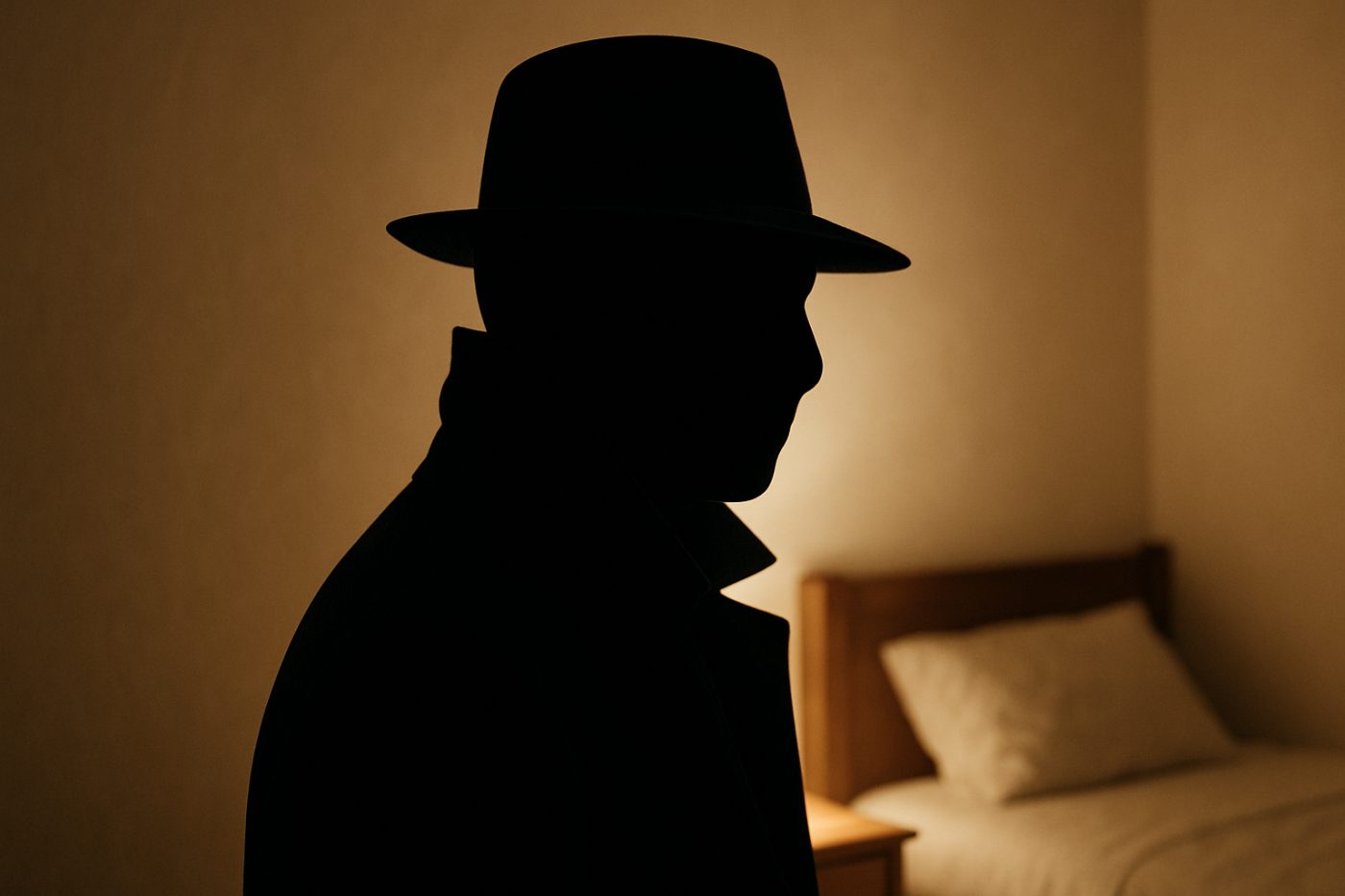
They gather in my peripheral vision — tall, dark, man-shaped, at the edges of every room. They freeze the instant I turn. For a year I ignored them. Then my new puppy started tracking them too.

Since childhood, on the worst nights, a tall figure in a wide-brimmed hat stands in my bedroom doorway. I described him age seven. My daughter, now, has just described him to me. Word for word.
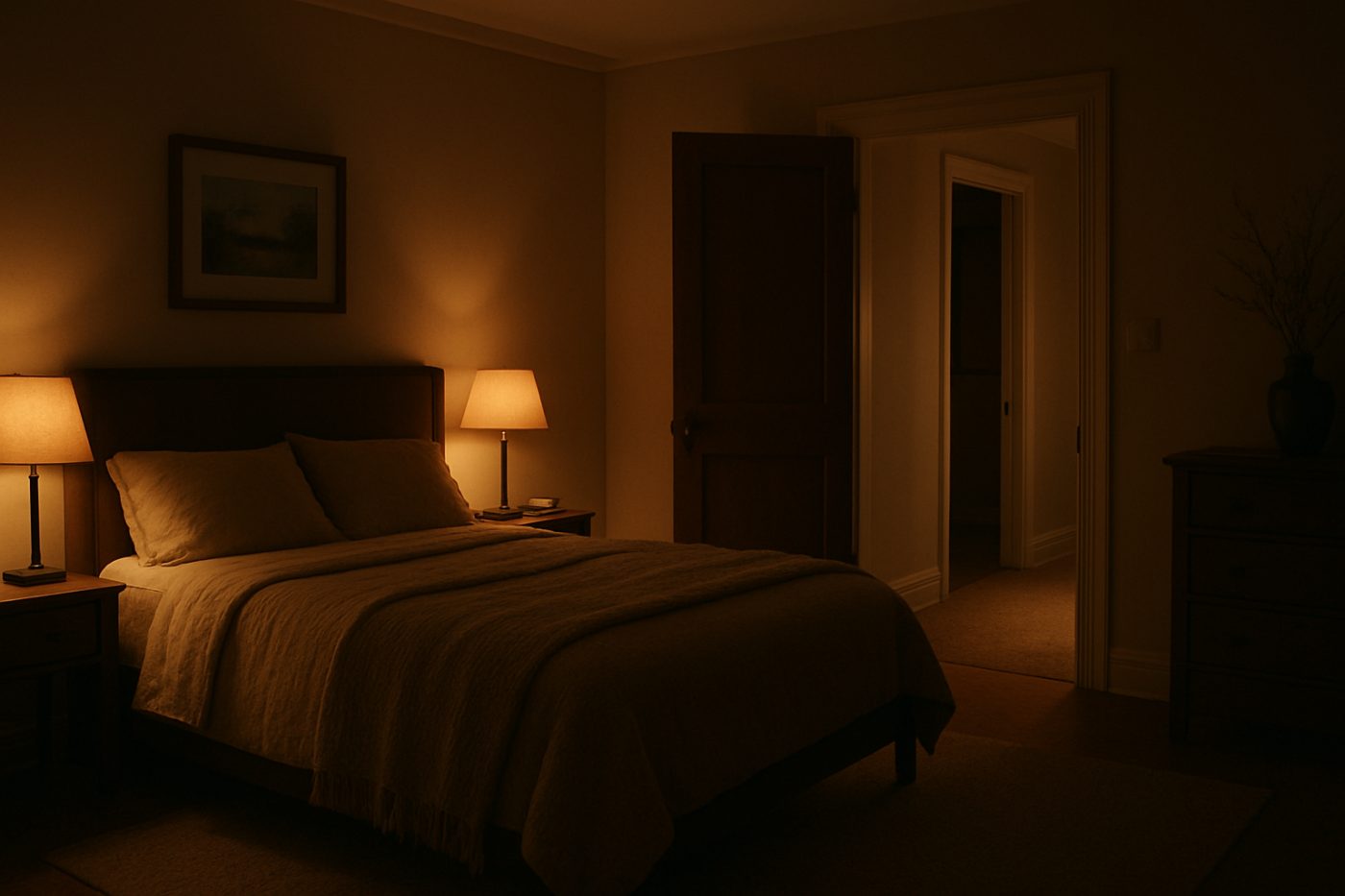
Every time I wake frozen he is in the same spot, a tall silhouette in a wide-brimmed hat, hands folded, waiting. I have never seen his face. I am not sure I want to.

Witnesses who have never heard of the hat man describe him first and name him later. The detail everyone fixes on is the least likely one. A silhouette in a dark room should be an outline and nothing more, yet the brim arrives intact — wide, flat, unmistakable, described in almost identical terms by people who had never heard the name until they searched for it afterwards. Two arguments run through the accounts here. One says the shape is seeded: fedoras are the standard visual shorthand for menace in half a century of film, and a frightened brain reaches for stock. The other says the seeding argument fails for the narrators who describe the brim first and only later learn that thousands of strangers describe the same thing.
Sightings without headwear are gathered under shadow people, and the episodes that end in screaming and no memory sit with night terrors. The jury is unusually split on the hat man — believe scores hover near the middle far more often than they do elsewhere — and the submissions that shift them tend to be the ones where a partner or a flatmate saw the outline on a different night and said so without prompting.
Many people across different cultures report seeing a tall, dark figure with a brimmed hat, especially during the night or while half-asleep. Explanations range from sleep paralysis and hypnagogic hallucinations to paranormal interpretations. On this site you can read first-person accounts and see how the reader jury votes on whether they believe each one really happened.
Waking to see a dark, hat-shaped figure is commonly linked to sleep paralysis, when your brain is partly awake but your body is still in REM sleep. In that state, the brain can project vivid images into your bedroom, often focused on a threatening or watching presence. Some storytellers here describe very similar experiences, and the jury votes reflect how convincing people find those accounts.
No one knows the exact numbers, but reports are frequent enough that the figure has become a recognized pattern in folklore, paranormal forums, and sleep research discussions. The stories collected here suggest the theme is widespread, with different witnesses describing very similar shapes and behaviors. The reader jury helps highlight which stories feel most credible or familiar.
Interpretations depend heavily on personal beliefs. Some people think they are spirits or negative entities, others see them as archetypal fear-images created by the brain in vulnerable states like exhaustion or sleep paralysis. The accounts on this site present both paranormal and psychological viewpoints, and the jury votes often show the split between these explanations.
Many people find that improving sleep routines, reducing stress, and keeping a light or sound source on can lessen nighttime apparitions. Others use personal or spiritual rituals for protection or comfort. Reading how different storytellers here cope with their encounters, and how the jury reacts, may give you ideas for approaches that feel right for you.
Shared cultural images, horror stories, and urban legends can influence what our brains create when we’re scared or half-asleep, leading to similar descriptions. Some believe this commonality suggests a real external presence, while others see it as evidence of a recurring psychological pattern. The similarities across the stories on this page are part of what makes the jury’s decisions so interesting.
Most brief, isolated experiences of shadowy figures at night are reported by otherwise healthy people, especially under stress or poor sleep, and don’t automatically indicate a disorder. Long-lasting distress, frequent hallucinations, or daytime visions can have many possible causes and are usually discussed with a health professional. On this site, writers focus on describing what they saw and felt, and readers judge whether it sounds like something uncanny or something explainable.