
The Printer Jam That Got My Boss Caught
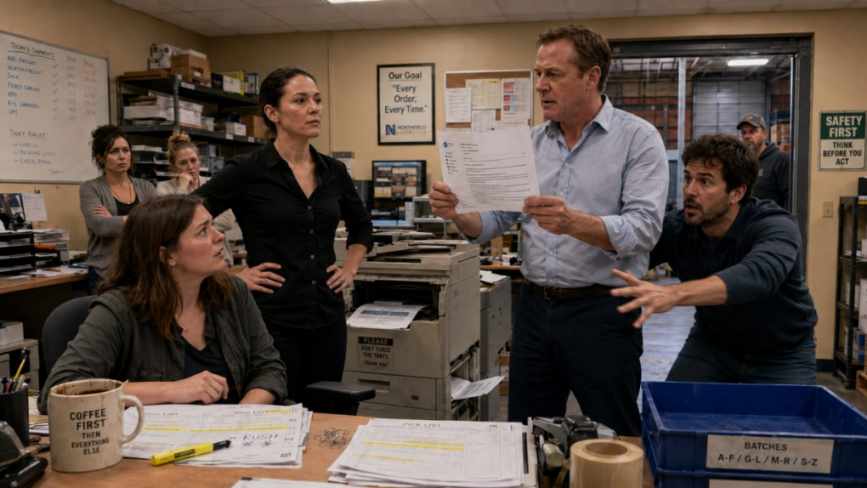
My manager blamed me for a ruined shipment in front of everyone, then tried to prove it using the office printer. The printer had other plans.
Office fails are the most survivable disasters on this site: epic work fails, reply-all catastrophes, and the worst day at work told by the person who caused it. Welcome to the home of unforgettable Work Fails, where office disasters, career missteps and workplace cringe are told straight from the people who swear they lived them. Here you’ll find messy meetings, awkward boss encounters, customer-service meltdowns, unfortunate uniform choices, corporate backstabbing and after-hours chaos that spills into Monday morning. Every piece is a first-person confession, read like a mini workplace drama, and ranges from mildly embarrassing mishaps to full-blown job nightmares.
Nothing here is fact-checked or proven; these are unverified experiences shared for entertainment, shock and secondhand embarrassment. Your role is the on-site jury: read each account, decide whether it sounds authentic or totally made up, and cast your vote on how real you think it is. Dive in, binge the stories, and start judging.

My manager blamed me for a ruined shipment in front of everyone, then tried to prove it using the office printer. The printer had other plans.
A catering worker is blamed for ruined deliveries until security footage shows her doppelganger entering early, using her badge, and hiding food in the freezer.
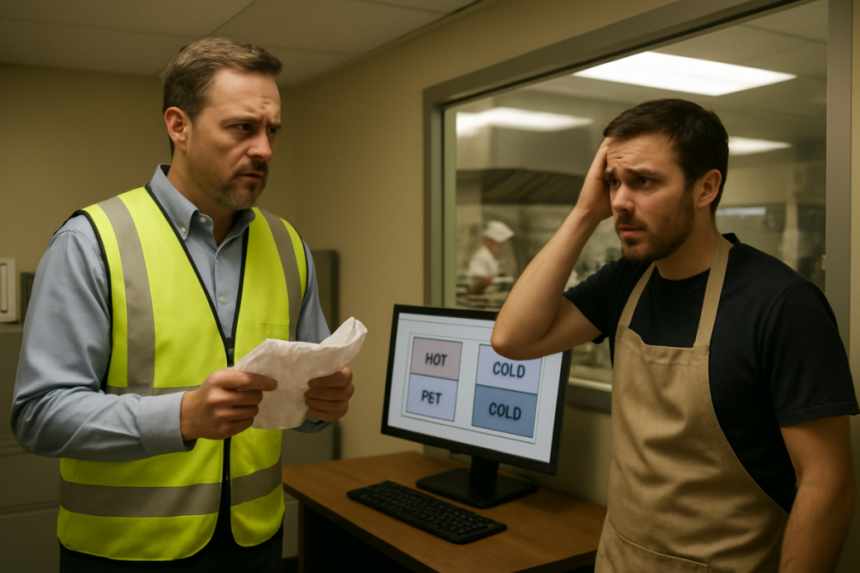
I laughed at the safety rules after a boozy lunch, then needed every one of them to survive.

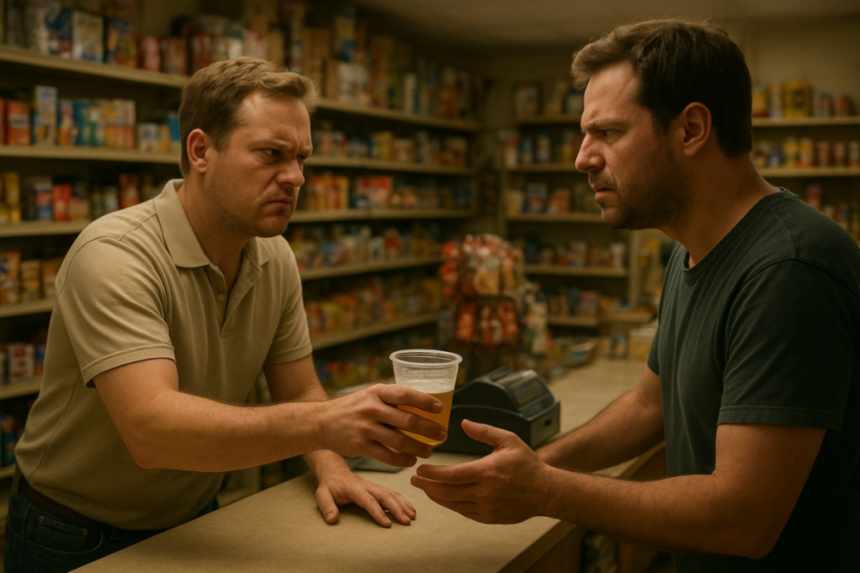
A pushy customer kept underpaying and demanding full service, sparking a string of absurd counter arguments at the register that turned into pure chaos.
On my first week I raised my hand in the all-hands, thanked my manager for her help, and finished with "thanks, Mom." Forty people heard it. She has never let it go, lovingly.

My manager fired me by text at 5 p.m. Friday to avoid a conversation. He did not realize I was the only person who knew how to run the payroll system. Monday morning was educational.

I was the new agronomist. It was my first farm visit. I had polished shoes and a clipboard and an opinion.

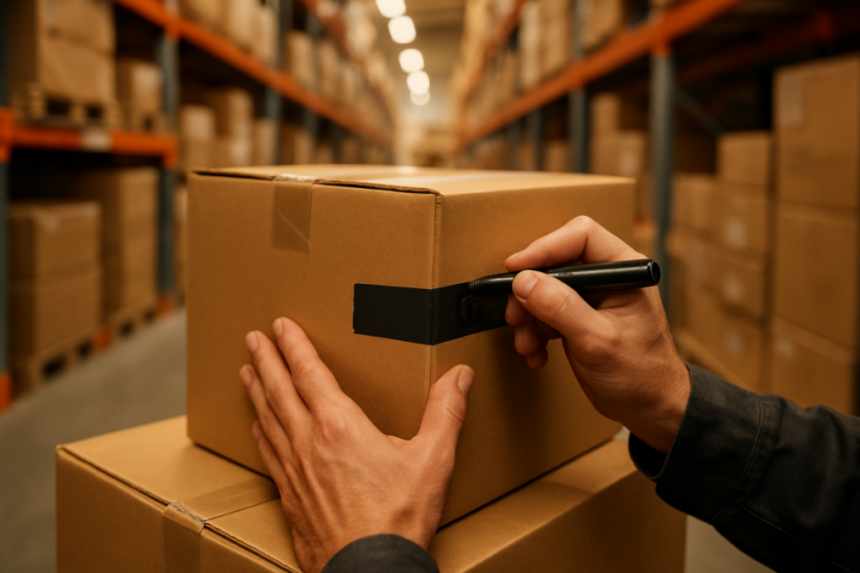
By a system. A good system. Nobody could find anything for two days, and then we kept it.
He had a lanyard from a maritime trade show. He wore it for the entire crossing. He got very drunk and very specific about my failings.

A colleague copied my entire analysis, put his name on it, and presented it to the executives as his own. He did not know I had left one deliberate mistake in the version I shared with him.

I thought my camera was off during the big video call, so I did some things you do when you think nobody is watching. Ninety people were watching. In grid view.

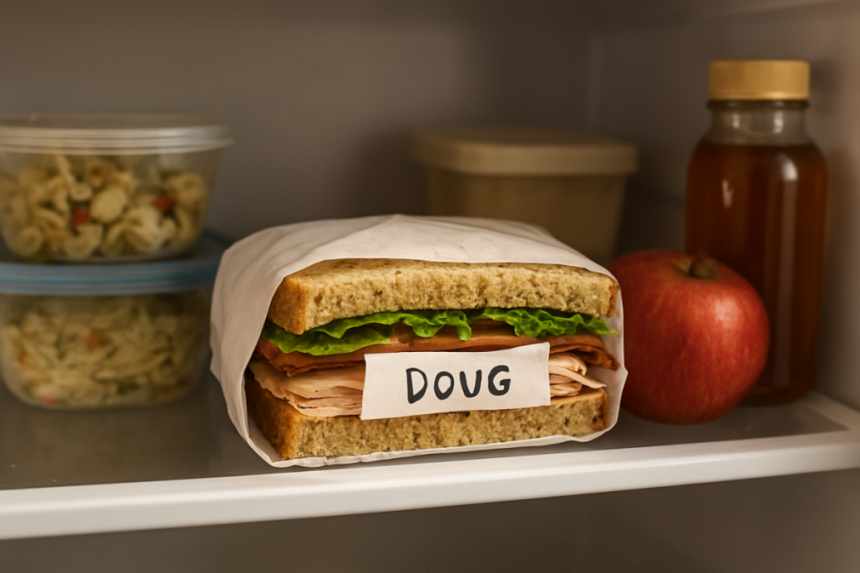
Eleven years of clean reviews, gone because a turkey club went missing from the fourth floor fridge and my badge was the last one to open the kitchen door.
A loud man shoved to the front of the bank queue, waving papers, demanding to close a big deal ahead of everyone. The manager he insulted on the way in turned out to be the one signing it.

On my third day at a huge company I meant to send one private joke to one friend. I sent it to the entire staff mailing list. All four thousand of them. With a typo.

The worst day at work is almost never the loudest one. Two kinds of disaster dominate here and they behave completely differently. The technical sort is instant and irreversible: a script run against the live database, a reply-all to nine hundred people, a delete key pressed on the wrong folder at ten to six on a Friday. The social sort is slow — a nickname that got back to the person, a comment in a lift with the wrong occupant. Readers are consistently more forgiving of the first, on the grounds that the system should have stopped it. What almost every account skips is the manager's side, which would probably be the more interesting document.
The wider working week is collected in workplace stories, and the cases that ended with a badge handed back sit under getting fired. A work fail lands on the aftermath rather than the blunder: who found out, what was said in the meeting, whether anything was actually lost. Stories that end at the moment of impact tend to read as though the writer never had to live with it.
On this site, the stories are submitted as first‑person accounts, and a reader jury votes on whether they believe each one really happened. Some incidents sound wild, but office life can be stranger than fiction, so you’ll usually see a mix of “this feels true” and “no way” in the verdicts and comments. Reading a few different tales and their jury results gives you a sense of what other people find believable.
Mishaps at work are common because you’ve got pressure, deadlines, ego, miscommunication, and sometimes poor systems all colliding in one place. People get tired, rushed, or overconfident, and that’s when things go sideways. The stories here highlight how tiny decisions or distractions snowball into disasters, which is exactly what the jury reacts to when deciding how plausible they are.
Social slip‑ups such as saying the wrong thing, sending a message to the wrong person, or messing up in meetings are very common in most jobs. They feel huge in the moment, but usually become funny anecdotes later, which is why so many are shared as confessions. You can see from the number of similar tales and their jury votes that plenty of readers recognize these situations from their own lives.
The basics are usually to own the mistake, communicate clearly, fix what you can, and think about how to prevent it next time. Over‑explaining or hiding things tends to make it worse, especially in a professional setting. Reading through other people’s disasters and the jury’s reactions can help you see which responses look mature versus defensive.
Some accounts of terrible managers or bizarre dismissals are absolutely possible, while others might be exaggerated or one‑sided. That’s why the jury system exists here: readers weigh the details, consistency, and context before voting on whether they buy it. Looking at both the story and the verdicts gives a more balanced sense than just taking any single claim at face value.
Customer‑facing jobs put people in constant contact with stress, money, and differing expectations, so conflict and mistakes are almost inevitable. Add policies that don’t always fit real life, and you get the kind of showdowns and slip‑ups described in many of these accounts. The jury responses often reflect how familiar these scenarios feel to anyone who has worked with the public.
They won’t replace real training, but they can help you spot red flags, learn from other people’s missteps, and feel less alone when things go wrong. Seeing how situations spiraled in these tales—and how the jury evaluates them—can make you more thoughtful about communication, boundaries, and double‑checking your actions at work.