
She Was Standing at Mile Marker 212 in Three Different States
In one sentence: A long-haul trucker shares the eerie experience of seeing the same mysterious woman standing at mile marker 212 in three different states under strange circumstances.
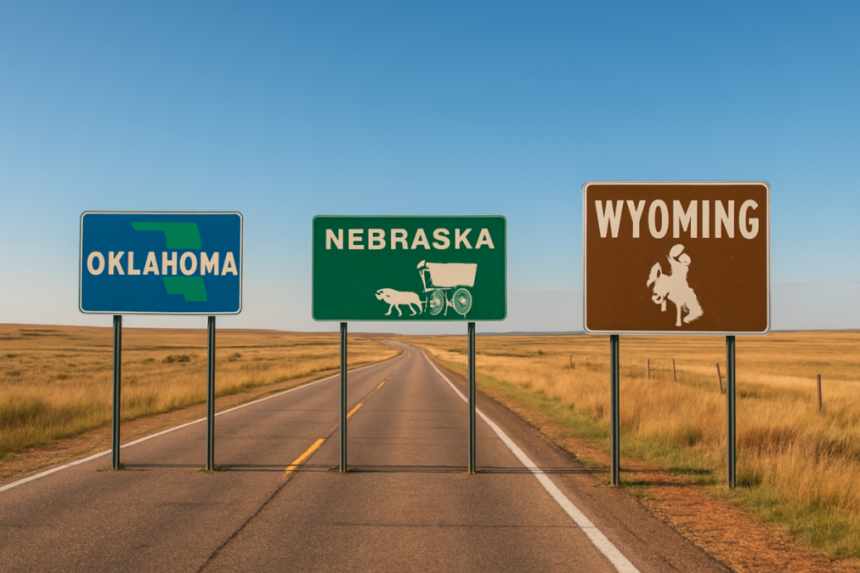
Twenty years long-haul, and I never pick anybody up. But the same woman kept standing at mile marker 212 - Oklahoma, Nebraska, Wyoming - same coat, same distance off the shoulder, and one night the CB answered a question I hadn't keyed yet.
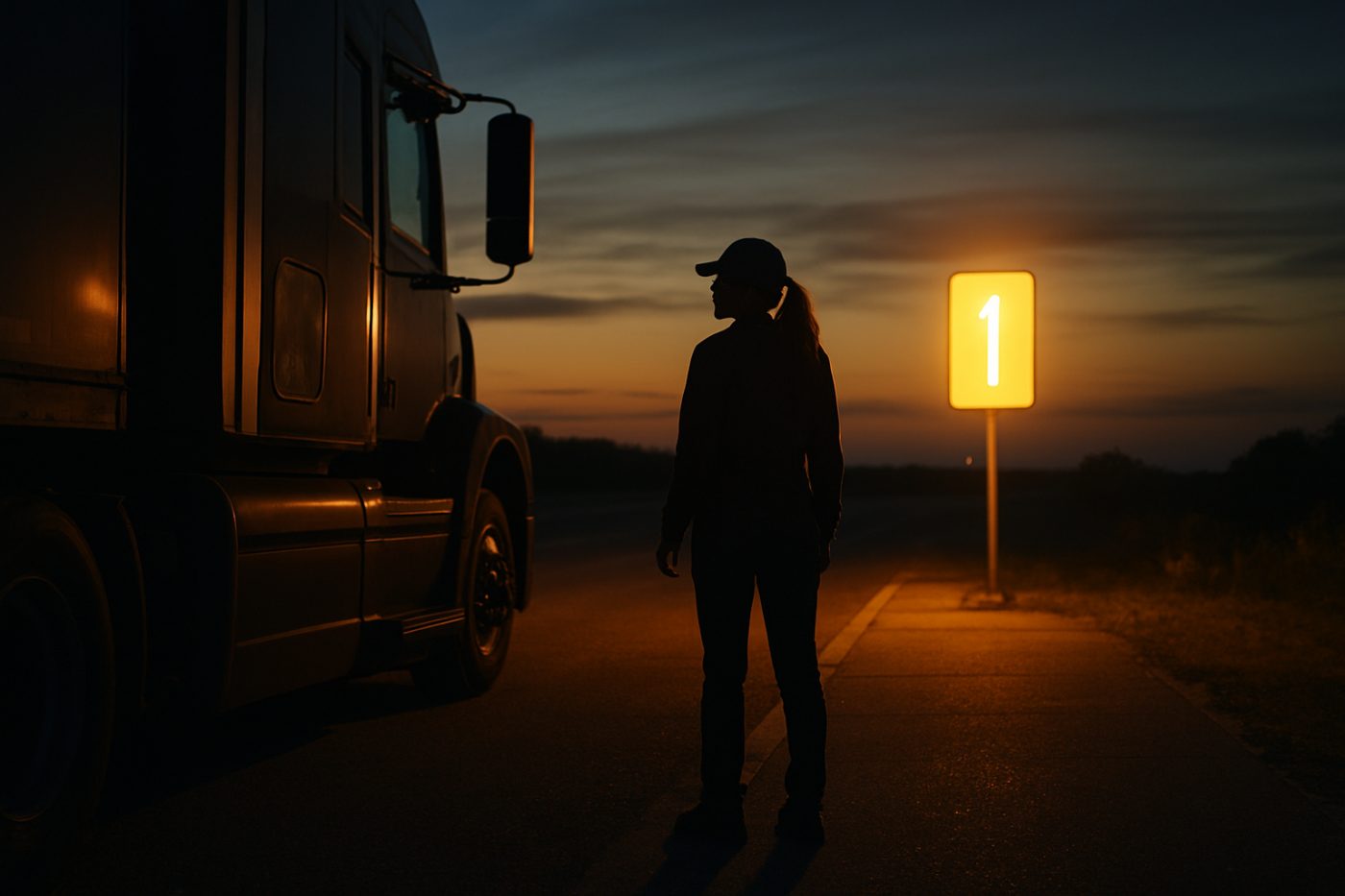
* AI Illustration
First impression: judge by the title and the picture alone — you get the real verdict after reading.
Swear It Happened — CASE FILE #559
JURY PENDING
COLD CASE — this file never got enough jurors. Your verdict counts double here (morally).
My name doesn't matter much but it's Dana. I was forty-seven when this started, forty-eight now. I've been driving since 1995, the last nine of those years as an owner-operator, which means the truck is mine, the payments were mine, the repairs are mine, and when a broker decides not to pay me, that's mine too. We'll get to him. The truck is a 2006 Freightliner Columbia with a Detroit Series 60 in it, thirteen-speed, one point four million miles when this story starts, and I mean this with love, it is the least haunted object I have ever owned. It is a diesel engine bolted to a frame. Everything it has ever done wrong has had a part number attached. I want you to hold onto that, because the whole time I'm telling you the rest of this, I was sitting inside a machine that I understood down to the injector cups, and that mattered to me more than I can explain. Some people have churches. I have a Detroit that starts at eleven below if you plug the block heater in.
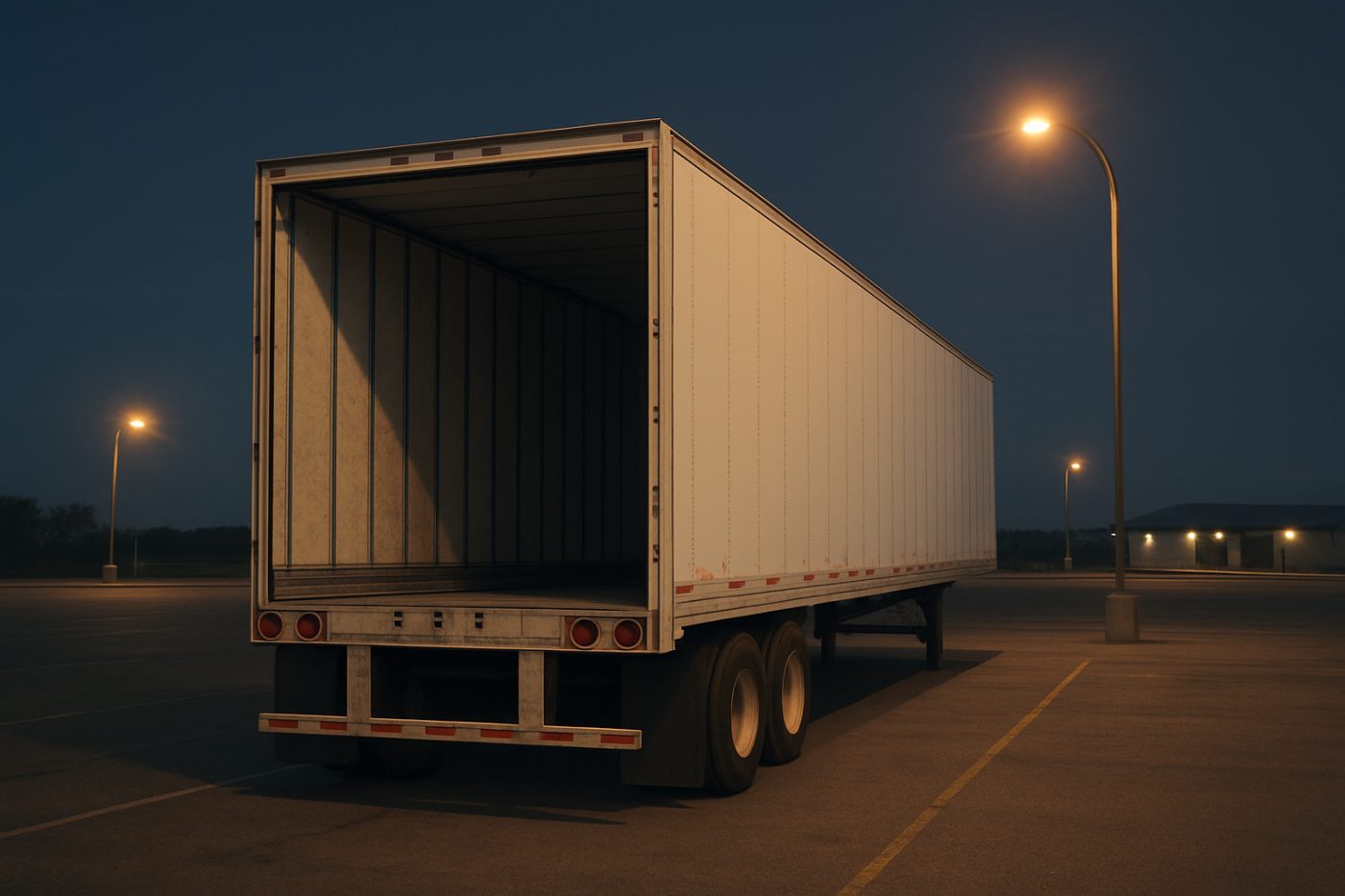
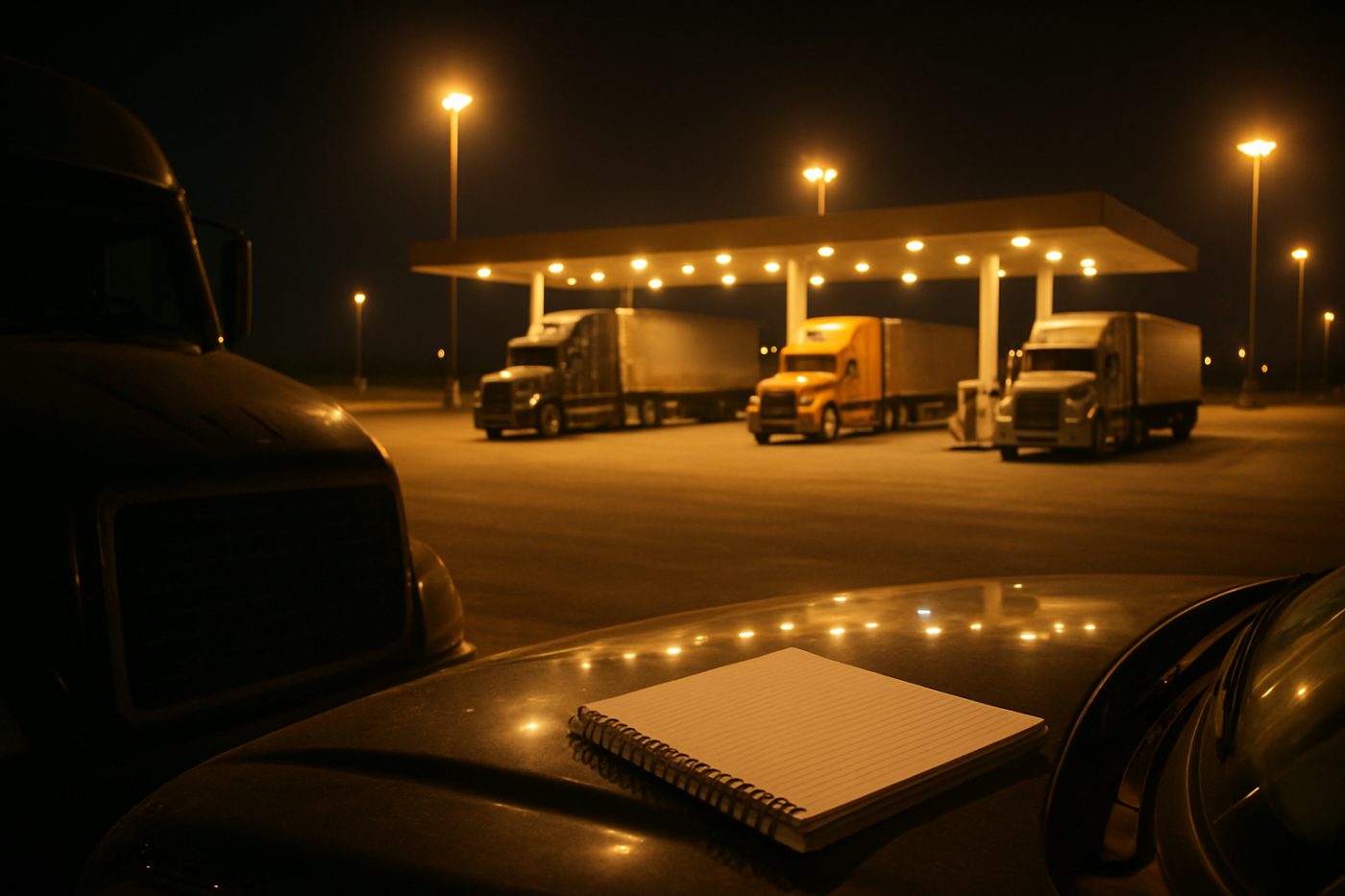
I pull a dry van, 53-foot Utility, 2009, roll-up door I keep meaning to convert to swing doors and never will now. Dry van freight is the bottom shelf of trucking glamour. No tanker endorsement drama, no oversize pilot cars, no reefer motor screaming behind your head all night. Boxes. Paper towels, pet food, tire assemblies, point-of-sale displays for stores that will throw them out in six weeks. In fall of 2015 I was pulling mostly off the load boards plus two brokers I trusted, and the math of my life was the same math it always is. The rate matters less than the deadhead. You can book a load at two-fifty a mile and it's garbage if you had to run two hundred empty miles to get under it, because empty miles cost you the same fuel and the same tires and pay you nothing. I keep a spiral notebook where every load gets a page, loaded miles, empty miles, fuel, tolls, what I actually cleared. My ex-husband used to say I ran the truck like a diner, every nickel written down. He wasn't wrong and the diner outlasted him, which I say with less bitterness than it probably reads.
The other thing you need to know about 2015 is that I was still on paper logs. The ELD rule, the electronic logging mandate, got published that December and everybody at every fuel island in America had an opinion about it, and I'm not going to give you mine because it doesn't matter anymore. What matters is that my hours were tracked in pencil, in a logbook, by me, and I was honest on it maybe ninety-two percent of the time, which made me one of the more honest people at any given fuel island. I'm telling you this because dates and times are going to matter in this story, and my source for them was a paper logbook I no longer have, because you only have to keep six months of logs and I didn't know yet that I'd want them. So when I say a thing happened on October 6th, understand that's me reconstructing from fuel receipts and memory, and memory is a broker too. It quotes you one thing and pays you another.
Here's the last piece of setup, and it's the part where some of you are going to decide things about me. I do not stop for people on the shoulder. Ever. I will call them in, I will slow down and move over like the law says, I will note the mile marker and give it to a dispatcher with my twenty and the direction of travel, and then I will keep driving. That is not because I don't care. It's arithmetic, same as the deadhead. I'm a woman who is five foot four, alone, in a vehicle that takes the length of a football field and a half to stop from highway speed. A staged breakdown is one of the oldest plays there is. You stop for the pretty stranded lady and her two friends come out of the ditch, and now you're beat half to death and your tractor's headed to a chop yard in another state. That happens to men who are six two. My CB handle, for what it's worth, is Switchback, from my flatbed years running the Colorado mountain routes, and a guy I ran team with back then, older guy, told me the rule plain the first month I drove. He said your rig stops for scales, for the law, and for nothing else that waves at you. Call everything in. Let the state come, that's what everybody's fuel tax is buying. I have followed that rule for twenty years and it has cost me some sleep and zero teeth, and I explained all of that to myself very calmly, twice, in October of 2015, and both times the explanation held. I want to be fair to the explanation. It's a good explanation. It's just that it was built for people, and I no longer think that what I was declining to stop for was a person, and there's a version of me that knew that the first night, at the speed of the skin on my arms, long before the rest of me was willing to do the paperwork on it.
I'll tell it in order. Order is the one thing I can still give it.
First week of October, 2015. The 6th, I believe, could have been the 7th. I had picked up a load of shelving components in Phoenix going to Oklahoma City, decent rate, terrible pickup, one of those shippers where your two o'clock appointment means they'll start thinking about you at four-thirty. I sat in that yard almost three hours past appointment, which matters, because it shoved my whole night east. I ran up through Flagstaff, fueled in Winslow, and by the time I was east of Albuquerque it was full dark and I was inside the last third of my fourteen-hour clock, doing that math you do where you know exactly which rest area you're going to die in, pardon, park in. I'd picked out Santa Rosa. There's a truck stop there I like because the showers are ugly but hot, and I want to say for the record that on a night like that the difference between a driver at hour three and a driver at hour eleven is real, and I'm going to hand that fact to the skeptics right now, free of charge. Hour eleven. Noted. Hold onto it, because it only explains the first one.
That stretch of I-40 east of Moriarty is high plateau, over six thousand feet, and at night it is nothing. I don't mean spooky nothing, I mean inventory nothing. Fence line, snow markers, the reflectors coming up out of the dark in their little rhythm, and every mile a green marker post doing its job. I read mile markers out loud when I'm tired. Have since my second year. It's not a superstition, it's a technique, same reason you crack the window or slap your cheek, the sound of your own voice is a tool for staying on the right side of the line. Two-oh-eight. Two-oh-nine. Not every marker, just when the eyelids get expensive. I've probably said ten thousand mile markers out loud in my life. I need you to know that habit existed long before any of this, because of what comes later.
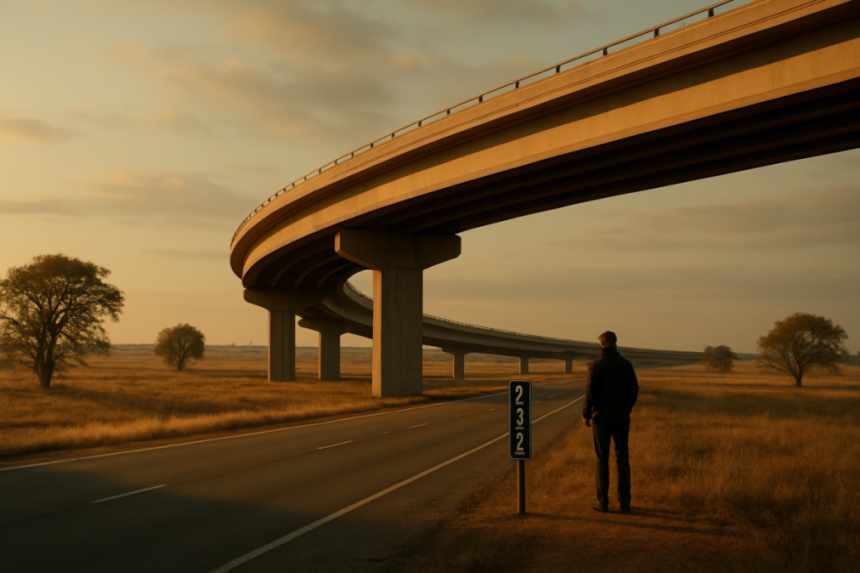
So. Mile marker 212, I-40 eastbound, New Mexico. My lights picked up the marker post first, the way they do, that green flare, and then maybe forty yards past it, standing on the shoulder just off the fog line, a woman.
Not a shape I had to interpret. A woman. Sundress, pale, maybe yellow, hard to say under headlights because everything goes to grayscale at the edges. Standing still. And here's the thing that I keep having to say to people slowly, because they nod too fast: there was nothing strange about her. That's the entire point of her, if she has a point. Weight settled onto her left leg, hip out a little, the way you stand when you've been standing a while. Right arm straight down her side. Face turned away from the road, to the north, like she was looking at something out in the dark plateau, and turned just so far, not craned, not dramatic. It was the single most ordinary posture I have ever seen in my life. Bus stop posture. Waiting-for-the-microwave posture. If she'd been standing in a break room nobody on earth would have looked at her twice.
She was standing on the shoulder of an interstate at ten forty at night at six thousand feet in October in a sundress, and there was no car.
You process a shoulder scene fast at 62 miles an hour, but you do process it, it's the job. Disabled vehicle, debris, gator in the lane, guy walking with a gas can, you read it, you're already moving over. I read her twice in the maybe four seconds she was in my light. No car on the shoulder, no car on the median side, no flares, no phone in her hand lighting her face, no bag at her feet. Moriarty was eighteen miles behind me. Clines Corners was up ahead, and then a whole lot of nothing until Santa Rosa. I've said fifty miles from anything when I tell this out loud and people have corrected me, there's a travel plaza closer than that, fine, I'm telling you how it read from the seat. It read like the middle of a dark ocean, and a woman standing in it dressed for a farmers market.
I did what I do. Moved over a lane, kept my speed, and as I passed I looked down at her, because from up in the cab you look down at everybody, and she did not turn her head. Everyone turns their head. Four hundred fifty horsepower going by at highway speed moves air. Her dress moved. I saw the hem of it move in my wash. Her head didn't. Face stayed turned away, that exact civil amount, and then she was behind me, and the shoulder in my mirrors was black, and I got my heart to sit back down by doing the thing I'd trained it to do, which is procedure. I picked up the phone, called New Mexico non-emergency, which I have saved, along with six other states, and told the dispatcher I had a pedestrian on the eastbound shoulder of 40 at the 212, no vehicle visible, female, no apparent distress. The dispatcher took it the way they take everything, like I was ordering a sandwich. She asked if the pedestrian had signaled for help. I said no, ma'am, she was just standing there. She said they'd send a unit when one came available. I said thank you and hung up, and that was, formally speaking, the end of my obligations to that woman as I understood them.
I want to walk through the not-stopping honestly, because this is the part where a certain kind of person tells me they'd have stopped, and they say it with their chin, like the chin settles it. Okay. Here's what stopping is. It's me braking a loaded truck, 68,000 pounds that night, from 62, on a dark shoulder, which takes long enough that I'm now parked an eighth of a mile past her. It's me setting my brakes, climbing down, and walking back an eighth of a mile in the dark along a live traffic lane, toward a scene I do not understand, having already noted that the one thing the scene is missing is the vehicle that would explain it. It's my truck, my whole business, my house payments, sitting back there unlocked with the motor running, because you don't shut down on a shoulder. Or it's me opening my passenger door to a stranger and being five foot four. I have a hammer in the door pocket and I know what it's for, and I also know the truth, which is that if it ever comes to the hammer I've already lost. Every female driver I know runs this same calculus and lands the same place, and the ones who don't have stories, and some of the stories don't get told by them, they get told about them. So no. I don't stop, I call. If that had been your daughter out there, my calling was the best thing I had, and I gave it.
That's the speech. I believed the whole thing when I made it to myself that night, somewhere around the Clines Corners lights, and I mostly believe it now. What I noticed, though, and I noticed it the way you notice a low steer tire, something wrong in the feel before there's anything wrong on the gauge, was that my speech was answering a question nobody had asked. The question the night had actually put to me wasn't should you have stopped. It was: what was moving her dress, if the air I pushed at her didn't reach her head?
That's not a fair way to put it. The air obviously reached all of her. What I mean is she didn't react, and fabric doesn't have a choice. I chewed that all the way to Santa Rosa, showered it off, slept fine, honestly, hour eleven will do that, and in the morning it was a story. Odd thing on 40 last night. I told it at the fuel desk to a driver I half know, told it to my friend Renata on the phone that weekend, told my sister at Thanksgiving. Every version I told, and this is me being fair to what happened later, every version had the leg in it. The weight on the left leg. It was the detail that made the story tell right, that made her real to the listener instead of a smudge. Remember that I was telling it around, with that detail in it, in truck stops, on the phone, out loud. It's going to matter when we get to the radio.
Before the next one, let me lay in the ordinary misery of that fall, because it was all happening on the same calendar and my head did not have a separate shelf for spooky. In September I'd hauled a load of restaurant equipment from Joliet to Tulsa for a Chicago broker called Meridian Cartage Group, guy named Kevin on the phone, very warm, called me "my friend" a lot, which I have since added to my list of red flags right under a rate that's too good. Eighteen hundred and fifty dollars, net thirty. Thirty days came and went. I invoiced again. Kevin got harder to reach in stages, first he was at lunch, then he was traveling, then the woman answering the phone had never heard of him in a tone that suggested she was sitting next to him. By late October I'd filed on their broker bond, which is a process I could teach a class on now, and I was watching my notebook page for that load sit there unclosed like a sore. I don't factor my invoices. Factoring costs you three percent to make waiting somebody else's problem, and I'd always run lean enough to wait. That fall I learned what the three percent buys, which is not having to think about Kevin at two in the morning. Keep Kevin in mind. He's not part of the pattern, that's exactly why I'm including him. Half my nights that October I wasn't thinking about the woman at all, I was composing voicemails to a man in Chicago. Real life doesn't clear the stage for these things. It keeps playing all its dumb music at the same time.
Also that month: my clutch brake started making itself known, my sister's marriage was coming apart in weekly phone installments that I will not detail except to say the word "kayak" figured in it more than you'd think possible, and the little TV in my sleeper died and I never replaced it. None of those go anywhere either. That's the point of them. You want to know what a year is actually like, it's that. Noise with a signal buried in it, and you only find out later which was which.
Three weeks after New Mexico, so end of October, and I've gone back and forth on this, it might have been closer to four weeks, I've told it both ways and I genuinely don't know anymore, my fuel receipts from that stretch are gone. Call it three and a half. I was eastbound on I-40 again, but Oklahoma this time, night again but earlier, maybe nine, hauling a load of boxed furniture out of Amarillo going to Fort Smith. East of Shawnee the interstate runs through low wooded hills, completely different country from that New Mexico plateau, oaks right up near the fence line, more traffic, you're never far from an exit with a gas station. I was fresh, hour four, coffee still working, radio on low. I want the conditions on the record because they were the opposite conditions. Different state, different terrain, different hour of my clock, different weather, it was mild and damp that night, and I was not reading markers out loud because I didn't need to.
I clocked the 210 without thinking about it, the way you register any number, and something in the back of my head sat up anyway. I remember being annoyed at myself. Genuinely annoyed, like, we're not doing this, we're not going to get weird about a number for the next thousand miles of our life. And then the 212 post came up in the lights and there she was.
Same side. Shoulder, just off the fog line, maybe forty yards past the post, and I know it was about forty yards because it was the same forty yards. Weight on the left leg. Right arm straight down. Face turned away, north again, which on that road meant toward the trees, and turned exactly as far. Not about as far. I've hung doors, I've backed forty-foot boxes into docks with nine inches a side, I have a protractor in my eye, and that head was rotated the identical number of degrees off the road as the head in New Mexico. The dress I couldn't swear to the color of, pale, but the shape of it was the same shape, loose, above the knee. No car. No bag. Nothing in her hands, and her hands are a thing I noticed that time, they were just hands, relaxed, fingers soft, nobody stands that relaxed on the shoulder of an interstate, your body knows better even when you don't.
I did not move over as smooth that time. I heard my own load shift in the box, that's how I know. I went by her at 65 and I looked, because you look, God help me you look, and her face was turned away, and I remember with my whole body the certainty that the reason her face was turned away exactly that far was so that I could not see it, and that the amount was calibrated. Somebody had figured out the maximum amount of turned-away that still reads as casual, and was using it.
Now. You're going to say I could not possibly have measured a head angle at 65 miles an hour at night from a moving truck, twice, three weeks apart, and matched them. You're right. I couldn't have. I did anyway. That's the most honest sentence in this whole account and I'm aware of how it sounds. There are things the body does that the eyes then get blamed for. I'd have flunked any test you put me to, show me silhouettes, pick the angle out of a lineup, I'd flunk it. And I would also stake the truck on it being the same, and both of those are true at once, and if you've never held a pair like that you've had a nicer life than me.
I didn't call Oklahoma. There's the confession, since I made such a parade of procedure earlier. I drove nine more miles to a Love's, parked it, sat in my bunk with the curtain shut and the engine off, and did math instead. Here's the math, and I still think it's good math, as far as it goes. Every mile of interstate has a marker. I-40 alone is over 2,500 miles long and crosses eight states, and most of those states are wide enough to have a mile 212. So does I-80, I-70, I-10, I-90, most of the two-digit system. There are, conservatively, dozens of mile marker 212s in this country, and I drive a hundred and ten, hundred and twenty thousand miles a year, which means I pass a couple hundred thousand mile markers a year, which means I pass some 212 or another damn near every working day of my life and have for twenty years. People stand on shoulders. Cars get abandoned, people walk to exits, people wander out of their lives in every state I run. Given all of it, the strange thing, statistically, would be to never see anybody standing near a 212. Two women, three weeks apart, in the two thousand miles between them, standing in the single most common posture a tired human being has? That's not a haunting, that's a base rate. I wrote something almost exactly like that in my notebook that night, in the margin next to Kevin's unclosed page. I'd tell you I wish I still believed it, but that's not even it. I do still believe it. It's correct. It just turned out to be correct about a different world than the one I was driving in.
The part the math never covered, the part I kept off the page: the same forty yards past the post. Both times, the woman was not at the marker. She was placed after it, downstream, at the exact distance where your lights finish with the green sign and pick her up next. Like the marker was there to tell you what you were looking at. Like a caption.
The radio thing happened the first week of November, and I can place it better than the sightings because it was the same day I got the letter about Meridian's bond, the surety company acknowledging my claim, which I have kept, so, November 4th. I was westbound on 40 deadheading back toward Amarillo to grab a load of insulation, which tells you how the freight was that week, I was eating 300 empty miles to get under anything at all. Channel 19 through the Texas panhandle in 2015 was mostly dead air and mostly garbage when it wasn't, the CB's been dying for years, everybody's on cell phones, but I keep mine on low out of habit because it's still the fastest wreck report there is. Somewhere around Shamrock a couple of guys were passing the time, one of them complaining about the parking situation in terms I'd describe as traditional, and it was easy, forgettable radio, and I don't know exactly why I keyed up. Loneliness, probably, if I'm being paid to be honest. I'd been carrying the thing for a week and my sister was all kayak that fall and Renata had gotten tired of it, she's a nurse, she triaged my story as "tired driver" and moved on, which stung in a small way I didn't examine.
So I keyed up and said something like, y'all run 40 through here regular? Anybody else ever see the gal that stands out by the mile markers at night, no car, no nothing, I've seen her twice now in two states, same,
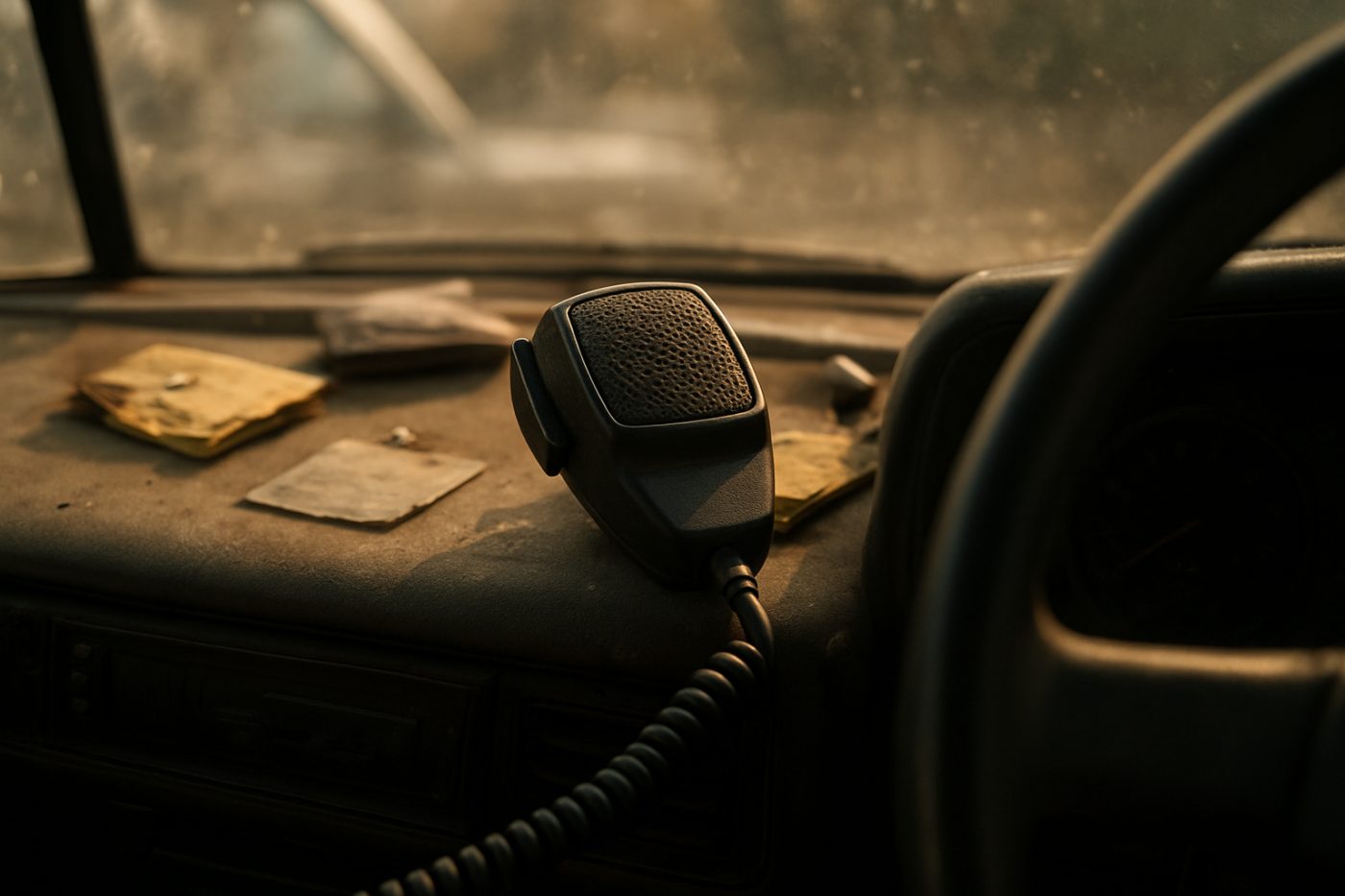
and I was going to say same stance. I had not said the word leg. I had not described one thing about her yet except no car. And a voice came over the top of me, stepped right on my transmission, which is rude, old radio guys don't do it unless it's a wreck, and this was an old radio voice, that dry panhandle sand in it, older than the two who'd been talking, and it said,
weight on her left leg. Right arm hanging straight down. Face turned away from you, just so far and not one hair farther.
And then nothing. The two guys who'd been complaining about parking had gone quiet, the way a room goes. I got my thumb working and said, who's this, and after a second the voice came back and gave a handle, Drybones, and I know how that reads in a story like this, I'd roll my eyes too, but handles are like that, half the men out there are Grim Reaper or Boneyard or Roadkill, it's a whole genre, at the time it registered as nothing. I said, Drybones, I'm Switchback, where'd you see her, and he didn't answer that. What he said, and I'm going to give it to you as close to verbatim as I can because I have gone over it in my head enough times to have worn a groove, was:
You've been calling her in. Quit calling her in. Doesn't hurt her, doesn't help you, just puts your voice on a tape with her in it. And then he said, listen, and there was a pause like he was moving his mouth closer to the mic, the sound got warmer, and he said: You don't wave at her, you don't flash your brights at her, and you don't count out loud. Not on that stretch. You keep your numbers in your head, driver.
I said, count what out loud. I already knew. My whole scalp already knew, but I asked anyway, the way you press on a tooth just to be sure it's the one, and there was no answer. I said his handle twice more. One of the parking guys keyed up and said something like, well that was different, nervous-jokey, and the other one laughed too loud, and normal radio noise closed over the hole where the old man had been like water over a dropped wrench, and that was all. Fourteen seconds of transmission, maybe. I've stretched it to an hour in the retelling of it to myself.
Let me do the debunk myself, so you know I did it then too, that same afternoon, at a fuel island in Amarillo, standing with the nozzle in my hand for so long past the click that the guy behind me honked. One: I had told the story out loud, with the leg detail, at that very fuel desk in Amarillo three weeks earlier, plus to a driver at the Santa Rosa stop, plus on the phone in public places more than once. Truck stops are a small town strung out along four thousand miles. Stories move. A bored old-timer with a good ear hears a story secondhand, then hears a woman on 19 winding up to tell it, and steps on her punchline for the pure art of it. That is a completely available explanation. Drivers do bits. There is a man out there somewhere who has been doing a fake Yankee dispatcher voice on 19 for thirty years for no reason anyone knows. Two: the detail he'd have needed for the trick was exactly the detail I'd been broadcasting, the leg, the arm, the face. I had, without meaning to, published the script. And three, the part that doesn't fit in the box with one and two, and I've tried: nobody I told the story to had heard the rules. The rules were new. No waving, no brights, no counting out loud. I hadn't told a single person about my mile marker habit, because it had never once occurred to me that it was worth telling, it would be like mentioning that I blink. There is no version of my story, as it circulated, that contained the information that the woman driving it counts markers out loud when she's tired. And that was the piece he had. That was the piece he leaned into the mic for.
I know. Cold reading. Lots of drivers talk to themselves, it's a fair guess, he threw it and it stuck. I've run that one too. I run all of them, that's the whole rest of this story, me running explanations like load boards, taking the best rate available even when the rate is bad.
November went by. I stayed off 40 for most of it, not on purpose, or ten percent on purpose, freight just pulled me north. I ran a couple of Denver turns, did a stupid cheap load to Boise because it repositioned me for a good one out of Ontario, Oregon, that fell through while I was still deadheading to it, thank you, load boards, and I spent Thanksgiving at my sister's outside Springfield listening to the kayak material live and in person. Somewhere in there the surety company sent a second letter saying Meridian's bond had more claims against it than bond, which is how I learned I'd be splitting $75,000 with every other driver Kevin had called my friend that year. I'd like to tell you the woman on the shoulder was eating at me the whole month. Mostly Kevin was. Fear is like freight, it doesn't run steady, it surges and slumps, and that month the boards were slow and my fear ran mostly financial.
One night at the Petro in Oklahoma City, and I'm putting this in even though it goes nowhere, because it's the kind of thing that happens out here and I want you to have the texture of it, somebody knocked on my cab at eleven forty at night. Three soft knocks. Now, a knock on your door at a truck stop at night is, in order of likelihood: somebody working, in the oldest sense, somebody selling DVDs or cologne, somebody stealing fuel who wants to know if you're in there, or somebody about to ruin your night in a more creative way. You do not open the door. I cracked the window vent and said, occupied, wrong truck, in my flattest voice, and a voice came back that was young and cracking and said something like, ma'am, I'm sorry, I'm trying to find the Greyhound, my phone's dead, everybody else's curtains are shut. I looked out. Kid maybe nineteen, hoodie, holding a phone charger in his hand like a dead fish, cable hanging, and an Army duffel at his feet, and everything about him was wrong for every category of knock I know. I kept the door shut, I'm not new, but I talked him down the road, the station's on the far side, past the scales, you can see the sign from the exit ramp, and then, because his face did a thing when I said how far, I passed a twenty out the window vent folded the long way. He took it like it might be a trick. He said his grandma was in Fort Smith. I said, tell her hey from Switchback, which confused him, and he walked off between the rows of idling trucks, and that's it, that's the whole story. He was fine. I assume he was fine. I bring him up because when I tell people I don't open my door at night, they picture me hard, and I want it understood that the same policy that kept my door shut on him is the policy that kept my wheels rolling past her, and the policy doesn't know the difference. That's what a policy is. It's a thing you build so you don't have to be smart at midnight, and its whole cost is that sometimes you weren't.
December 9th. I can date this one close because it was my first snow run of the season and I'd bought my winter gloves in North Platte that afternoon, and the receipt lived in my cubby for a year. Load of appliance parts, Cheyenne to Grand Island, I-80 the whole way, and by dusk it was snowing that fine dry Nebraska powder that doesn't so much fall as get herded, ground blizzard weather, the flakes running across the road in snakes. Nothing serious yet, road was wet-black and holding, I had my speed down to 55 and the westbound push of it was worse than mine. I want to say I'd thought about the number. Anybody would have. Gothenburg sits at exit 211 out there, I've fueled there plenty, and when I saw the sign for it my stomach put a hand up, and I told my stomach what I'd told it in Oklahoma, that this is a big country absolutely riddled with 212s, and we were going to drive through this one like the professional operators we were.
Marker 212 came up green out of the snow on the right, and forty yards past it, she was standing in the grass just off the shoulder, and she was in the sundress.
In the snow. In a crosswind that was pushing my trailer around, at, my gauge said, 24 degrees. Sundress, bare arms, bare legs from the knee down, weight on the left leg, right arm straight down, face turned away, north, into the dark over the fence line, exactly that far. The snow was streaming across my low beams in ropes, and this is the detail that I have never once managed to say out loud without my voice doing something, so I'll type it instead: the ground around her held snow. Thin, wind-scoured, but holding, a white skin over the grass, and in the whole throw of my headlights, and I had my fogs on too, there was not one footprint in it. Not leading to her. Not around her. She stood on top of unbroken snow the way furniture stands on a floor.
I was past her in three seconds like always, and here is where I did the dumb thing, and I've had a year and a half to decide what to call it and dumb is the word I've settled on, though at the time it wore a nicer coat and called itself getting to the bottom of this. I took exit 211. I got off at Gothenburg, in gathering snow, in a 68-foot vehicle, crossed over, and got back on 80 westbound, ran the two-and-change miles back west, past where she'd be across the median, couldn't see a thing across it in the snow, got off at the next crossover-legal exit, turned around again, and came back through eastbound, this time at 40 with my flashers on like an idiot, on a snow-slick interstate at night, a maneuver that added twenty-some minutes, most of a gallon of fuel, and a genuinely embarrassing amount of risk, all so that a woman who does not stop for anything could go back and look at the one thing on earth she least wanted to see. If a four-wheeler had come over that last rise doing 70 with his brain in his phone, this would be a different kind of story and somebody else would be writing it. I knew better the entire time I was doing it. Both hands knew better. They did it anyway. People talk about curiosity like it's a cat thing, cute, whiskers. It isn't. It's a hook, and it doesn't much care what it's hooked to.
She was gone. Twenty-two, twenty-three minutes, and the shoulder at the 212 was empty, and I slowed to 30 coming past it, flashers going, half in the lane like a plow, and I put my spotlight, I have a wired spot I use for finding trailer numbers in dark drop yards, I put it right on the grass where she'd stood.
Unbroken snow. More snow than before, it was coming harder, but you could see the old skin of it under the new dust, and there were no prints filled in soft, no depressions, no scuff where a person had waited twenty minutes in a blizzard in a sundress, nothing had ever stood there. And no prints leading away, and nothing along the fence, and the fence is a four-strand barbwire you'd have to be a deer to clear. I sat there rolling at maybe 25, spotlighting an empty piece of Nebraska like it owed me money, until headlights showed in my mirrors a mile back and shame caught up with me at the same speed, and I got my flashers off and my foot in it and drove to Grand Island with the radio up loud on a station I couldn't have named a single song from afterward.
I called it in from the receiver's yard at one in the morning, Nebraska non-emergency, pedestrian, I-80 eastbound 212, hours stale by then and I knew it. The dispatcher was kind and it went nowhere, obviously. I know it went nowhere. And yes. I remembered what the old man said about calling her in, the tape with her in it and my voice on it, and I did it anyway, and I'd be lying if I told you that wasn't half of why my voice sounded so strange to me in that call, formal, like a woman reading a statement she'd been handed.
Grand Island to Christmas, I did the responsible thing, by which I mean I attacked myself with science. Renata's triage had been "tired driver," so I gave that theory the full audit. Micro-sleeps are real, I've had them, everybody who says they haven't is lying or new. Two, three seconds gone, and your brain will absolutely paper over the gap with invented footage, it hates a gap the way water hates a hole. Highway hypnosis is real. Pattern-matching under fatigue is real, I read about it in the sleep apnea pamphlets they hand you at the DOT physical, your tired brain starts promoting noise into signal because signal is what it's paid to find, a fence post becomes a man, a trash bag becomes a dog, I have personally braked for a mattress that turned out to be a shadow. Here's the audit though. New Mexico, hour eleven, fine, textbook candidate. Oklahoma, hour four, coffee'd, alert, mild night. Nebraska, hour six, cold, driving snow, and adrenaline to the eyebrows because of the weather, nobody micro-sleeps in a ground blizzard, you couldn't pay your brainstem to blink. And a micro-sleep hallucination does not survive a twenty-two minute round trip and come back as an absence with no footprints. Fatigue explains one sighting, gives you partial credit on a second, and then stands there with its hands in its pockets. Half the theories I ran that winter were like that. They'd start strong, cover a third of it, and quit on me like Kevin.
The coincidence math I already told you. It's the same shape. Covers the fact of women near markers, covers the number, quits completely on the posture, the dress in the snow, the forty yards, the snow with no writing in it.
Which left the third door, the one I liked best, honestly, because it had a human being behind it: somebody was working me. Some old boy with a scanner ear and a long memory heard Switchback tell her spooky story once too often, and has friends, and a sick sense of theater, and a lot of time. I liked this theory enough that I took it apart slowly, the way you'd strip a carburetor, hoping to find the bad gasket. The radio bit, fully coverable, I told you how. The Oklahoma woman, coverable if you squint, somebody's niece standing out there on a mild night as a gag, though the establishing question, how did they know my route that night, I'd booked the Fort Smith load nine hours before I ran it, has never had an answer that didn't need a second conspirator. The Nebraska woman, bare-armed at 24 degrees in a crosswind for at least the twenty-two minutes I was circling, standing on snow without marking it, and gone without marking it, that's not a niece. That's not a mannequin either, I watched a mannequin theory die in my head in real time somewhere around Kearney, mannequins get carried in and carried out and carrying leaves prints. The punking theory covers the radio and quits on the snow. They all quit on the snow. Snow is the best instrument I've ever seen used against me. You can argue with a witness. You can't argue with an unbroken surface. All winter I kept catching myself wishing the third one had happened on dry pavement, so I'd still have somewhere to live.
The Drybones part I found out in January, and I want to tell it exactly as it happened, because the way I found out matters to how much you should trust it, and the answer is: some.
I was in the drivers' lounge at a shop in Cheyenne getting a wheel seal done, and there was an old hand in there, trainer for one of the big carriers now, silver mustache, drinking the free coffee and reviewing everybody's life for them, you know the type, and I like the type. War stories got going, CB material came up, the great dead art of it, and I asked, casual as I could manufacture, anybody ever run across an old boy on the panhandle stretch, handle of Drybones? And this trainer's face did something I wasn't ready for. He got quiet, and then he said, where'd you hear that handle, and not in a spooky voice, in the specific flat voice of a man doing arithmetic about dates. And what he told me, and two other guys in that lounge nodded along to parts of it, was that Drybones was Marvin somebody, I never got the last name to stick, an owner-operator out of Sayre, Oklahoma, forty-some years on the road, panhandle institution, exactly the voice I described when he asked me to describe it, that dry sand, everybody knew it. And Marvin went into the median on I-40 outside Sayre in an ice storm in November of 2011 and that was that. Trainer said he'd gone to the benefit lunch. Said the man's radio, this is the detail everybody in the lounge already seemed to own, like a town story polished from handling, his radio was still keyed when they got to him, mic in his hand.
November 2011. I heard him in November 2015, four years dead, allegedly, stepping on my transmission with the leg and the arm and the face in his mouth already.
Now watch me do the thing, because I did it right there in the lounge out loud and I'll do it again for you now: no. Absolutely not, and here's why not. One, handles aren't licensed. There is nothing on this earth stopping some other rusty-voiced old man from keying up as Drybones, tribute or theft or coincidence, there've probably been forty Drybones between the coasts since CB was invented, it's exactly the handle a certain kind of man reaches for. Two, my identification of a voice I heard once, for fourteen seconds, through panhandle skip and engine noise, matched against a description of a voice, secondhand, in a lounge, four years later, would not survive one minute of cross-examination and should not. Three, lounge stories are polished, I said so myself, the keyed mic detail is exactly the barnacle a good town story grows. Somebody is using a dead man's handle, is what I said to the trainer, and the trainer looked at me for a second with the free coffee steaming under the silver mustache and said, could be, in the tone you use with a woman you've decided not to argue with, and I have resented that tone every day since, because I earned it fair and square and it still wasn't right of him.
I looked, later. Found a little news item from November 2011, fatal single-vehicle commercial accident west of Sayre, ice, name withheld pending, and never the follow-up with the name, small papers are like that, half their stories are pending forever. So the record I have is: a real wreck, a lounge full of men who agree on a nickname and a lunch, and my fourteen seconds. You can build anything out of that or nothing, and I've built both, some nights one and some nights the other, and the construction I finally settled into, because a person has to live somewhere, is: someone used his handle. Obviously. Obviously. And the sentence after that one, which took me until about March to be able to say in my own head with the lights off, is: and whoever or whatever used it knew things that were not in circulation. Both of those are load-bearing, don't lean on either one alone, that's the best engineering I can offer you.
The dreams started between Christmas and New Year's, and I'm not going to make a meal of them, dreams are cheap and I know it, everybody's haunted in their sleep, it's the one place hauntings are free. But I keep a notebook, you know that about me by now, and starting December 27th there are entries, and the entries are short and they are all the same shape, and I'll just give you three of them verbatim and let you watch the arithmetic happen. December 27: her again, shoulder dream, same as always, face away. January 14: shoulder dream. Something different, sat up a while, couldn't name it, wrote this so I'd quit thinking. January 30, and this is the first one where I named it: she's coming around. Not her body, the body never moves, the weight never shifts off that left leg. The face. It's turned one less degree away than it used to be. That's the entry, and then in February the entries get regular, and by February I'd started doing something in the dream that I'm not proud of, which is measuring. Standing in the dream on the far side of my own headlights, treating her head like a trailer I was backing, reading the angle. A degree a dream, more or less. I did the projection on a legal pad one bad night in a rest area outside Ogallala, like an absolute lunatic, dreams per week times degrees per dream, and came up with a date in late spring for when she'd be facing me square, and then I tore the sheet off and threw it away because you have to draw a line somewhere, and apparently that was mine. Doing the trigonometry was fine. Keeping it was too far.
Two habits came in with the new year, and I'll give them to you straight because they're the measure of where I actually was, whatever I was still saying in drivers' lounges. First, I quit counting markers out loud. Anywhere. Not just the 212s, the whole system, twenty years of technique, gone, replaced by chewing gum and the window cracked to a knife of winter air, because every time my mouth started shaping a number I heard sand in an old man's voice saying keep your numbers in your head, driver, and my mouth closed on its own like something with a lid. And second, the doc light. I have a little gooseneck map light over the doghouse, doc light, I use it for paperwork at docks. Starting in January, any night run that had a 212 in it, I'd reach up about two miles out and click it on, and leave it on till the marker was behind me. Now you tell me what sense that makes. Lighting your own cab at night is the single dumbest thing you can do for your night vision, it turns your windshield half mirror, you're driving toward whatever's out there with a reflection of your own tired face laid over it. It made me measurably worse at seeing her. That was the point. I'd figured out, without ever deciding it, that I would rather be worse at seeing. And the other thing the doc light did, and I knew this too, in the place where you know things you won't say, was it lit me. If the cab is lit, the cab is the thing that can be seen into. I'd made myself the woman in the window. I cannot explain why that felt like a move in the game instead of a forfeit, but it did, it felt like the first move of mine that she'd have to respond to, and no, I can't tell you what I mean by that, and I've decided to leave the sentence in anyway.
Winter otherwise was winter. I ran a lot of I-80 because that's where my freight lived, Cheyenne and Laramie and the Elk Mountain stretch where the wind will put an empty trailer on its side and the DOT closes the gates and four hundred trucks bed down in Laramie like cattle. Which is where the APU died, third week of January, and if you want to know what my life is actually made of, it's this paragraph, not the woman. The APU is the little auxiliary diesel that heats the bunk and keeps the batteries up so you don't idle a 14-liter engine all night. Mine chose 9 below zero, in Laramie, during a closure, to throw a rod, a noise like a dropped toolbox and then a silence that cost, I'll do the whole autopsy for you: $211 for the tow-in because it seized in a way that scared me about fires, $4,880 quoted for a rebuilt unit that I did not do, $610 for the used unit I found in the spring, and in between, six weeks of idling the main engine all night in the cold, which at a gallon an hour and diesel around two dollars that winter was twenty, twenty-five dollars a night, times maybe thirty cold nights, call it $650 in fuel, plus the wear, plus the guilt, an idling Detroit is money burning at 600 RPM and every owner-operator hears it in their sleep. I lay in my bunk in Laramie those nights with the engine drumming through the frame rails and the wind doing forty across the lot, and I'll tell you the truth, it was the best I slept all winter. The noise filled the whole channel. You can't hear yourself think about degrees over a Detroit at idle, and the doc light stayed off, and she never once showed up in a dream in that lot. Draw whatever conclusion you want. I drew one and I'm keeping it to myself because it embarrasses me more than the circling back did.
Somewhere in February I also drove I-40 through New Mexico again, daylight, on purpose, because a person needs to spit on their own fear once in a while. Passed the 212 at one in the afternoon under a sky like a paint chip. Empty shoulder, empty grass, a hawk on the fence wire about a quarter mile east of it doing hawk business. I pulled into Clines Corners after and bought a coffee and stood by my drives drinking it, and a man in a Broncos cap asked if I knew anything about the brake check area being closed, and I had a completely normal conversation with him about nothing, and I want that afternoon in the record too. Most miles are just miles. Even that mile is just a mile, twenty-three hours and change out of every day. Whatever she is, she's not always. She's barely ever. Out of maybe forty times I crossed a 212 that fall and winter, I saw her three times. A skeptic could and should say: three for forty is exactly the hit rate hysteria runs at. I could and do say back: I never once saw her at a 211. Sit with the second sentence as long as you sat with the first, that's all I ask.
March, the dreams were at what my legal-pad math, before I threw the legal pad away, would have called eleven or twelve degrees off square. In the dreams there began to be sound, which was new, not from her, from the truck, my own turn signal, clicking, though in twenty years I have never once signaled on an empty interstate shoulder-side, there'd be nothing to signal to. Click, click, click, and her face a few degrees off mine, and whatever was about to finish turning I woke up ahead of, every time, sitting up in the bunk with the curtain glowing gray and my hand already reaching for the doc light. And then I'd get up, log myself off duty to driving, and go do my job, because the job does not care, the appointment in Stockton does not care, and honestly, thank God for that. People with softer schedules than mine have been eaten alive by less. The freight kept me sane the exact same winter something in the freight lanes was working on the other thing. Both true at once. By now you know that's the only kind of true I deal in.
The last one was the last week of March, 2016, and it's the one where nothing happened, and it's the one I can't get out from under.
Load of packaged food, Salt Lake City to North Platte, I-80 the whole way, booked it two days out at a rate I remember exactly, $1.94 a mile all-in, because I remember everything about that load, it's the most audited load of my career. The plan was the plan I'd been running all winter for that lane: leave Salt Lake late afternoon, run the Wyoming night when the wind lies down, and here's the part I'd quit pretending was coincidence, cross the Rawlins stretch deep in the night, hammer down, doc light on, eyes on the drive line. Wyoming's 212 sits practically in Rawlins' lap, east edge of town where the interstate climbs away from the refinery lights, which never made sense to me, she likes empty and that stretch almost isn't, and I'd crossed it all winter without a glimpse, and I had a theory I hummed to myself like a tune, that town light was a kind of fence for her. It was a stupid theory. I had no data. I was a woman humming to herself in the dark, and I knew it, and it helped anyway.
I crossed into Wyoming at Evanston about seven that evening and the port of entry board said all trucks, which it does, and I rolled across the scale expecting the green light I've gotten there a hundred times, and got the arrow instead. Pull around. Level One inspection. And I want to tell this part properly, because at the time it was the whole disaster, and in memory it's almost the comedy, and underneath both it turned out to be the hinge the whole winter swung on.
A Level One is the full sacrament. Not the quick walkaround, the whole liturgy, lights, brakes, steering, logbook, medical card, the man goes under the truck on a creeper. My inspector was a young fella, and I mean young, mustache still at the aspirational stage, clipboard cocked like he'd practiced, and he was thorough the way only the new ones are thorough, the older hands know what actually kills people and go straight at it, the new ones read you the whole menu. He measured brake stroke at every position, chocked and marked and measured, calling numbers to himself. He spent, I am not exaggerating, eleven minutes on my fire extinguisher, because the gauge needle sat on the line between green and recharge, and we had a genuine philosophical seminar, the two of us, in a cold shed in Evanston, about whether the line itself is in the green, and I gave him the extinguisher out of the side box and let him hold it, weigh it, turn it over, read the date tag, like a man appraising a ham. Paper logs delighted him, I might have been the first paper he'd seen that month, everybody big was on e-logs by then, and he added my recap out loud with the tip of his pen ticking each day, and I stood there in the shed watching a twenty-six-year-old check my arithmetic and thinking about the hours draining off my clock, thinking, kid, I have somewhere to not be, and you are making me late for the dark. His printer jammed. I want that in the record. The inspection printer jammed twice, and he apologized twice, sincere as a groomsman, and the second time he went at the rollers with a letter opener I thought, I'm going to be crossing Rawlins at dawn because of a Brother laser printer, and it was the first time that thought had anywhere to sit in my head, and it sat there, and it grew.
Two hours and forty minutes, all told. Clean inspection, one warning, marker light, which I fixed in the parking area in four minutes with a bulb from my kit while my hands did that thing where they're steady and furious at the same time. And I ran my options like a dispatcher. I could shorten my break and keep the old timing, roughly, if everything else went perfect. Everything else never goes perfect. Elk Mountain had wind posted by nine. I sat in Rock Springs for my half hour staring at the hours grid in my logbook, pencil in my teeth, genuinely working the problem like it was freight, how do I get my truck across mile 212 in the dead of night like a sane person, before the other voice in me, the one that adds up the notebook pages, said what it always says, which is: the appointment is in North Platte, and nothing about the appointment cares what o'clock you cross Rawlins, and you have never once in twenty years planned a night run around a ghost, and you're not going to start writing that kind of logbook now. Two logbooks is how guys get caught, I actually thought that, as a joke, to myself, and it wasn't funny, it was the truest thing I'd thought all winter. I'd been keeping two books since October. One for the DOT and one for her.
So I ran legal and easy, slept short at Rawlins, there's a lot on the west side I've used for years, and pulled out at first light, which that week was about six-fifteen, and crossed the east edge of town as the sun was still below the rim but the sky had gone that gunmetal-to-peach that high desert does, light enough to see everything, dark enough that my headlights still meant something. Twenty-nine degrees. Everything wore frost, and if you've never seen a Wyoming frost at dawn, it's not a dusting, it's a coat, every fence wire is a white rope, and the guardrail out of town on the eastbound side ran white as primer, mile after mile, the top rail and the face of it furred all over, catching the first color out of the sky.
The 212 post came up. And I was watching, doc light on, both hands at nine and three, and I'll swear to my grave I was watching the road line, and my eyes went where they went anyway, forty yards past the post, they knew the address.
Nobody was standing there.
On the guardrail, where somebody would have been leaning if somebody had spent the night leaning there, the frost had a gap in it. A shape out of the frost, clean-edged, the white just absent down to bare galvanized steel, and the shape was a woman from about mid-thigh up, the long line of a hip settled onto the rail's top edge, weight all on one side, the left, a lean I'd have known anywhere because I'd been watching it since October, one arm's straight line marked out down the rail face where an arm would have hung, and the head, the head's shape tipped away, north, that far and no farther, printed in nothing, in an absence of frost, like a stencil the cold had worked around all night because something warm had been there the whole time it was forming. And below, on the shoulder, the pavement was dark with morning wet everywhere except one patch, dry, pale, boot-print clean, the size and shape of two bare feet and the small stand of ground between them.
Sixty-four miles an hour. I had it in sight for four seconds, maybe five with the mirrors, and you are within your rights to hand me back everything I've told you about what can and can't be read at speed, the head angle I couldn't have measured, and now a frost shape I couldn't have parsed in five seconds at dawn, feet I couldn't possibly have sized from a moving cab across a lane of interstate, and you'd be right, and I've already agreed with you twice in this account and I agree again here. Couldn't have. Did. It printed on me whole, the way the flash of a camera prints, I could close my eyes tonight and shade it in for you, and the part of it that I actually cannot stand, the part that has moved into my chest and pays rent there, isn't the shape. It's the warmth the shape implies. Frost forms over hours. For that gap to be that clean, something had to be there all night, from the first crystal to the last, patient, warm, leaning on a guardrail in the dark east of Rawlins, facing away from a road that had no one on it for hours at a time. Waiting on the schedule I'd been keeping all winter. And the one morning the schedule broke, because a kid with a clipboard couldn't un-jam a printer, what was there to see was only ever the parking spot. I didn't miss her by luck. You can't tell me it was luck. The inspection was the most documented, stamped, government-witnessed delay of my entire year. If I ever needed proof I wasn't driving my own timing that night, I've got it in triplicate, and one copy has a CVSA sticker on it.
I did not stop. You knew that already. I didn't lift, didn't touch the brake, and I did not look away either, I gave it the whole four seconds level, like you'd hold eye contact with a dog you're not sure of, and then it was in the mirrors, and then it was gone, and I drove to North Platte and backed into door 14 at 11:40 for a noon appointment and a receiving clerk told me it'd be a while, they were short, and I said that was fine. I sat in the drivers' room with a vending machine coffee going cold in my hand for two and a half hours and I have never in my life been so glad to be detained.
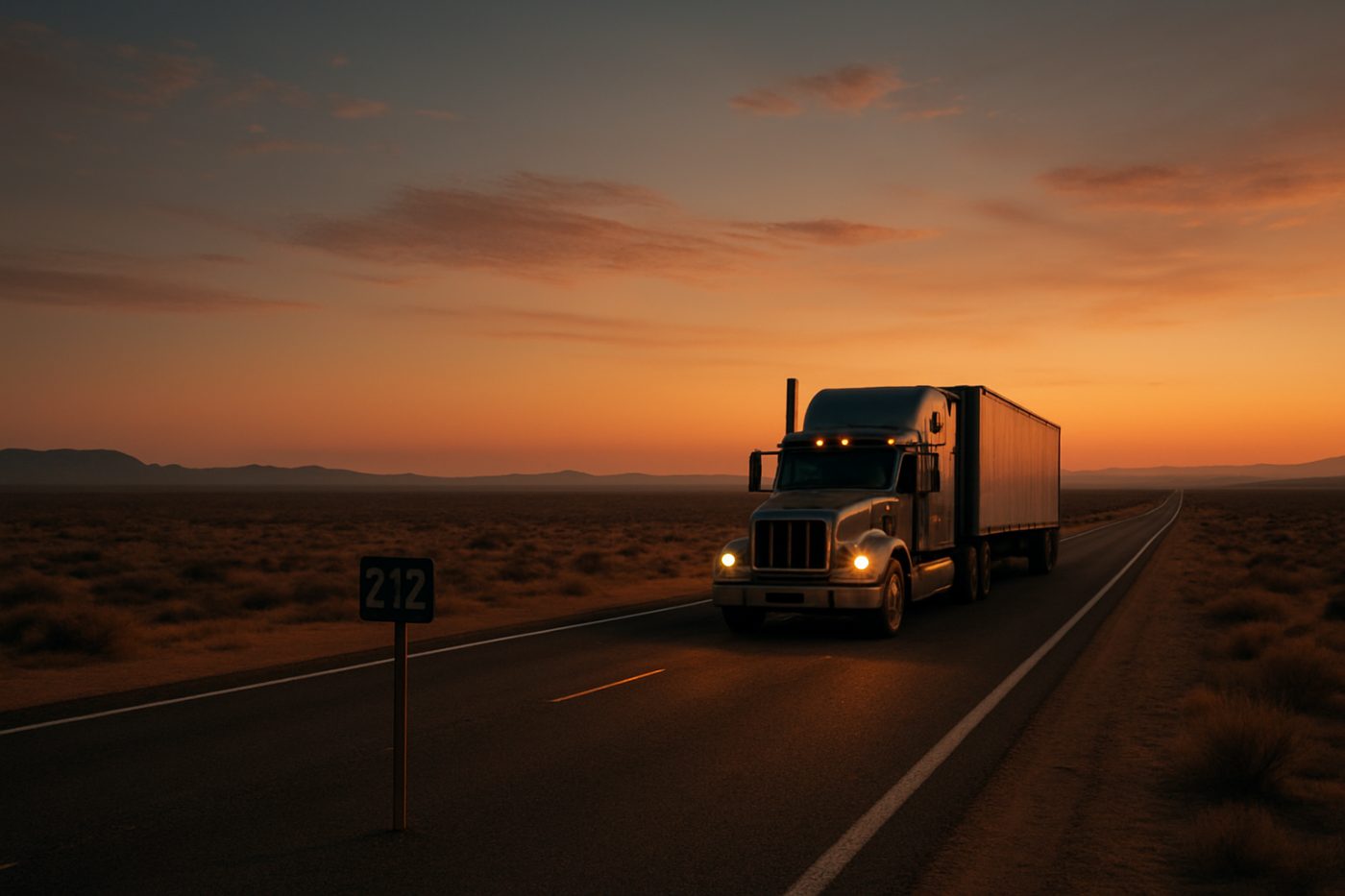

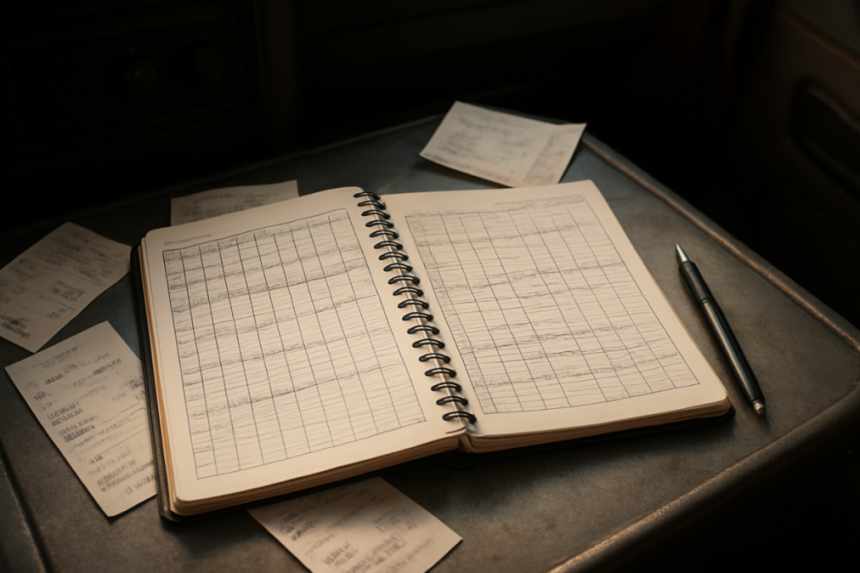
AI illustrations. Please judge the story itself. About AI images.
Filed by its author.
Before you peek: what share of readers believes this story?
50%
No votes yet
Total verdict votes: 0
Guess first! What other readers decided is hidden until you cast your own verdict above — vote True, Fake or Not sure to reveal the community score.
Changed your mind? Read the strongest arguments of the other camp below. If they convinced you — change your verdict (once).
Your new verdict:
Why did you vote that way? Pick up to two:
Noted — thank you, detective.
My case notes (private — stored only in this browser)
Saved in this browser.
True or Fake? — play the detective
How it works: cast your True/Fake verdict above and see whether you matched the reader majority. Then hit "Next case" for a random story and keep your streak going. Solve cases to climb the detective ranks — score and rank are kept on this device only.
Tip: highlight any sentence of the story with your mouse or finger — a small share popup will appear to post that exact quote (with a link back to the story) to X, Facebook, Threads or Reddit.
Something similar happened to you? Tell your version — the jury is waiting. Tell your story
Comments (0)
Comments here are case materials: pick a role — ask the author a question, or file your evidence FOR or AGAINST the story — and it lands in the right column. Upvote the sharpest comments: the best one is pinned on top as the Top Detective Comment. Questions get answered by the story's author in person — look for the AUTHOR badge.
No comments yet. Be the first!