
Grandma Set a Place at the Table for Someone Who Never Came
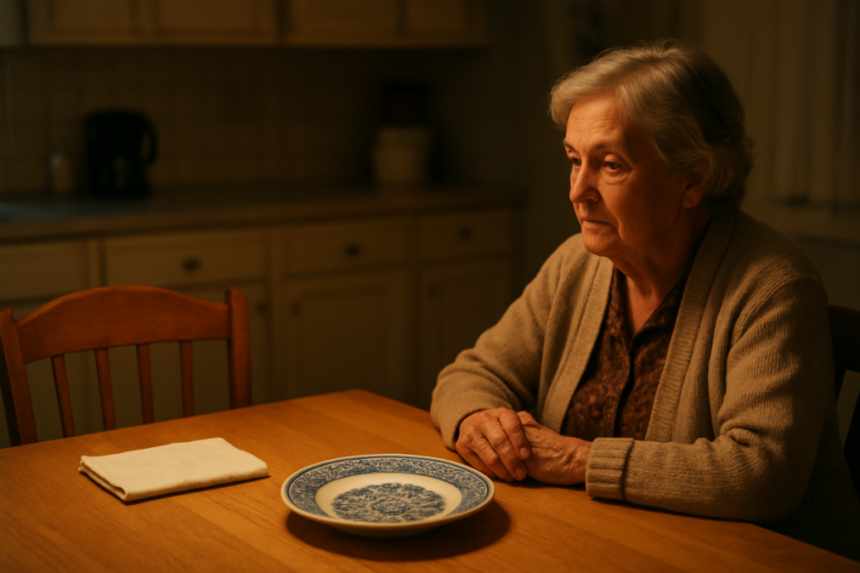
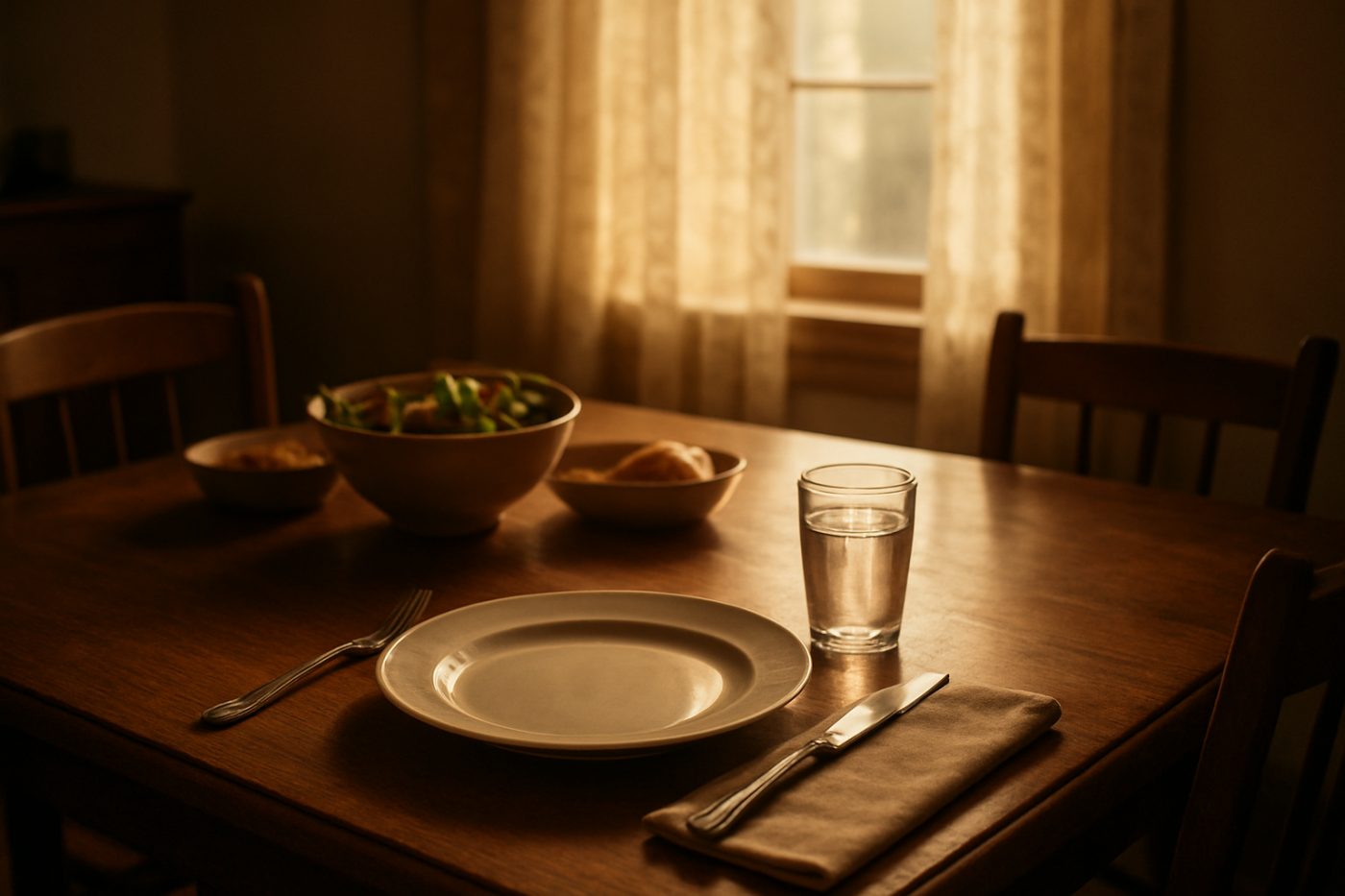
Every Sunday of my childhood my grandmother laid an extra place setting and would not say who it was for. I only understood the year I turned nine, and I have never told anyone why.
* AI Illustration
First impression: judge by the title and the picture alone — you get the real verdict after reading.
Swear It Happened — CASE FILE #461
57% BELIEVED
I grew up thinking this was normal, the way you think everything in your own family is normal until a friend sleeps over and looks at you funny. My friend Katie was the one. She came for Sunday dinner when we were both eight and she said, out loud, in front of everyone, who is the extra plate for. The whole table went quiet in that specific way that teaches a child a question was wrong without ever explaining it.
My grandmother just smiled and said, for whoever needs it, and passed Katie the potatoes. And that was the answer for years. For whoever needs it. She said it lightly, like a small kindness, an old country habit, a plate for the stranger or the angel who might knock. That is certainly what my parents believed, if they believed anything. It was easier than asking.
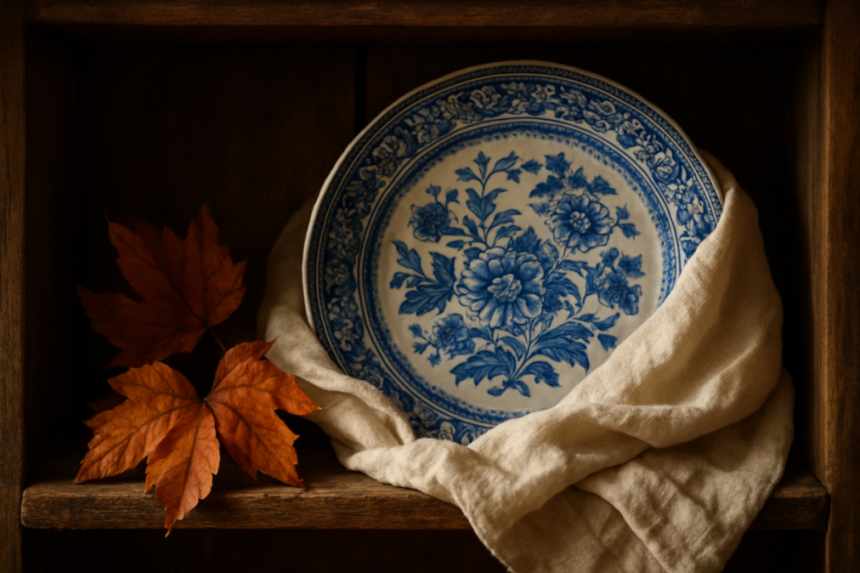
But I was a watchful child, and I noticed things the grown-ups had stopped noticing. I noticed that she always sat so she could see the empty place. I noticed that when she said grace she looked at it. And I noticed that once a year, always in October, always on a Sunday, she would set that place with a different plate -- a good one, blue and white, kept wrapped in a cloth in the back of the cabinet the other fifty-one weeks of the year.
The October I was nine, I could not sleep, and I came downstairs late and found my grandmother sitting alone at the dark table with the good blue plate in front of the empty chair, and she was talking. Quietly. Not praying. Talking, the way you talk to a person, with pauses where the other one answers.
She heard me on the stairs. She did not startle. She just held out her hand and I came and sat in her lap, which I was really too big for, and she let me. And she told me, in a low voice, the thing she had never told my mother and, as far as I know, has never told anyone since.
She had a twin. A sister. They were born in a hard year in a hard place, and the family could not feed two, and when the girls were four years old her sister was given -- her word, given -- to relatives in another town, with promises of letters and visits, and the letters came for a while and then the war came and then nothing came at all. My grandmother never saw her sister again. She did not know if she lived a long life or died a child. She did not know anything.
So every Sunday she set a place. Not for an angel. For a specific girl with her own face, aged in her imagination alongside herself, a woman she had never met but had never for one day stopped keeping a seat for. The blue plate was for October because October was the month they were born. She was setting the table for her sisters birthday. Their birthday. For eighty years.
I asked her, that night, why she never told my mother. And she said something I have carried my whole life. She said, because your mother would have tried to find her, and looking would have meant admitting she is gone, and I would rather set a place forever than have an answer I cannot bear.
She would rather hope than know. She chose, every single Sunday, the small ache of an empty chair over the possibility of a final one.
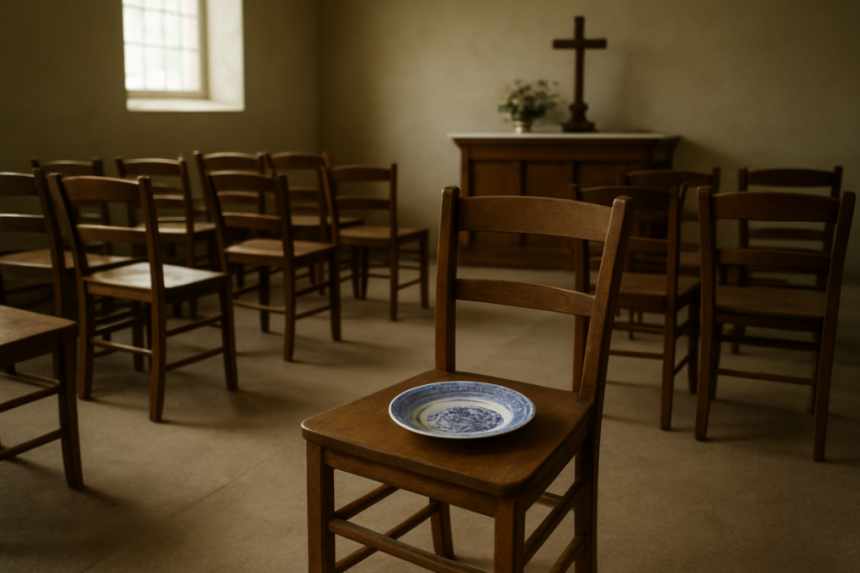
My grandmother is gone now. She died in her nineties, still setting that place, and at her funeral I did something I have never explained to my family. When they asked if anyone wanted to say a few words, I did not speak. Instead I had asked the funeral home, quietly, ahead of time, to set one extra chair in the front row. Empty. With, if they had one, a blue and white plate on the seat.
They found one. It sat there through the whole service, and my relatives assumed it was some arrangement error, and I let them assume it.
It was for whoever needed it. And I think, that day, for the first time in eighty years, both sisters finally had a seat.

AI illustrations. Please judge the story itself. About AI images.
Filed by AI — launch archive.
Before you peek: what share of readers believes this story?
50%
57% of readers believe this story
Total verdict votes: 184
Guess first! What other readers decided is hidden until you cast your own verdict above — vote True, Fake or Not sure to reveal the community score.
Changed your mind? Read the strongest arguments of the other camp below. If they convinced you — change your verdict (once).
Your new verdict:
Why did you vote that way? Pick up to two:
Noted — thank you, detective.
My case notes (private — stored only in this browser)
Saved in this browser.
True or Fake? — play the detective
How it works: cast your True/Fake verdict above and see whether you matched the reader majority. Then hit "Next case" for a random story and keep your streak going. Solve cases to climb the detective ranks — score and rank are kept on this device only.
Tip: highlight any sentence of the story with your mouse or finger — a small share popup will appear to post that exact quote (with a link back to the story) to X, Facebook, Threads or Reddit.
Something similar happened to you? Tell your version — the jury is waiting. Tell your story
Keep investigating
- More Childhood cases
- More Grandma's Stories cases
- A case the jury believes: The Letter Grandma Sewed Into the Lining of Her Coat
- A case the jury believes: No Firstborn in Our Family Is Ever Allowed to Learn to Swim
- A case the jury believes: The Curse on Our Family Turned Out to Be a Sister No One Named
- The full Family Legends archive
- Cases the jury cannot settle
Comments (0)
Comments here are case materials: pick a role — ask the author a question, or file your evidence FOR or AGAINST the story — and it lands in the right column. Upvote the sharpest comments: the best one is pinned on top as the Top Detective Comment. Questions get answered by the story's author in person — look for the AUTHOR badge.
No comments yet. Be the first!