
The Letter Grandma Sewed Into the Lining of Her Coat
In one sentence: A family discovers a hidden secret inside their grandmother’s old coat that reveals a forgotten chapter of her past.
For eighty years my grandmother wore the same gray wool coat and never let anyone take it to the cleaners. When she died we found out why -- there was a letter stitched inside the hem.
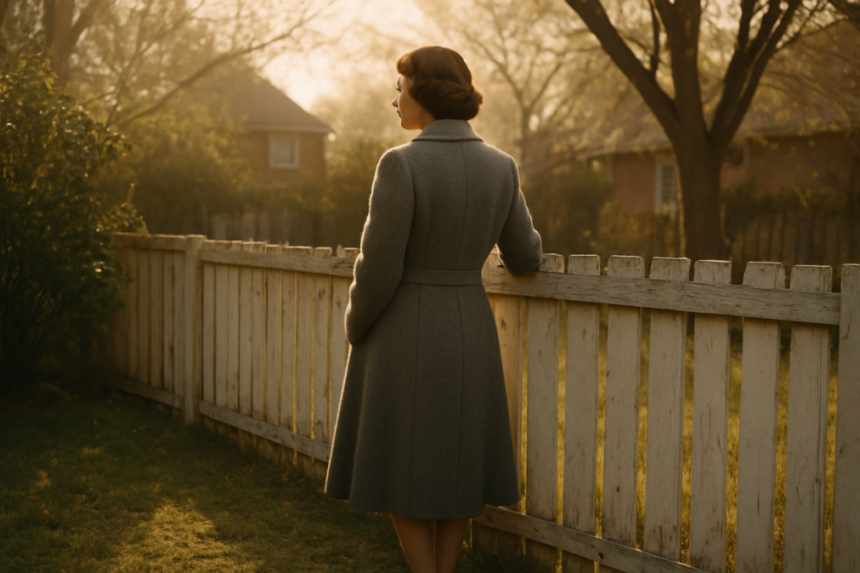
* AI Illustration
First impression: judge by the title and the picture alone — you get the real verdict after reading.
Swear It Happened — CASE FILE #458
58% BELIEVED
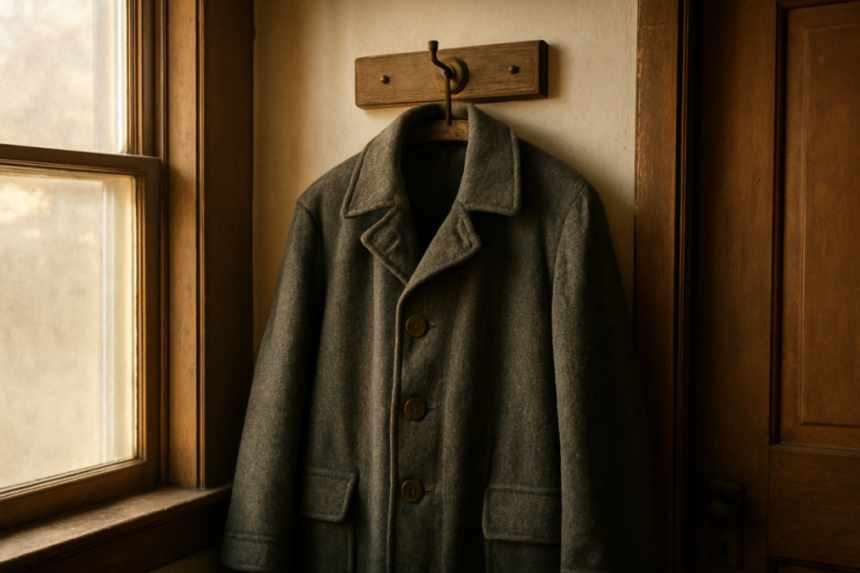
The rule in our house was simple. Nobody touched the coat. My mother offered a hundred times to have it dry cleaned, to reline it, to at least sew the pocket that had torn. Grandma would just put her hand flat on the front of it, like she was calming an animal, and say, no, thank you, it is fine as it is. And that was the end of the conversation.
We thought it was stubbornness. She was born in 1931 and she came from people who did not throw things away, who wore socks until they were more darn than sock. A coat that still buttoned was a coat you kept. That is what we told ourselves.
She died in March, at ninety-one, in her sleep, which is the death everyone says they want and almost nobody gets. When we were clearing the house, my aunt found the coat on its hook by the back door where it had hung my entire life. She took it down to fold it, and she felt something stiff in the hem. Not a coin. Paper.
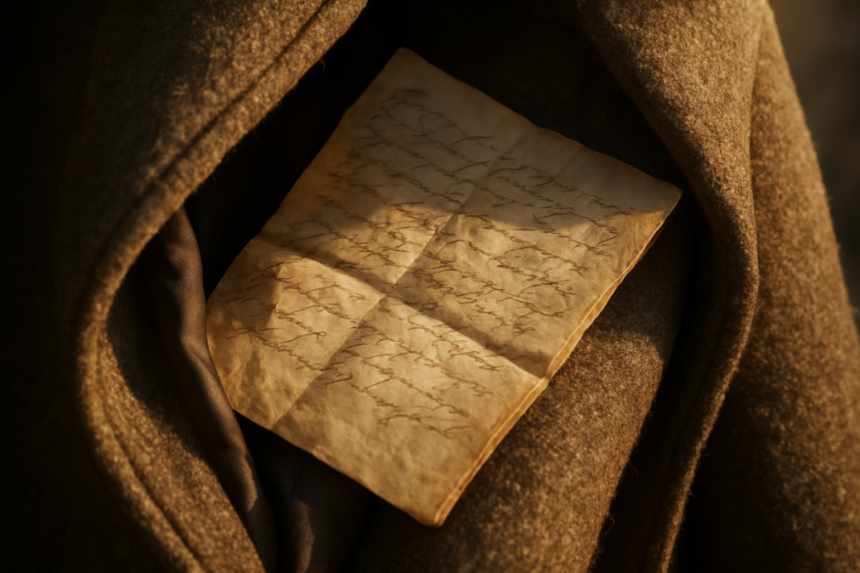
We opened the lining with a seam ripper at the kitchen table, all of us leaning in, and inside, folded into a square the size of a matchbook and gone soft as cloth from decades of being carried, was a letter.
It was written in Polish. My grandmother never spoke Polish to us. Not once. She told us her family was from Ohio, that her people had always been from Ohio, that there was nothing interesting back there. We had no reason to doubt her. She made pot roast and watched game shows and complained about the neighbors. She was the least mysterious person I knew.
My cousin found a translator online, an older woman at the university who did it for free when she heard how old the letter was. It took two weeks. When the translation came back my aunt read it out loud and had to stop twice.
It was from a man named Tomasz. It was dated 1949. He wrote that he was sorry, that he had waited at the station as long as he could, that the boat would not hold and he had to go, and that he would think of her on the ship and every day after. He wrote that he was keeping the other half of the photograph. He signed it, your husband still, if you will have me, and if you will not, then still.
My grandmother came to this country in 1950. Alone, according to every document we had. She married my grandfather -- the grandfather I knew, the one who fixed radios and smelled like pipe smoke -- in 1953. As far as any of us had ever been told, he was the first and only.
But here was a letter that called her wife four years before that. Here was a man named Tomasz who had waited at a station for a boat.
We do not know what happened. We do not know if Tomasz drowned, or reached America and could not find her, or reached America and did find her and she chose the man with the radios instead. We do not know if she was ever really his wife or if it was a promise made by two frightened young people that a war had already broken. We found no photograph, torn or whole. We found no record of him at all.
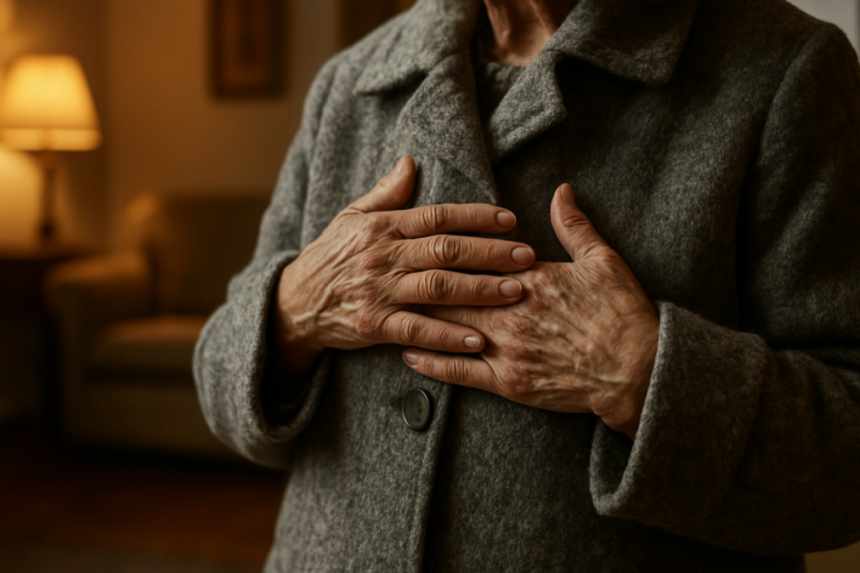
What we know is that for over seventy years my grandmother carried a piece of that man against the inside of her coat, over her ribs, close enough to feel it when she buttoned up against the cold. She carried it while she raised my mother. She carried it while she buried my grandfather. She carried it to church and to the grocery store and to my wedding, where she danced, in the coat, because she was cold, and we all laughed.
I keep thinking about the last line. Your husband still, if you will have me, and if you will not, then still. Still. As in, regardless. As in, forever, whatever you decide.
She decided. She built a whole life. And she never once took off the coat.

AI illustrations. Please judge the story itself. About AI images.
Filed by AI — launch archive.
Before you peek: what share of readers believes this story?
50%
58% of readers believe this story
Total verdict votes: 169
Guess first! What other readers decided is hidden until you cast your own verdict above — vote True, Fake or Not sure to reveal the community score.
Changed your mind? Read the strongest arguments of the other camp below. If they convinced you — change your verdict (once).
Your new verdict:
Why did you vote that way? Pick up to two:
Noted — thank you, detective.
My case notes (private — stored only in this browser)
Saved in this browser.
True or Fake? — play the detective
How it works: cast your True/Fake verdict above and see whether you matched the reader majority. Then hit "Next case" for a random story and keep your streak going. Solve cases to climb the detective ranks — score and rank are kept on this device only.
Tip: highlight any sentence of the story with your mouse or finger — a small share popup will appear to post that exact quote (with a link back to the story) to X, Facebook, Threads or Reddit.
Something similar happened to you? Tell your version — the jury is waiting. Tell your story
Keep investigating
- More Grandma's Stories cases
- More Old Letters cases
- A case the jury believes: No Firstborn in Our Family Is Ever Allowed to Learn to Swim
- A case the jury believes: Grandma Set a Place at the Table for Someone Who Never Came
- A case the jury believes: The Curse on Our Family Turned Out to Be a Sister No One Named
- The full Family Legends archive
- Cases the jury cannot settle
Comments (0)
Comments here are case materials: pick a role — ask the author a question, or file your evidence FOR or AGAINST the story — and it lands in the right column. Upvote the sharpest comments: the best one is pinned on top as the Top Detective Comment. Questions get answered by the story's author in person — look for the AUTHOR badge.
No comments yet. Be the first!