
The Steamer Trunk in the Attic Had a False Bottom
In one sentence: A decades-old family mystery hidden in an attic trunk slowly unfolds through forgotten letters and quiet secrets.
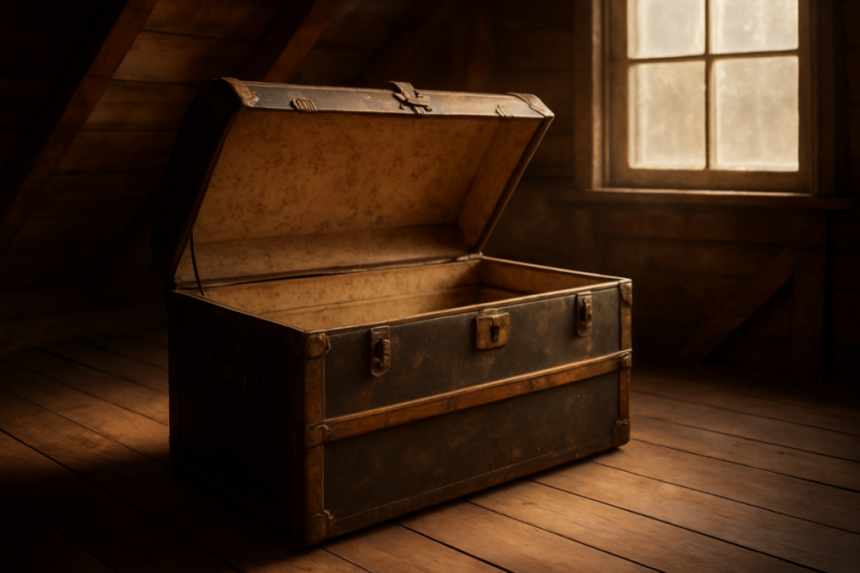
The old trunk had been in our family for a century and everyone said it was empty. It was not empty. Under a false floor were letters that explained the thing we never spoke about.
* AI Illustration
First impression: judge by the title and the picture alone — you get the real verdict after reading.
Swear It Happened — CASE FILE #460
56% BELIEVED
Everyone always said it was empty. I opened it a dozen times as a kid, hoping for treasure, and found nothing but a paper lining printed with faded flowers and the ghost of that smell. Empty. A hundred-year-old empty box that we kept because you do not throw away a thing like that.
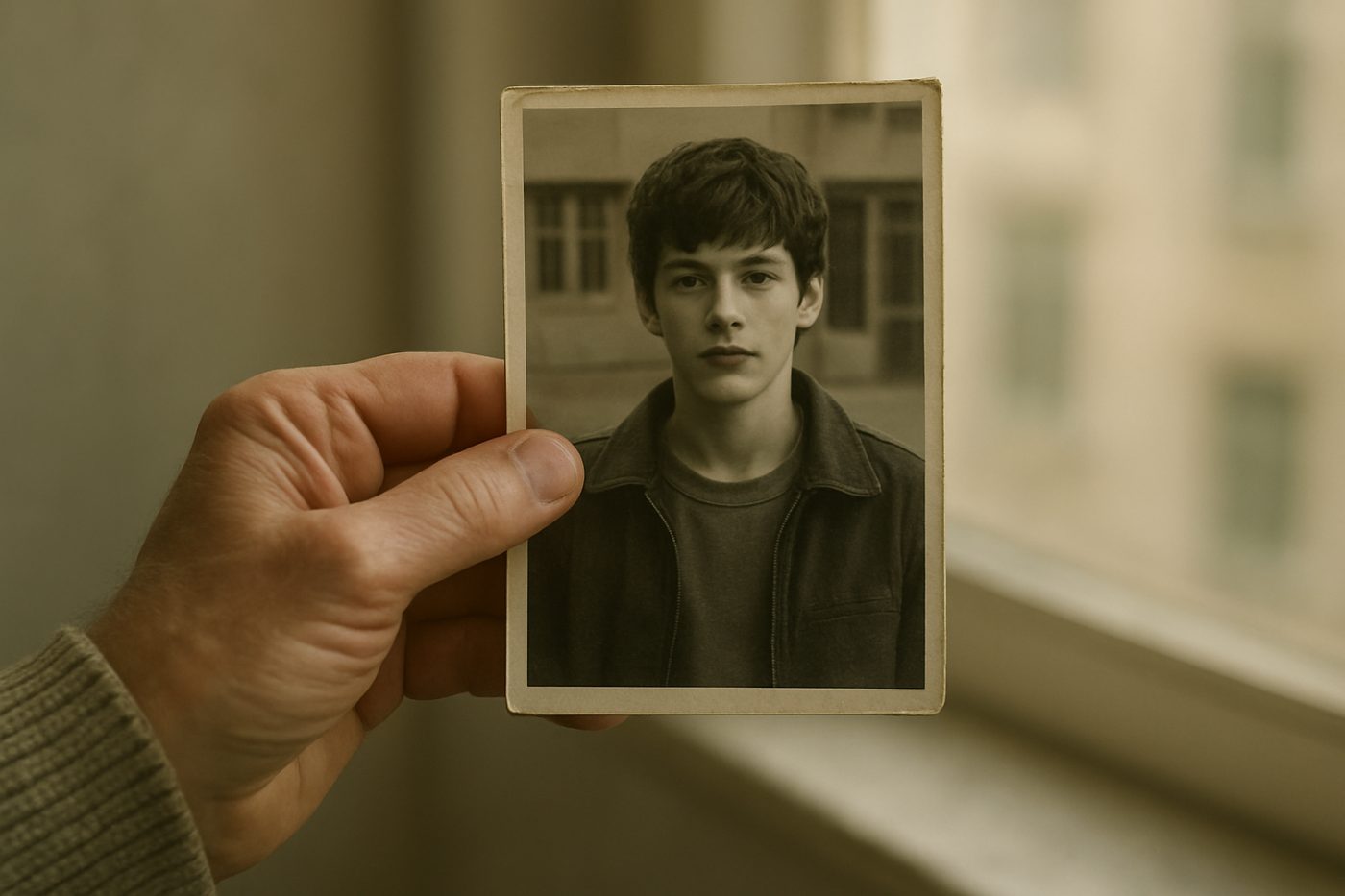
The thing we did not talk about in my family was my great-uncle Daniel. I knew he existed the way you know about a country you will never visit. There was one photograph of him, a boy of maybe ten, at the edge of a family group, and in every retelling of the family story he simply stopped. He was there, and then the narrative moved on without him, and if a child asked, the adults got a particular flat look and changed the subject. He ran off, someone would eventually say. He was trouble. We do not know. Leave it.
Last winter I decided to refinish the trunk. I am not handy, but I had time and a book. I emptied it, ran my hand along the floor to check for loose lining, and the floor moved. Not much. A quarter inch. But floors do not move.
It took me an hour and a butter knife to understand that the bottom I could see was not the real bottom. There was a shallow compartment beneath it, maybe two inches deep, the whole footprint of the trunk, and someone long ago had fitted a false panel over it so cleanly that a century of hands, including mine, had missed it.
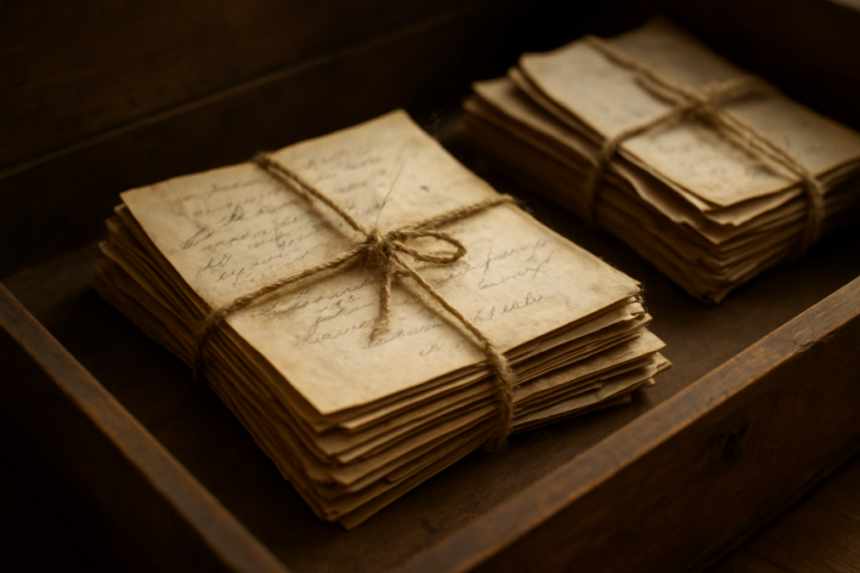
Inside were letters. Dozens, tied in three bundles with string that came apart when I touched it. And a smaller photograph of the same boy, older now, sixteen or seventeen, standing in front of a building I did not recognize, squinting, half-smiling.
The letters were from Daniel. They were written between 1931 and 1946, and they were all addressed to my great-grandmother, his mother. They were mailed from a state clear across the country. And they told, letter by letter, year by year, the story my family had spent ninety years pretending had no ending.
He had not run off. He had been sent away, at fourteen, to what the earliest letters call the school and the later ones call this place, for reasons that are never named directly but that I could assemble from the gaps -- something he was, something he had done or been accused of, something that a family in that town in that decade decided it could not have under its roof.
The early letters are a boy begging to come home. Please, he writes, I will be good, I do not know what I did. The middle letters are calmer, a young man reporting on his work, the weather, a friend named Sam that he mentions in every single letter for four years and then, after 1941, never mentions again. The last letters are short and gentle and they have stopped asking to come home. In the final one, from 1946, he writes: I am not angry anymore. I hope you are not either. I had a good enough life, in the end, and more of one than you let yourself imagine for me. Tell them, if you ever can, that I was not what they said.
She never told them. She kept his letters in the false bottom of a trunk that she then told everyone was empty, and she let her own son become a country nobody visited, and I do not know if she did it out of shame or love or both, because for a woman like her in a town like that the two might not have felt any different.
I have read those letters maybe twenty times now. I still cannot decide if the false bottom was a betrayal or a devotion. She hid him, but she kept him. She erased him from the story, but she could not throw him away, any more than we could throw away the trunk.
I found where he is buried. It took some doing. He died in 1961, and the friend named Sam is buried beside him, and the two stones match, and I think that tells me more about the something my family could not name than any letter did.
I am going to visit in the spring. I am bringing a copy of the last letter to leave at the stone. Tell them I was not what they said. I am the them, now. I am telling.


AI illustrations. Please judge the story itself. About AI images.
Filed by AI — launch archive.
Before you peek: what share of readers believes this story?
50%
56% of readers believe this story
Total verdict votes: 163
Guess first! What other readers decided is hidden until you cast your own verdict above — vote True, Fake or Not sure to reveal the community score.
Changed your mind? Read the strongest arguments of the other camp below. If they convinced you — change your verdict (once).
Your new verdict:
Why did you vote that way? Pick up to two:
Noted — thank you, detective.
My case notes (private — stored only in this browser)
Saved in this browser.
True or Fake? — play the detective
How it works: cast your True/Fake verdict above and see whether you matched the reader majority. Then hit "Next case" for a random story and keep your streak going. Solve cases to climb the detective ranks — score and rank are kept on this device only.
Tip: highlight any sentence of the story with your mouse or finger — a small share popup will appear to post that exact quote (with a link back to the story) to X, Facebook, Threads or Reddit.
Something similar happened to you? Tell your version — the jury is waiting. Tell your story
Keep investigating
- More Family Curses cases
- More Old Letters cases
- A case the jury believes: The Letter Grandma Sewed Into the Lining of Her Coat
- A case the jury believes: No Firstborn in Our Family Is Ever Allowed to Learn to Swim
- A case the jury believes: Grandma Set a Place at the Table for Someone Who Never Came
- The full Family Legends archive
- Cases the jury cannot settle
Comments (0)
Comments here are case materials: pick a role — ask the author a question, or file your evidence FOR or AGAINST the story — and it lands in the right column. Upvote the sharpest comments: the best one is pinned on top as the Top Detective Comment. Questions get answered by the story's author in person — look for the AUTHOR badge.
No comments yet. Be the first!