
The Typewriter Finishes Sentences I Don't
In one sentence: A typewriter collector brings home an old machine and finds his test pages turning into someone else’s mournful story whenever he leaves the room.
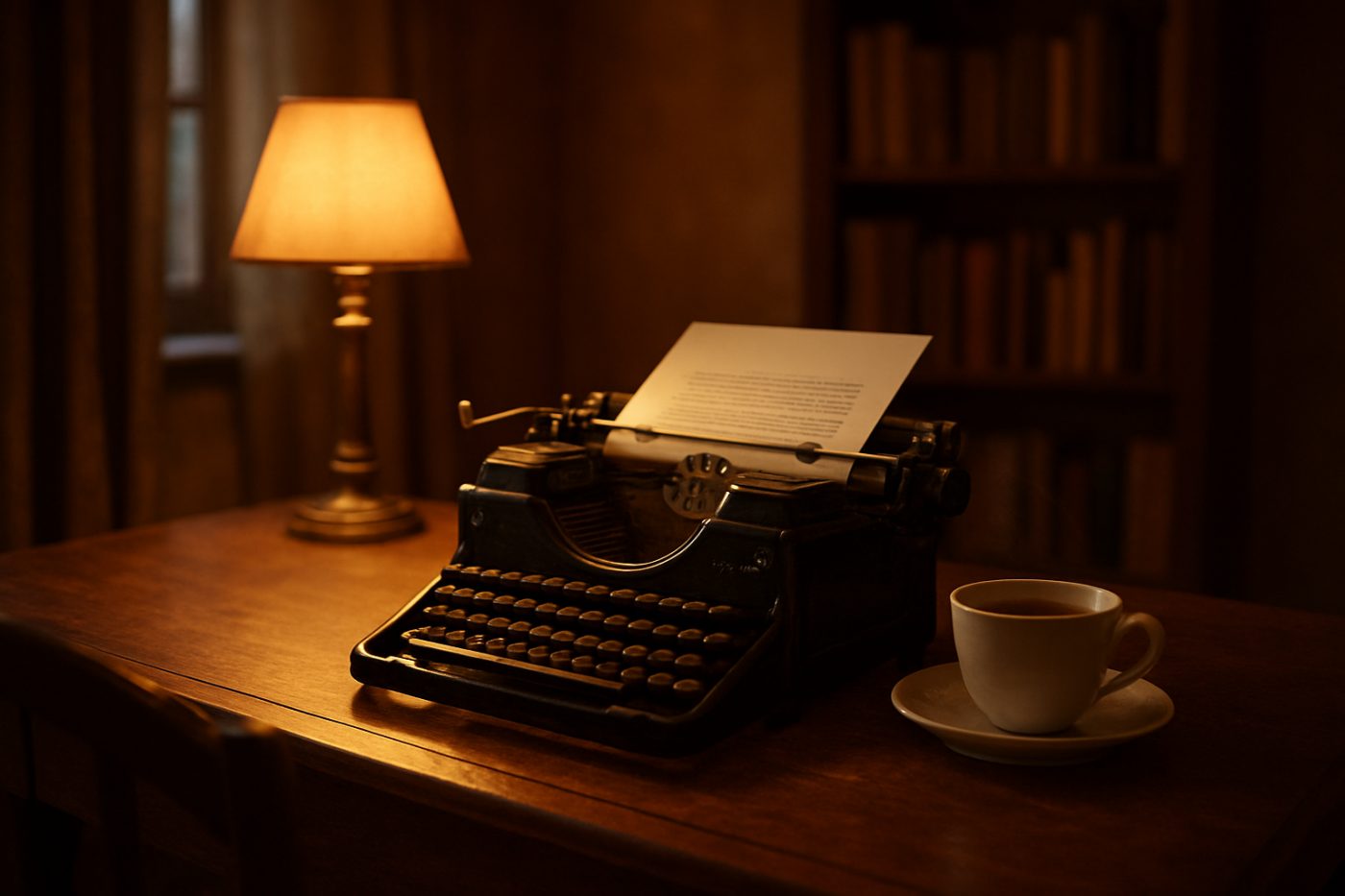
I collect old typewriters. One, from a house-clearance, types a line of its own after I stop — always continuing my sentence, always in a voice that isn't mine, always about a woman waiting for a letter.
* AI Illustration
First impression: judge by the title and the picture alone — you get the real verdict after reading.
Swear It Happened — CASE FILE #140
85% BELIEVED
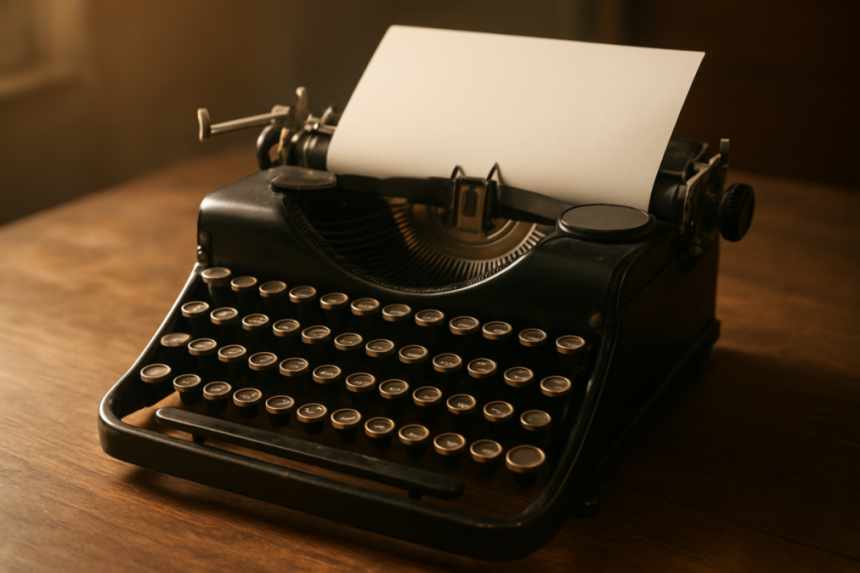
You type on a manual typewriter and nothing types back; that is the entire nature of the machine. There is no mechanism by which keys depress themselves, levers swing, the platen advances, without a hand. I want that understood as the baseline physics I'm violating.
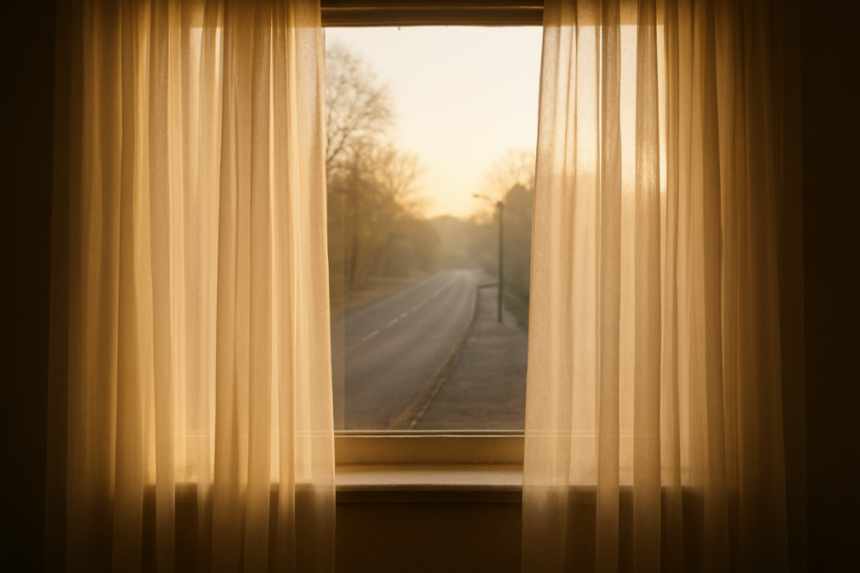
I typed a test line — the usual quick brown fox nonsense — and left the room to make tea. I came back to a second line on the page, below mine, that I had not typed. The machine had, in my absence, in an empty locked room, typed a sentence. And the sentence was not random: it CONTINUED. Not my fox sentence, but a thought, mid-flow, as if picking up a conversation I hadn't known I was in: '...and still no letter came, though she watched the road every morning from the window over the door.'
It has done this many times now, and the rules have become clear. It types only when I'm not looking. It always continues — never starts fresh, but extends whatever fragment I've last typed into its own thought, seamlessly, so that my banal test lines become the openings of someone else's sentences. And the sentences are always, always about the same thing: a woman, waiting, for a letter that doesn't come. 'She kept his chair.' 'The postman's bicycle bell was the cruelest sound.' 'Forty years is a long time to watch a road.' A whole life of waiting, typed out a line at a time, in a voice with its own cadence and its own grief, using my typewriter and my ribbon and my absences to say the things it apparently still needs to say.
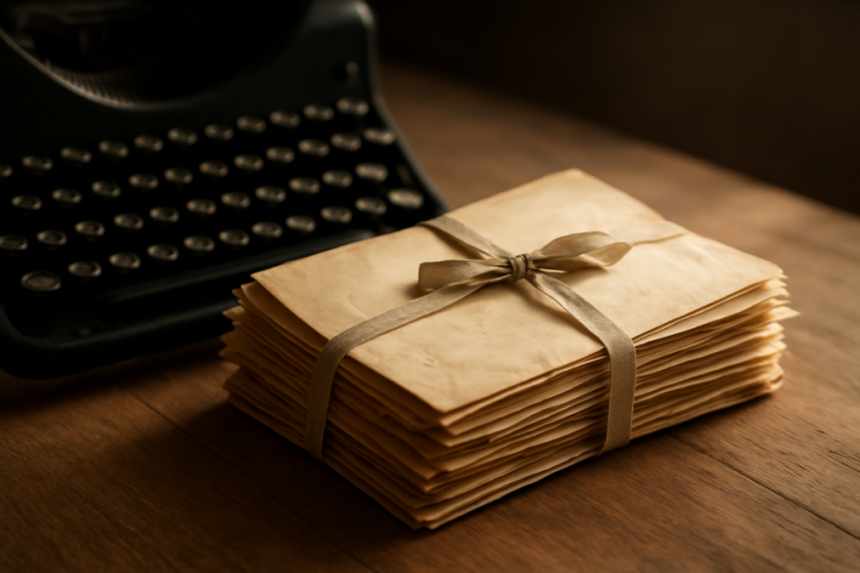
I've researched the clearance house as far as it goes. A woman lived there alone for a very long time. The clearance people, when I pressed, remembered 'a lot of unsent letters' among her effects, bundled and never posted, and a house 'that felt like it was still waiting for someone.' I think I know whose typewriter this was. I think she spent forty years writing to someone who never wrote back, or never came, and I think some residue of that waiting is still in the machine, still watching the road, still finishing the sentence.
I keep it inked and I keep paper in it, and I've stopped testing the keys with foxes. Now I sometimes type a real opening — 'Tell me about the letter' — and leave the room, and come back to a page of her answer, and I read it, and it's unbearable, and I keep doing it, because I think forty years of unsent grief deserves, at last, one person willing to come back into the room and read what it finally got to say. When she's finished — if grief like that ever finishes — I imagine the keys will go still. Until then, I leave the paper in, and the light on, and the road, I suppose, watched.

AI illustrations. Please judge the story itself. About AI images.
Filed by AI — launch archive.
Before you peek: what share of readers believes this story?
50%
85% of readers believe this story
Total verdict votes: 117
Guess first! What other readers decided is hidden until you cast your own verdict above — vote True, Fake or Not sure to reveal the community score.
Changed your mind? Read the strongest arguments of the other camp below. If they convinced you — change your verdict (once).
Best arguments that the story is True:
I restore these machines for a living. Manual typewriters have zero capacity for autonomous action — no motor, no solenoid, nothing that moves without finger force.
Best arguments that the story is Fake:
This is the mechanism of automatic writing / dissociative composition — you're typing the continuations yourself in a fugue-adjacent state and not encoding it, primed by an evocative object with a sad provenance.
Your new verdict:
Why did you vote that way? Pick up to two:
Noted — thank you, detective.
My case notes (private — stored only in this browser)
Saved in this browser.
True or Fake? — play the detective
How it works: cast your True/Fake verdict above and see whether you matched the reader majority. Then hit "Next case" for a random story and keep your streak going. Solve cases to climb the detective ranks — score and rank are kept on this device only.
Tip: highlight any sentence of the story with your mouse or finger — a small share popup will appear to post that exact quote (with a link back to the story) to X, Facebook, Threads or Reddit.
Something similar happened to you? Tell your version — the jury is waiting. Tell your story
Keep investigating
- More Unexplained Events cases
- More Thrift Store Finds cases
- A case the jury believes: The Music Box Winds Itself the Night Before Bad News
- A case the jury believes: The Doll Faces Whoever Will Die Next
- A case the jury believes: Grandfather's Watch Runs Backward at 4 A.M.
- The full Cursed Objects Stories archive
- Cases the jury cannot settle
#422 typewriter_restorer · Verdict: True · Jun 1, 2026
I restore these machines for a living. Manual typewriters have zero capacity for autonomous action — no motor, no solenoid, nothing that moves without finger force.
#423 tell_me_about_the_letter · Jun 4, 2026
Typing 'Tell me about the letter' and leaving the room so forty years of unsent grief finally gets one reader. That's not a haunting, that's a correspondence, decades late. The kindest thing on this entire site, and the saddest. Keep the paper in.
#424 automatism_al · Verdict: Fake · Jun 7, 2026
This is the mechanism of automatic writing / dissociative composition — you're typing the continuations yourself in a fugue-adjacent state and not encoding it, primed by an evocative object with a sad provenance.