
I Count Things for a Living, and One Night Won't Balance
In one sentence: A pharmacy tech experiences unexplained lost time and strange symptoms after her car mysteriously dies on a remote highway one night.
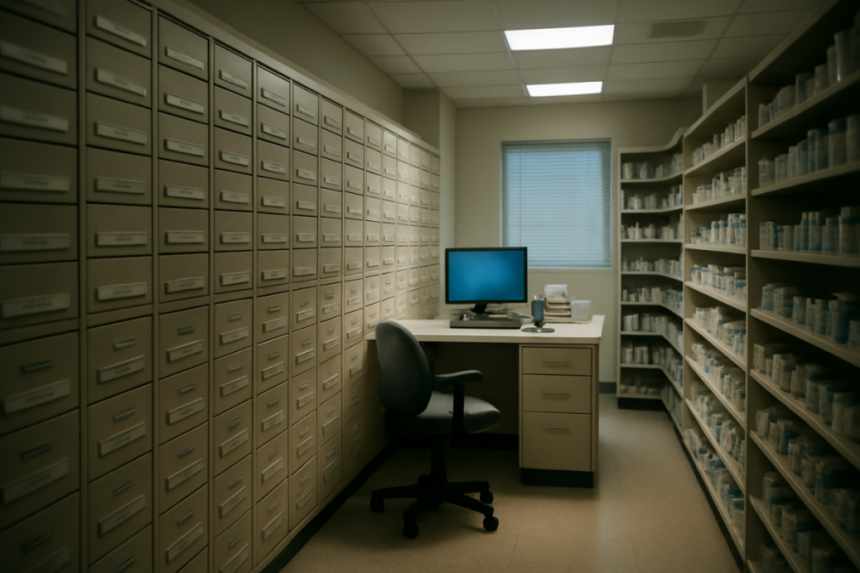
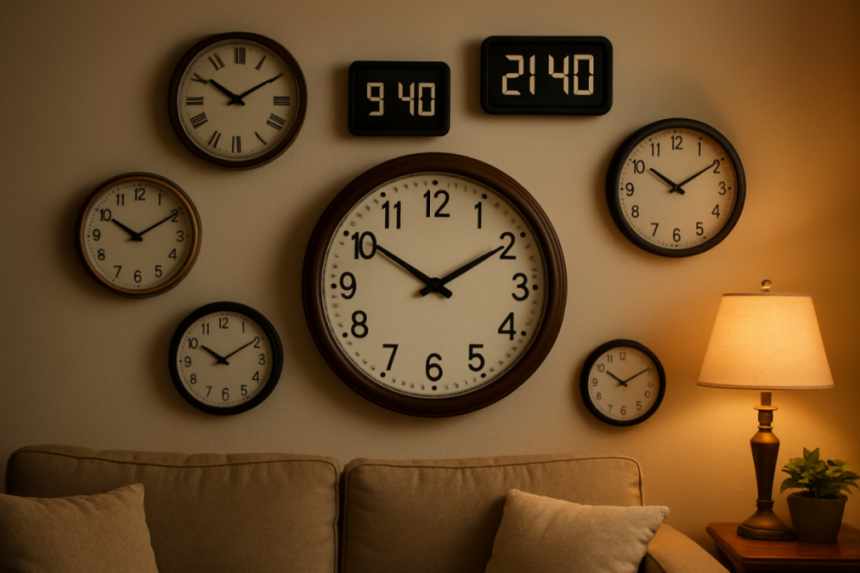
Pharmacy tech, sixteen years. My car died on US-97 at 9:40 on a clear November night, and twenty-some minutes stopped agreeing with every clock I own. I don't remember a thing. What I got instead is worse: I know my way around a room I've never been in.

* AI Illustration
First impression: judge by the title and the picture alone — you get the real verdict after reading.
Swear It Happened — CASE FILE #557
JURY PENDING
COLD CASE — this file never got enough jurors. Your verdict counts double here (morally).
I am telling you this so you understand what kind of person is about to tell you the rest, and so you understand what it cost me. Because since November of 2021 I have been carrying a discrepancy I cannot resolve, and it is not in a drawer, it is in me, and I have pulled every record I have access to and the count does not balance.
I also want to say that I have never cared about UFOs. I need that on the record because the first thing people do when you tell a story like mine is sort you into a bin, and the bin has Coast to Coast AM in it, and blurry photographs, and grown men in Mulder t-shirts arguing about Bob Lazar in hotel conference rooms. That is not my bin. My ex-husband went through a History Channel phase around 2014 and I used to leave the room. Not out of fear. Out of the specific irritation a person who reconciles numbers for a living feels watching a show where nobody ever checks anything. So when I tell you what I am about to tell you, know that every sentence of it embarrasses me. I have written this out three times and deleted it twice. My sister finally said, write it like one of your incident reports, Renee, you're good at those. So that is what this is. An incident report. Long one.
Some background, quickly, because the background matters more than I understood at the time. I was 41 when it started, 45 now, divorced since 2017, no kids. I live alone in a two-bedroom rental off Purcell in Bend with a yard I keep meaning to do something with. I have worked at the same retail pharmacy for eleven of my sixteen years, a high-volume store, four to five hundred scripts a day. My sister Dana lives in Klamath Falls with her husband and my niece. It is about two hours and forty minutes door to door, almost all of it on US-97, which if you have not driven it at night, is one of the emptier experiences available in the lower forty-eight. Between the little towns there are stretches where it is just you, the lodgepole pines, the odd logging truck, and however you happen to be feeling about your life at that moment.
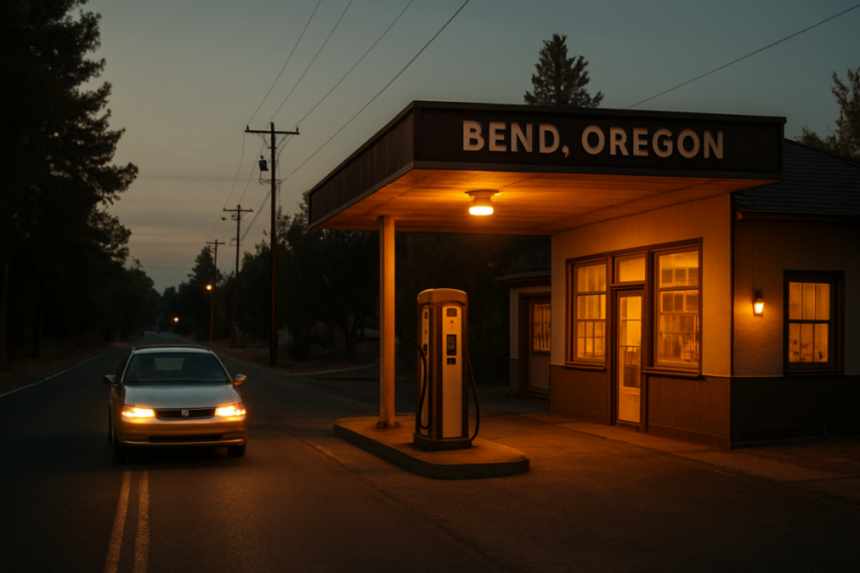
I drove down on Friday, November 12, 2021, for my niece's ninth birthday, which was the 13th, a Saturday. I stayed the extra night because Dana and I split a bottle of wine Saturday and I don't drive after drinking, at all, ever, which is relevant later because people have tried very hard to make that night about impairment and there was none. I left Sunday evening, November 14. I remember being annoyed with myself for leaving so late. Dana wanted me to stay for dinner and I said yes to be agreeable, so it was almost 7:30 before I got gas at the station on Washburn Way and pointed the car north. I had work at 8:45 Monday morning. The plan was home by 10:15, laundry going by 10:30, bed by midnight, because at that time in my life midnight to 5 was when I lay in bed not sleeping, which was its own long-running situation I will get to.
The car was a 2013 Corolla, silver, bought used in 2016 with 41,000 miles on it. I am not a car person but I am a maintenance person. Oil every five thousand, tires rotated, the sticker in the corner of the windshield always current. That car had never once failed to start. I am aware that every breakdown story ever told includes the sentence "the car had never given me any trouble," and I am aware of what that sentence is worth as evidence, which is nothing. I'm including it anyway because it is true and because the mechanic will back me up, for whatever his part of this is worth, which is also, I have come to accept, close to nothing.
North of Chemult the highway straightens out and the towns quit. There is a stretch I have driven probably two hundred times in my life, maybe more, flat and straight with the pines set back from the road on both sides, and a long low ridge to the east you can only see in daylight. No houses. One rest area, closed that winter for a plumbing issue, which I only know because I looked it up afterward, because afterward I looked up everything.
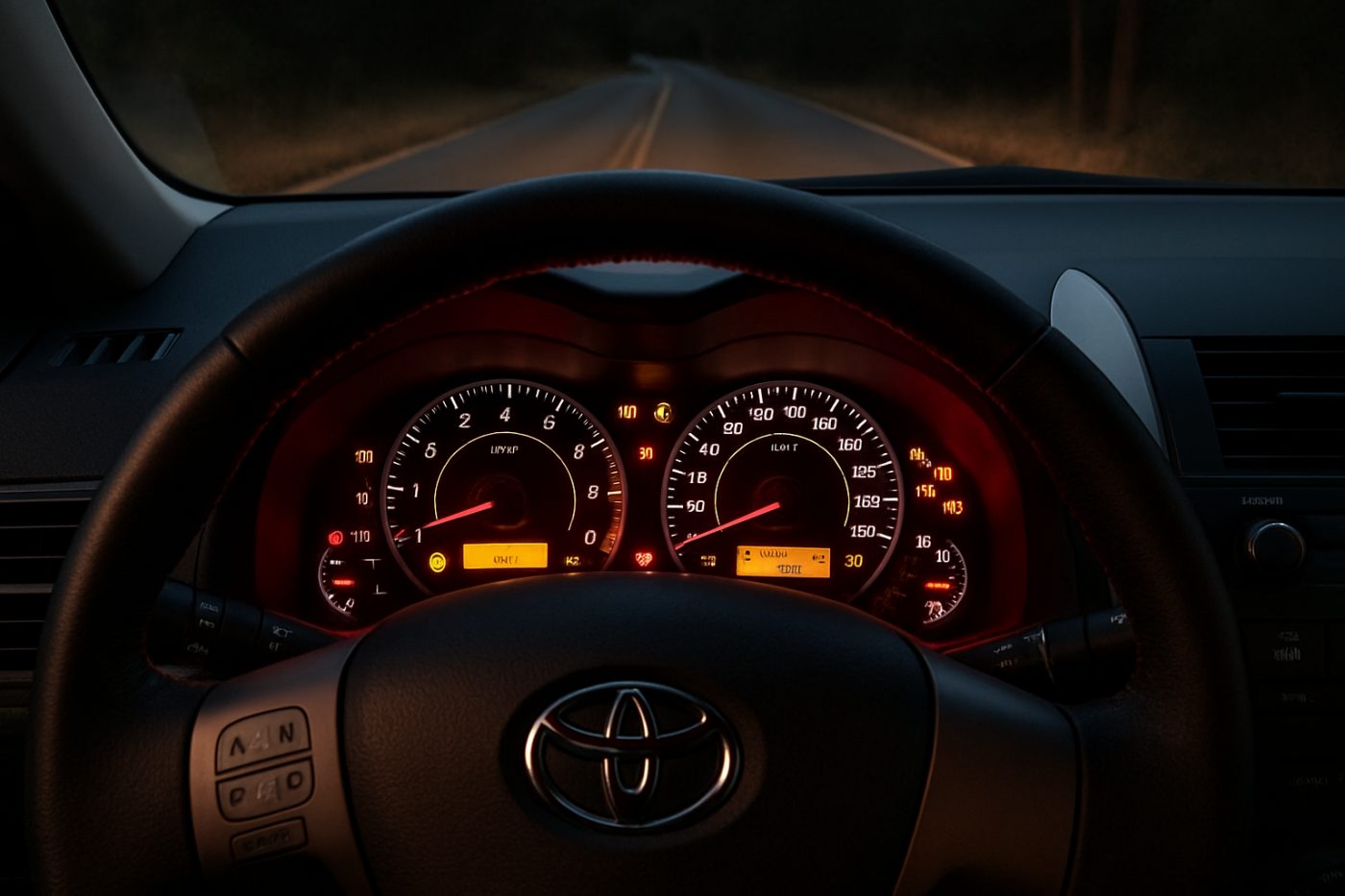
At 9:38 or 9:39 the radio cut out. I know the time the way you know things afterward, by reconstruction, not the way you know things when they happen. I had the radio on for company, some classic rock station out of Bend fading in and out, and it did not fade, it stopped. Then the dash lit up, every warning light at once, the way it does for half a second when you first turn the key, and then all of it went dark. Dash, headlights, radio, the works. The power steering went heavy in my hands. The engine was just gone, no cough or sputter, nothing you could call a mechanical event. It was like the car had been unplugged. I want to be careful here because I have told this part enough times that it has gotten smooth, and smooth is what happens to stories, not to memories. So let me rough it back up: I do not actually remember steering to the shoulder. That is a gap and it is the first gap and I have flagged it in my records as such. The next thing I have is the car stopped on the gravel, straight, parked as neatly as if I'd done it in a lot, and my hands in my lap.
And here is where I have to slow way down, because this next stretch of time is the center of the whole thing and it is exactly the part I can say the least about.
The car was dead and I was sitting in it, and my memory of the next twenty-some minutes is that the car was a place I was waiting in. That is the most accurate sentence I can build and I have tried many. Waiting the way you wait in an exam room. Not afraid, not bored, not thinking about being late for work, which is not like me, being late is one of the four or five things I actually fear. I did not try the key. I did not reach for my phone, which was in the cupholder, charged, two bars, I checked it later. I did not put the hazards on, which would not have worked, but the point is I didn't try. I sat there with my hands in my lap like a person who has been told, kindly, that it won't be long now.
I need to be precise about what I am claiming and what I am not claiming. I am not claiming missing time in the way the paperback books mean it. I can account for the time in the sense that I was, as far as I know, in the driver's seat of my own car for all of it. What I cannot account for is me. There is no content in those minutes. Not darkness, not a blank like sleep. Sleep leaves a seam, you can feel where the night was stitched out. This had no seam. It was more like a page in a ledger where the entries are in someone else's handwriting, and the handwriting is neat, and the totals carry forward correctly, and it is still wrong, because you did not write it.
At 10:04 by my phone the engine was running. I do not remember starting it. I have the phone time because the first thing I did, and this at least is completely in character, was pick up the phone and look at the clock and start doing arithmetic, because I am always doing arithmetic. 10:04. I had left Klamath Falls at 7:34 by the gas receipt. The stretch I was on is about ninety minutes from that station at my speeds. So the car died a little before 9:40 and now it was 10:04 and the engine was idling like nothing had ever been wrong with it, heater blowing, headlights on, and the radio playing the same station, and I looked at the clock on the radio and it said 9:38.
Twenty-six minutes behind my phone. I sat there and I did what I do, I tried to reconcile it. The radio clock in that car was the kind you set by hand with the tuning knob, and I had set it myself the previous spring when daylight saving started, and it did not drift, or if it drifted it drifted the way dashboard clocks drift, a minute or two a year. Twenty-six minutes is not drift. Twenty-six minutes is an outage. A dashboard clock that loses power forgets everything and flashes 12:00. It does not politely stop for twenty-six minutes and then resume. I knew that even then, sitting on the shoulder, before I knew anything else. The clock had experienced the interruption and my phone had not, because my phone carries its own battery and gets its time from the network. Which means, and this was the first genuinely cold thought I had that night, the interruption was real and had a length, and the length was about twenty-six minutes, and I had been present for all of it and could report nothing.
I drove north. What else was there to do. The car ran perfectly. I stopped at the first place with lights, a 24-hour gas station and mini-mart at a junction I'd passed a hundred times, Loder's, the one with the plywood elk on the roof, and I parked under the canopy lights and took a photograph of the radio clock with my phone held next to it so both times were in frame. Phone: 10:31. Radio: 10:05. I have that photo. It is the only physical evidence I possess of the strangest night of my life, and I want to be the first to tell you everything wrong with it, because someone in the comments will do it anyway and I would rather it be me. A photo of two clocks proves that two clocks disagreed. That is all it proves. Phones resync their time off cell towers, and if you want to argue my phone had been wrong all evening and corrected itself somewhere north of Chemult, I cannot fully rule that out, I can only tell you the gas receipt from Washburn Way says 7:34 p.m. and my phone said 7:34 when I got in the car, because I looked, because I was doing the arithmetic about getting home. You will have to decide what my word on that is worth. That is in fact the whole problem with everything I am about to tell you. Almost none of it exists outside my word. I have thought about that more than anyone reading this ever will.
Inside the mini-mart I bought a coffee I did not drink and a package of peanut butter crackers I did not eat. I know because I found them both in the car two days later, the coffee molded into the cupholder. The kid at the register said something to me, something friendly about the Ducks game probably, and I answered him, apparently normally, because he did not look at me the way you look at a person in trouble. I have thought about that kid a lot. He is the only human being who saw me inside the first hour, and to him I was just a tired woman buying crackers. Whatever I was carrying out of that stretch of highway, it did not show. I find that worse, somehow, than if he had asked me if I was okay.
I got home at 12:20 in the morning. No laundry. I sat at my kitchen table with my coat on for a while, I could not tell you how long, and then I did something that I can only describe as the first symptom, though I didn't recognize it as one. I got a legal pad out of the junk drawer and I wrote down a timeline. 7:34 gas. 9:38-9:40 radio out, car dies. Approx 10:04 car running. 10:31 photo at Loder's. And then under it I wrote, in my own handwriting, which I have kept, "26 min. Where is it." No question mark. I don't know why no question mark. It looks like an inventory note. It looks like what I write on a cycle count sheet when a number is short and I haven't found it yet, because a question mark implies the possibility that there is no answer, and professionally I do not admit that possibility. Short 26. Where is it. Find it.
I went to work Monday morning on four hours of bad sleep and told exactly one person, Kayla, who worked drive-through, and I told her the boring version, car died on 97, scared me, no idea why, started again. Even the boring version made me feel like I was handing her something I would want back later. Kayla that fall was in the middle of a divorce that was going badly in ways she narrated to us daily, in installments, like a radio drama, her husband and the boat, her husband and the storage unit, her lawyer who never called back, and Kayla's divorce has nothing to do with anything in this story. I am including her because she was there, every day, being ordinary next to me, and because in the version of that winter where nothing happened on Highway 97, Kayla's divorce is what I would remember about November. The boat. Him listing the boat online while the filing was still pending. That was the world I was supposed to be living in.
Tuesday I took the Corolla to my mechanic, a two-bay shop off Division that a guy named Ed has run since before I moved to Bend. I trust Ed because he has told me, on three separate occasions, that something I was ready to pay for did not need doing. I told him the honest mechanical facts, total electrical death at highway speed, dead maybe twenty-five minutes, restarted, drove fine. He kept it two days. He called Thursday and the call cost me forty dollars in labor and here is the entirety of what it bought me. Battery was deeply discharged, he said, which made no sense to him given the alternator tested fine and the battery itself, load-tested, was healthy. No corrosion, no parasitic draw he could find, grounds all clean, no stored fault codes, and this is the part I wrote down while he was saying it, because writing things down is what I do with my hands when I'm scared: "It's like the car sat for a month with something on. But everything else says it didn't. Charged her up, she's fine. If it does it again put a meter on it, otherwise drive it and forget it."
Drive it and forget it. Ed found the automotive equivalent of what I would eventually find everywhere else, an account that was short with no transaction to explain the shortage. A battery is a ledger. Charge in, charge out. Something had drawn that battery down and there was no record of the draw. He wasn't troubled by it. Mechanics live in a world of intermittent faults and unexplained one-offs, they have made their peace with a universe that is approximately 2 percent slop. Pharmacy does not extend me that privilege. In my world if the record says nothing came out, and something came out, that is called diversion, and people lose licenses over it, and somewhere there is a fact of the matter and your job is to walk backward until you step on it.
I want to describe the next couple of weeks honestly, which means describing them as almost normal, because they almost were. This is the part the movies get wrong. Nothing swirled. I did not have nightmares, which, hold that thought, because the opposite of nightmares turns out to be its own problem. I went to work, I counted, I came home. Thanksgiving happened at Dana's, I drove down and back in daylight and I will admit my hands were not relaxed on that stretch but nothing occurred except that I caught myself slowing down as I passed it, the way you slow down past a house you used to live in.
Two things from those weeks that I only recognized as data later, and I want to log them even though at the time they were nothing.
First thing. The Monday after it happened, our barcode scanner at pickup started bothering me. If you have not worked retail pharmacy, the scanner beep is the sound of your entire day, hundreds and hundreds of times, a short high chirp, and after your first month you do not hear it anymore, it goes wherever the refrigerator hum goes. Mine came back. Not louder. Earlier. I know how that sounds. I would reach for a bag off the will-call shelf and my shoulders would come up before the beep, a full flinch, the kind that makes a customer glance at you, and then the beep would happen. Kayla noticed it before I did. She said something like, you keep doing a little jump. I told her too much coffee. But I stood there that afternoon and did an experiment on myself, because that is apparently who I am, I scanned twenty bags in a row paying attention to my own shoulders, and the flinch came first every time. Roughly a quarter second before, if I had to put a number on it, and you know by now that I have to put a number on it. My body had started treating that beep as the second thing in a sequence. I could not tell you what it thought the first thing was. It knew the rhythm of something, and the scanner beep happened to sit where one of the notes went.
Second thing. My sleep changed, and I need to lay out the before to make the after mean anything. I have had insomnia since my twenties, the standard kind, no trouble falling asleep at 11, wide awake at 2:30 with my brain running payroll on my entire life, then thin gray sleep from 4:30 until the alarm. Twenty years of that. I had a routine for it the way you have a routine for a bad knee. Melatonin sometimes, no screens after 10, a boring book, all the hygiene, none of it more than 20 percent effective. It was as much a fixture of my life as my job.
In early December 2021, and I cannot give you the exact night it started, which bothers me, my insomnia inverted. That is the only word for it. I began falling asleep at 11:58 and waking at 3:40. I do not mean approximately. I had a sleep tracking app on my phone, one of the free ones that listens to you breathe, I had it from years of insomnia troubleshooting, and I still have the exports. Sleep onset between 11:54 and 12:01 night after night after night. Wake at 3:38 to 3:42. No alarm. Eyes open, done, rested. And I do mean rested, that is the terrible part. Three hours and forty-some minutes and I would wake up feeling the way I am told well-rested people feel, clear, level, no grit behind the eyes, and I would lie there in my level clarity at 3:41 in the morning absolutely rigid with a feeling I still cannot name properly. The closest I can get is: scheduled. I felt scheduled. Twenty years my body would not hold a schedule for me, not for melatonin, not for sleep restriction therapy that I paid actual money for, and now it kept one to the minute for something, and nobody had shown me the schedule, and I had not signed it.
You will notice I have not yet said anything about the dome light, and there is a reason, which is that in November and December I did not know about the dome light. The dome light is a January problem and I am trying to keep this in order, because order is the one thing I can still offer. But since I have raised it I will say this much now. When I tell you later that I recovered a detail from that night months after the night, I am fully aware of what recovered memories are worth. I am more aware of it than the people who will bring it up. Sit tight.
December also gave me the first of the drawings, though I did not call them drawings then and I did not call them anything, because the honest description of how they arrived is that they did not arrive at all. There was no moment. I want to be really careful here because this is the center of everything and it is also the part that sounds the most like a person coming apart, and I have practiced saying it in a way that keeps my hands still.
At work, the paper that is always in front of me is the cycle count sheet, a printed inventory list, and the backs are blank, and everybody who works a pharmacy counter doodles on the backs of something. Mine had always been boxes. Rectangles, divided, subdivided, little grids, ask my coworkers, it was a joke, Renee draws spreadsheets to relax from spreadsheets. Sometime in December I noticed that what my hand had been doing during hold music was not boxes. It was an oval. A shallow oval, wider than deep, drawn with the long axis level, and always the same three additions. A line inside the oval following its curve, set in from the wall, at what I somehow understood to be hip height, though the drawing had no scale and no reason to have a height at all. A hatched band across the middle of the floor. And a notch in the upper left of the curve, a recess, drawn with harder pen strokes than anything else on the page, gone over two and three times the way you ink over something you are certain about.
I found four of these before I caught my hand making the fifth. I want that on the record too. I did not sit down to draw what I remembered. There was nothing to remember. I found the drawings the way you find out about a payment you don't remember authorizing, statement first, memory never.
Here is the difference I need you to hold onto, because everything depends on it. I did not remember that room. I knew it. Those are not the same thing and the entire time I have been living with this, the hardest part has been getting anyone to sit still for the difference. Remembering has a direction, it points backward, it comes with a where and a when attached, however corrupted. I remember my niece's birthday. I remember the plywood elk. This was not that. This was the other kind of knowing, the kind you never audit because it never gets challenged, the way you know your own kitchen in the dark. Nobody remembers learning where the silverware drawer is. Your hand just goes there, and the knowledge has no date on it, no acquisition record, it is simply in inventory. Sometime between November 14 and mid-December, a room I have no memory of ever standing in got entered into my inventory as if it had always been stocked, and my hand kept going to the drawer.
I could tell you, still, today, without closing my eyes, that the rail is not for holding. It is at hip height and it runs along the wall like a handrail and it is not for holding, it is for leaning back against, and the correct posture is leaning back against it with your hands at your sides. I could tell you the floor in the hatched band has give. Not softness. Give, like the platform of the big freight scale at our wholesaler's dock, a surface that accepts your weight and reports it somewhere. I could tell you that the notch in the upper left, the alcove, is where the cold instruments live. That exact phrase. It surfaced whole, with "live" in it, and I want on the record that "live" is not my word. I do not say instruments live somewhere. I say instruments are stored somewhere. In sixteen years of inventory work I have never once said an item lives in a bin. The phrase came to me the way a fact comes, and it came in a vocabulary that is not mine, and honestly that one detail frightens me more than the oval, the rail, and the floor put together, because you can argue an image into someone's head a dozen mundane ways, but I do not know the mundane way a locution gets in.
And no, before anyone asks, I have never seen the room in a movie. I know the movies. I made myself watch the big ones, Fire in the Sky, communion, the fourth kind whatever it was called, in the spring of 2022, like homework, with a notepad, looking for my oval room, hoping to find it, because if I found it I could file this whole thing under contamination and go back to my life. The rooms in the movies are wrong. They are cluttered. They are dressed like sets, all dangling hoses and gurneys and dentist lamps, they are art directed. The room I know is almost empty and completely obvious. Everything in it is where it is because that is the correct place for it. I recognized the logic before I recognized anything else, and the logic is the logic of my own profession. It is a workspace, organized by someone who thinks the way I think. That is the other thing I have never been able to say out loud to anyone except Dana. The room is not alien to me. That is the problem. Whoever keeps that room keeps it the way I keep the vault.
January 2022 is when the dome light came back, and I am going to be as exact about this as I can, because this is the detail I trust least and think about most. I was at work, mid-January, a Tuesday or Wednesday, standing at the counting bench doing a cycle count on lorazepam, and the overhead fluorescent at the far end of the pharmacy was going bad. It had that end-of-life behavior where it dims and browns for a second and comes back. It flickered like that maybe three times in an hour, and on the third one, standing there with a tray of pills and a spatula, I had the dome light. It did not come back like a photograph developing. It came back like a line item. One moment my account of November 14 had darkness in the car, because the car was electrically dead, and dead cars are dark, that is not memory, that is inference, and I had never even examined it. The next moment the account said: the dome light was on. The whole time. The car was dead in every circuit, no dash, no headlights, and the dome light was on, a steady even yellow, and, this is the part that came with it, unattached to anything, I was not surprised by it at the time. Sitting in my waiting car with my hands in my lap under a light that had no possible source of power, and feeling about it the way you feel about the light in an elevator.
I put down the spatula and went and stood in the break room. I would like to say I handled it better than I did. There is a fifteen-minute stretch where I apparently just stood by the microwave, because Kayla came in and asked if the microwave was broken, and I said no, and she waited, and I was not able to produce a next sentence, and she microwaved her soup next to me in what I can only call a very kind silence.
Now. Everything wrong with the dome light, stated by me, before anyone else gets the satisfaction. It is a detail recovered sixty-some nights after the night, under a flickering fluorescent, by a sleep-deprived woman who by then already believed something had happened to her. I have read about memory. Not skimmed, read. When this all started I did what I do with any discrepancy, I went to the literature, and the literature on human memory is a horror story all by itself, worse than mine. Elizabeth Loftus putting whole false childhood events into a quarter of her subjects with nothing but a typed paragraph and some family names. Lost in a mall. People producing rich, tearful, detailed accounts of things that never occurred, and the detail and the tears meaning nothing. I know that a "recovered" detail is the least reliable object in the entire evidence room. I know my dome light is exactly the kind of thing a brain manufactures to give a shapeless bad night a face. I hold both of those things, and I will also tell you: it does not feel like the other memories feel. My actual memories of that night have edges that have worn smooth from handling. The dome light has never worn. It came back with a hard edge and it has kept it, and every time I inspect it, it reads the same, steady even yellow, no surprise. Make of that what you will. I genuinely do not know what to make of it, and I have had four years.
The other January thing was the calf, although the calf may have been earlier and I missed it, which galls me. Left calf, outer side, a patch of numb skin. Not tingling, numb, the way your lip is numb after the dentist, a region where touch arrives as pressure and nothing else. I found it in the shower, and once I found it I could not stop finding it, the way your tongue finds a chipped tooth. It had a shape. I am not going to pretend I discovered the shape innocently, because by then I owned a fabric measuring tape and no innocent reason for it, and I mapped it, standing with my foot up on the toilet lid like an idiot, dragging a toothpick along my own leg and marking where the feeling stopped with a makeup pencil. It was a triangle. Sides just under two inches, one and seven-eighths by my tape, near enough equilateral that the difference was inside my measurement error, one vertex pointed down toward the ankle. The skin itself, normal. No mark, nothing to photograph, which is of course this whole story in miniature. Every instrument I point at my own life comes back reading normal, and meanwhile the leg does not feel the toothpick.
I took it to my doctor in late January. I have been with the same clinic for years, my regular doctor had left, so I saw a physician assistant, perfectly competent, brisk, running behind like they all are. I told the truth minus the highway, which I recognize was a decision about what kind of patient I wanted to be filed as. Numb patch, few weeks, no injury I know of. She did the neuro basics, ran the tuning fork around, poked me with the broken end of a swab, had me walk on my heels. Everything normal except the triangle, which she agreed was numb and agreed was a triangle, and the word she used was "well-demarcated," which entered my personal vocabulary that day and has not left. I have the after-visit summary. I requested my records later, all of them, and the note for that visit reads, and I am copying this from the printout: "Pt reports focal numbness L lateral calf x several weeks. Denies trauma, denies back pain, denies weakness. Exam: well-demarcated region of decreased sensation to light touch L lateral calf, approx 4-5 cm, otherwise neuro intact. Assessment: paresthesia, likely positional vs idiopathic. Discussed benign nature. RTC if spreading or new symptoms." Likely positional. Positional means you sat on your leg wrong. I did not argue with her, because what was I going to say, that the geometry bothered me? It did bother me. Bodies do not usually go numb in polygons. Nerves serve territories, and the territories have organic shapes, blobs and stripes and gradients that fade at the borders. This did not fade at the borders. Touch worked, worked, worked, stopped. Like the sensation had been removed to a line. Like something had been checked out of that triangle and never returned, and the checkout was clean, and whoever did it squared the edges, because whoever did it squares edges as a matter of course. I know how that sentence sounds. It is four years later and the triangle is still numb, and I still test it some mornings with a bobby pin, and it is always exactly the same size. Idiopathic is doing a lot of work in that chart note. Idiopathic is medicine's version of drive it and forget it.
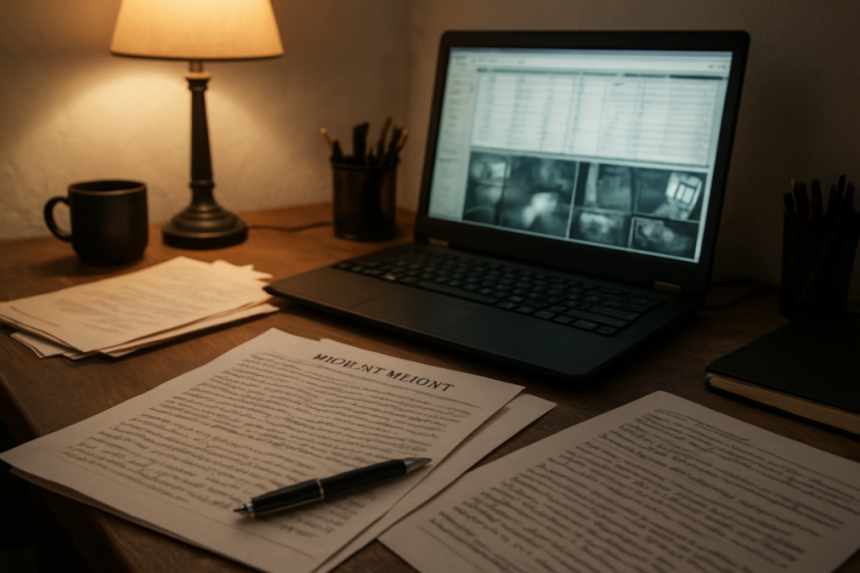
February is the spreadsheet, and the spreadsheet is the part of this story where, when I tell it, I watch people decide about me, so let me just walk into it with my eyes open. In February 2022 I opened a workbook on my personal laptop and I built what I know how to build. I ran a reconciliation on myself. Columns: date, time start, time end, description of gap or anomaly, corroborating record if any, possible ordinary explanation, status. Status had three values, the same three I use at work. Resolved. Pending. Unresolvable with available records. I entered the highway, obviously, 9:39 to 10:04, twenty-six minutes, corroboration: clock photo, receipt, Ed's forty-dollar diagnosis. I entered the drawings, each one I could put even an approximate date on. I entered the dome light with a flag on it, because my own rules required the flag, source: recovered memory, reliability: low, and typing "reliability: low" about the inside of my own head at one in the morning is an experience I do not recommend. I entered the sleep numbers, exported straight from the app, onset and wake, night after night, 11:58, 3:40, 11:56, 3:41, a column of near-identical values that looks like absolutely nothing until you remember it is a woman sleeping. I entered the scanner flinch. I even entered Ed's battery, under equipment.
I am not going to reproduce the whole thing here. It ran, at its fullest, to about 140 rows, and I will tell you honestly that some of those rows shame me, because somewhere in March I crossed from logging anomalies into logging everything, a smell in the garage, a dream, a wrong number that called twice, and a reconciliation that accepts garbage inputs produces garbage, I teach that to new techs in their first week. I cleaned it up eventually. Deleted forty-some rows in one sitting in April and felt like I had gotten a tooth pulled. What was left, the core of it, has not changed much since: eleven rows I mark unresolvable with available records. Eleven. In sixteen years of professional counting I have personally signed off on exactly zero unresolvable discrepancies, and in one winter my own life handed me eleven.
Dana asked me once, gently, what the spreadsheet was for. Not what was in it. What it was for. And I gave her the honest answer, which I will give you, even though it is the least flattering sentence in this whole account. The spreadsheet was for proving I was still the kind of person who makes spreadsheets. The count was off and I could not fix the count, so I did the only thing left, which was to demonstrate, nightly, to an audience of nobody, that the counter still worked. That the instrument was fine and the discrepancy was real. Because the alternative reading of the data, and I knew it was the majority reading, I am not stupid, is that the instrument is what broke.
Since I have already told you the least flattering sentence, I might as well do the stupidest night, and get it behind me. Early March 2022, a Saturday, I could not stand it anymore, and I got in the Corolla at 1:30 in the morning and drove back down to the stretch. I had prepared. That is what makes it stupid, the preparation. I had a printed checklist. I had my headlamp from the one summer I pretended to be a hiker, the fabric measuring tape, a can of marking chalk from the hardware store, my phone charged to 100 with a backup battery, and a folding chair. I do not know what the folding chair was for. I have tried to remember what I was thinking with the chair and I cannot. It rode down there and rode back and was never opened.
The plan, insofar as a plan existed, was to identify the exact spot, measure things, and sit with it. I had convinced myself I would recognize the pullout, and here is the first thing the night taught me: you cannot find a memory on a highway at night with a headlamp. Every quarter mile of that road is the same quarter mile. Gravel shoulder, delineator posts, pines. I had my odometer notes from reconstructing the November drive and even so I picked three different spots in the space of an hour, walked each one, crouched over the gravel looking for I truly cannot tell you what. Scorch marks. A neat little triangle of dead grass. The gravel had no information in it anywhere, which the daylight part of my brain could have told me for free.
At approximately 3:00 a.m. I was on the shoulder with the measuring tape out, measuring the distance from the fog line to the tree line, writing numbers on a clipboard, in the dark, in a 28-degree wind, when a state trooper pulled in behind me with the lights going. And I want you to appreciate the picture, because he certainly did. A middle-aged woman, alone, 3 a.m., folding chair visible in the back seat, clipboard, chalk, measuring tape deployed across the shoulder of US-97. He asked if I was all right, and every true thing available to me was worse than every lie, so I told him I had hit a deer along here in the fall and my insurance was being difficult and I was trying to document the site. This was a lie a normal person would tell in a normal story, and he accepted it, mostly, although he stood there while I wound up the tape and he ran my plates before he let me go, and the whole drive home I was less rattled by his headlights than by how instantly the lie had come and how good it was. I drove home understanding something I did not want to understand, which is that I could not trust my own outward normalcy as evidence of anything. The kid at Loder's saw a tired woman buying crackers. The trooper saw an insurance grudge. If I read as fine when I am measuring a highway with a sewing tape at 3 a.m., then me seeming fine has no evidentiary value at all, in either direction, and neither, probably, does anyone's.
Also that same month our tablet counter died, and I am going to spend a paragraph on it precisely because it has nothing to do with anything. It was a Kirby Lester, the little bench machine that counts pills by dropping them past a sensor, and one Monday it started overcounting by one, then it was fine for a week, then it counted a tray of 30 as 43 and we pulled it. The repair vendor came twice, replaced a sensor board that fixed nothing, and the second guy, older, stood there feeding it metformin for half an hour, said the sensor was fine and the problem was static from the new carpet, which we did not have, we have had the same carpet since 2015, and he put a grounding strap on it and left, and it did it again, and then in April it just stopped doing it and never did it again. Nobody ever established a cause. I include this because a machine three feet from me spent six weeks producing wrong counts nobody could explain, and it meant nothing, and if I wanted to I could stitch it into the pattern, and it would stitch, that is the horror of patterns, everything stitches. Part of staying sane through this has been deliberately keeping a shelf of things I refuse to promote into evidence. The Kirby Lester lives on that shelf. So does the smell in the garage, and the wrong numbers, and about forty deleted rows. I am telling you about the shelf because the people in my new unwanted hobby community do not have one, and it is the single biggest difference between me and them, and I need you to see it.
Which brings me to the audit, since I was already talking about work, and this is the other thread I can close out for you neatly, because it closed neatly, and I want you to have at least one thing in this account that does.
In late March 2022 our pharmacy got flagged for a controlled-substance inventory audit. Corporate loss prevention, not DEA, though when the email came through with the word AUDIT in the subject line I had a physical reaction I am not proud of, because a person who has spent the winter secretly reconciling her own missing time does not receive the word audit calmly. For about a day and a half I entertained the genuinely unhinged idea that it was about me, that my numbers at work had started drifting the way my life had, that whatever had unbalanced me was contagious to my counts. I want to flag that thought as the low point. The actual low point of this entire experience was not the highway and was not the dome light, it was standing at the fax machine at 9 in the morning being afraid that I had become a source of error. My whole adult identity is that I am not a source of error. If you take that from me there is not a great deal left, there is a rental off Purcell and a numb triangle.
The audit took two days and found what these things always find. A quantity variance on hydrocodone-acetaminophen traced to a wholesaler invoice that had been posted twice in October, a transposed entry on the C-II log from a floater tech, both from before my highway, both corrected on paper with everyone initialing everything, exit meeting, thanks for your cooperation, your store's variance rate is below regional average. I printed that line for myself, which I recognize is pathetic. The instrument still worked. At least at work, where the inventory is tablets and the tablets hold still, the instrument still worked.
Spring 2022 is also when I finally told Dana everything, and Dana is the reason this account exists, so she gets her paragraphs.
My sister is three years younger than me and we are close in the way of sisters who became close later, after being nothing alike for thirty years. She teaches middle school science. I drove down in April, a daylight drive, and told her the whole thing at her kitchen table with the spreadsheet open on my laptop, and she did the exact right thing, which I did not know until she did it that there was an exact right thing. She did not believe me and she did not not believe me. She treated it like weather. Something real that had happened to me, that neither of us caused, that we now had to live around. She asked good questions. She asked whether the sleep thing held in her guest room, in a different bed, different town, and I had to admit I did not know, and so we tested it, that night, and it held. 11:57 and 3:39, in her guest room, and in the morning she looked at the phone export and I watched my sister the science teacher sit with a data point at her own kitchen table, and she said something like, well, and then didn't finish it, and made coffee. She has never once used the word alien to me. Neither of us has. It is a kind of hygiene we maintain without having agreed to it, the way we never talked about Mom's last year until we suddenly did, but I am getting ahead of myself.
It was Dana, though, God love her, who caused the regression thing, by mentioning me to her friend Gail, in confidence, in the way that confidences travel, and Gail knows people in that world, and that is how in May 2022 I ended up on a fifty-minute phone call with a man from Eugene I will not name, who described himself as an experiencer researcher, and who was, I want to be fair, kind, softspoken, not obviously selling anything. He listened to the short version. He said a number of things designed to make me feel less alone, some of which worked, which annoyed me. And then he said that what I really needed, to quote him as close as I can from my notes, because yes I took notes on the call, was to "unlock the rest of it," and that he worked with a hypnotherapist in Portland who specialized in regression for people like me, insurance wouldn't cover it but she had a sliding scale, and most people, he said, most people find that once they go under, the whole night is right there.
I said no on the call and I will now write down why, at length, because this is the one place in this entire account where I get to be the expert instead of the specimen.
Hypnotic regression does not recover memory. There is no tape. That is the whole misunderstanding, the idea that memory is a tape and trauma is a lock and hypnosis is a key. Memory is not storage, it is renovation. Every time you pull a memory out you rebuild it on the way back in, with whatever materials are lying around, and hypnosis is a state specifically characterized by suggestibility, by lowered source monitoring, by an increased willingness to accept imagined content as remembered content. You put a person like me, a person with a genuine gap and a desperate, clawing need for that gap to have contents, into a chair, and you relax her, and a warm-voiced professional asks her leading questions in the dark. You are now looking at the rest of it, the voice says. What do you see. And her brain, which has spent months drawing ovals, which has watched the movies, which wants nothing in the world more than a balanced count, will supply. Of course it will supply. It will produce a night, fluent and detailed and coherent, and it will file that night in with the real inventory with no marker on it, none, there is no font for false memories, and from that day forward she will remember the produced night with the same felt certainty as her own wedding. And it will be vivid, and she will cry, and the crying will mean nothing, because confidence and accuracy are not correlated.
That is what I would be buying on the sliding scale. Contamination. The one thing I actually possess, four years in, is a clean count. It is a terrible count, it is a count with a twenty-six minute hole in it and eleven unresolvable rows, but it is clean, I know exactly what is in it and where each entry came from, I can produce a source for every line. The literature is full of people who had what I have, a real gap, a real strangeness, and who poured regression into it like ink into water, and now they have three hours of vivid narrative and no way, ever, to know which parts they experienced and which parts they manufactured in a chair in Portland. They closed their gap. I understand why they did it. There are nights, I will be honest, when the offer replays itself, most people find the whole night is right there, and something in me leans toward it the way you lean toward a warm doorway in the cold. But I would rather have a hole I trust than a filling I can't. In my profession, when the count is short and you cannot find it, you do not write in a number that makes the sheet balance. There is a word for writing in the number, and the sheet was never really balanced again afterward no matter what it says. I told the man from Eugene a shorter version of this. He was gracious about it. He said something like, when you're ready, the door's open, which is the kind of sentence that sounds gentle and is actually a hook, and we hung up, and I sat in my kitchen feeling, for the first time since November, competent. It is the only decision in this whole affair I am unreservedly proud of.
Mark is my ex-husband. We were married nine years, divorced in 2017, and it was one of those divorces that was nobody's fault in the specific way that is somehow worse than fault. We stayed friendly. He fixes my gutters. In June 2022 he was over doing exactly that, and afterward we were drinking iced tea on the back step, and I told him. Not the whole thing. The highway, the clock, the sleep. I told him because he is the person who has known me longest as an adult, and because some part of me wanted the reaction of a man who once watched me spend a weekend finding a seventeen-cent error in our checking account because I would not let it stand.
He listened all the way through, which he is good at. He did not laugh and did not reach for the History Channel stuff, which I had braced for. He looked at his glass for a while. And then he said, quietly, not unkindly, with something in his face I had never seen pointed at me before, "You sound like your mother did."
That sentence did several things at once, and they took months to unpack. The first thing it did was make me furious, because my mother, at the end, was not well, and we both knew it, and comparing me to her was comparing me to a woman who died confused, and he knew what he was reaching for when he reached for it. The second thing it did, underneath the fury, right away, was ring. Like a glass rings. Because he was not talking about the end. I knew he was not talking about the end. Mark only met my mother in her fifties, but he had heard the stories, the family-legend versions, told at holidays with the edges sanded off for company. He was talking about the sleepwalking.
Here is the family legend, sanded, as it was told when I was growing up. In the mid-1980s, when Dana and I were little, our mother went through a phase of sleepwalking. She would get up in the night and Dad would find her in the yard, standing at the back fence in her nightgown, looking at the field. It went on for a summer and stopped. It was told as comedy. Your mother and her tours of the yard. Dad putting a hook-and-eye latch up high on the kitchen door, too high for her to notice asleep, that detail always got the laugh, Dad standing on a chair with a screwdriver at midnight.
Here is what I actually remember, which is not much, because I was eight, and what I have since assembled, which is more, and you can weight it however you want given everything I have told you about assembled memories. I remember the latch. The latch was real, I used to flick it when I was tall enough. I remember that it was the same summer the dogs would not come in the yard, because those two things were always one thing in my child mind, the summer of the latch and the dogs. We had a beagle mix named Scooter, and the neighbors behind us had two big outdoor dogs, and for a stretch of that summer, I could not tell you how long, an eight-year-old's stretch, none of them would come into our backyard. Scooter would stand at the sliding door and refuse. Not cower, refuse, planted, looking at the yard the way you look at a wet floor. My father blamed a skunk. The neighbors' dogs stopped coming to the fence line at all, which even he admitted was unlike them. And my mother stood at the back fence in her sleep, some number of nights, that same summer, looking at the field, and the family put those facts in two different boxes and never once, in forty years, put them in the same box, until her forty-nine-year-old daughter sat on a back step with an iced tea and heard a glass ring.
I called my aunt Lorna in July. My mother's younger sister, in Medford, sharp as ever. I asked her about the sleepwalking summer, casually, framed as nostalgia, and she got quiet in a way that was not nostalgic, and then she told me two things that were not in the sanded version. One, it was not one summer. It was two, maybe three, she said, on and off, and my father did not put the latch up as a joke, he put it up because one night in, she thought, 1985, he woke at some small hour and Mom was not in the yard, she was not anywhere, and he was pulling his boots on to drive the roads when she came in through the kitchen door on her own, barefoot, calm, with her feet clean. Feet clean. My aunt said that detail like she had been keeping it in a drawer for forty years, which I suppose she had. Barefoot in a yard that backed onto a field, in through the kitchen door, feet clean. And two, when I pushed a little, my aunt said, your mother told me once she wasn't asleep out there. She made me promise not to repeat it to your dad. She said she was awake the whole time, and it was like the yard was a place she was supposed to wait in, and Lorna, having said that sentence, that exact sentence, to me, on the phone, in 2022, had no idea what she had just done, because I had never told her one word about my highway. She was just handing me back my own phrasing across forty years and a dead woman, and I had to say, huh, that's so strange, and change the subject, because no version of continuing that conversation ended anywhere good.
A place she was supposed to wait in. I did not sleep my strange scheduled sleep that night. That night I got the old kind of night, the 2:30 a.m. payroll kind, and I lay there running the arithmetic I have been running ever since. My mother was born in 1948. The waiting yard was, call it, 1984 to 1986, so her mid-to-late thirties. I was 41 on the highway. It is not a match, nothing in this matches cleanly, that is exactly what makes it feel less like a story and more like an inventory kept by someone whose fiscal years I do not know. And underneath the arithmetic, the actual thought, the one I could not put down: my mother carried a version of this for fifty years and told one person one time. She stood at fences. She raised us, packed lunches, clipped coupons, went back to work when Dad's hours got cut, and the whole time there was a yard in her that she had been made to wait in, and she balanced her books alone. When she got sick at the end, and confused, she talked about a lot of things that made no sense, and we soothed her and looked at each other over her head, and I have gone back through those last-year fragments a hundred times since July 2022 looking for the yard, and I cannot find it, and I do not know if that is because it was not there or because I was not listening for it, and that is row number eleven, if you were wondering. The last unresolvable row in the spreadsheet is not about me at all.
I never did tell Mark what his sentence set off. He texted a few weeks later to ask if I was doing okay, in the way of a man who fears he has broken something, and I told him I was fine, and that was true in the way my telling people things are fine is true. We have not talked about it since. He rehung the gutter in the fall. Some threads do not go anywhere, they just get load-bearing, quietly, and you leave them alone.
For completeness, because this is an incident report and incident reports have a findings section, here is where every line stood as of the end of 2022. The Corolla never had another electrical problem, not one, Ed has looked at it twice since and pronounced it the most boring car in Bend. The battery he charged in November 2021 is still in it. The scanner flinch faded over about a year, so gradually I cannot date its ending, though even now if I stand at will-call and attend to my shoulders I can feel the ghost of the lift, my body keeping a rhythm it will not explain to me. The triangle is unchanged, one and seven-eighths, tested with a bobby pin the morning I wrote this paragraph. The sleep held its schedule, to the minute, from December 2021 until the spring of 2023, and then loosened, and by that summer I had my old insomnia back, my terrible familiar 2:30 payroll insomnia, and I want to be very careful and very honest about the fact that I was glad. You cannot know what that means unless you have had a body that kept someone else's appointments. The first night I lay awake until 4 for no reason, I nearly cried with relief. It was mine. The sleeplessness was stupid and ruinous and mine.
The drawings stopped in the fall of 2022. Or I stopped finding them, which is not the same claim, and I know the difference matters. I still know the room. That has not faded at all, and I have stopped expecting it to. The rail is for leaning back against, hands at your sides. The floor has give across the middle band. The alcove is upper left, and someone on a forum once asked me, not kindly, upper left from where, since a room you have never stood in has no orientation, which is a fair hit, and I have no answer. It is upper left every time I draw it. From where, I could not tell you. From wherever I am when I know it.
Which leaves the last entry, and then I am done, because there is no conclusion, I told you at the start this was an incident report and incident reports do not have endings, they have a final line and a signature.
March 2023. Dana and I drove down to Klamath Falls together, daylight, a Saturday, for nothing, for errands and her kid's soccer thing, an aggressively normal trip. I had by then reset the radio clock, obviously, I had reset it in November of 2021 in the parking lot at Loder's the very night, twenty seconds with the tuning knob, and it had kept perfect ordinary time for sixteen months, checked against my phone more often than I would like to admit. We took the Corolla. We passed the stretch a little after eleven in the morning and it was just road, pines, the ridge to the east that you can see in daylight, and neither of us said anything and I did not slow down, and I was proud of that.
We stopped at Loder's for gas and bathrooms on the way back, late afternoon. Dana went in. I stood at the pump, and when the tank clicked off I got back in to grab my card off the seat, and the radio clock said 3:58, and my phone said 4:24.
Twenty-six minutes. I sat there with one leg out the door. The car had not been out of my possession. It had not had electrical work, the battery had never been disconnected, and I had looked at that clock, against my phone, some morning that same week, because I always look, and it had been right. I did the arithmetic twice. Twenty-six.
Dana came out with two waters and a bag of the peanut butter crackers, which she buys every stop as a joke that neither of us has ever explained to her being not entirely a joke. I did not tell her. I want to be honest about why, because I have thought about it. It was not to protect her. It was that there was nothing to say that the two of us do not already carry, and the count was not going to balance whether or not I said the number out loud, and she was happy, holding the waters, telling me something about the soccer coach.
I reached over and set the clock forward with the tuning knob, held it down through the minutes, 3:59, 4:05, 4:15, 4:24, checked it against the phone, and pulled my leg in and shut the door. It is the same motion as correcting a count at the end of an inventory, the exact same motion, you make the record agree with the phone in your hand, you initial it in your head, you file it, knowing what you know, which is that a corrected number and an explained number are not the same thing and only one of them stays corrected.
Dana got in and asked if I wanted water now or in the cupholder. Cupholder, I said, and we pulled out onto 97 northbound, and the clock kept time the whole way home.



AI illustrations. Please judge the story itself. About AI images.
Filed by its author.
Before you peek: what share of readers believes this story?
50%
No votes yet
Total verdict votes: 0
Guess first! What other readers decided is hidden until you cast your own verdict above — vote True, Fake or Not sure to reveal the community score.
Changed your mind? Read the strongest arguments of the other camp below. If they convinced you — change your verdict (once).
Your new verdict:
Why did you vote that way? Pick up to two:
Noted — thank you, detective.
My case notes (private — stored only in this browser)
Saved in this browser.
True or Fake? — play the detective
How it works: cast your True/Fake verdict above and see whether you matched the reader majority. Then hit "Next case" for a random story and keep your streak going. Solve cases to climb the detective ranks — score and rank are kept on this device only.
Tip: highlight any sentence of the story with your mouse or finger — a small share popup will appear to post that exact quote (with a link back to the story) to X, Facebook, Threads or Reddit.
Something similar happened to you? Tell your version — the jury is waiting. Tell your story
Keep investigating
- More Missing Time cases
- More Alien Abductions cases
- A case the jury believes: The Cattle Guard Ate Twenty Minutes Of My Life
- A case the jury believes: The Thing In The Orchard Had Knees That Bent The Wrong Way
- A case the jury believes: The 911 Call I Took That Was Not On The Recording
- The full Alien Stories archive
- Cases the jury cannot settle
Comments (0)
Comments here are case materials: pick a role — ask the author a question, or file your evidence FOR or AGAINST the story — and it lands in the right column. Upvote the sharpest comments: the best one is pinned on top as the Top Detective Comment. Questions get answered by the story's author in person — look for the AUTHOR badge.
No comments yet. Be the first!