
Three Nights the Whole Feedyard Looked at the Same Corner
In one sentence: A seasoned pen rider in a vast Texas feedyard encounters strange lights and an eerie silence that unsettles both cattle and crew one October night.
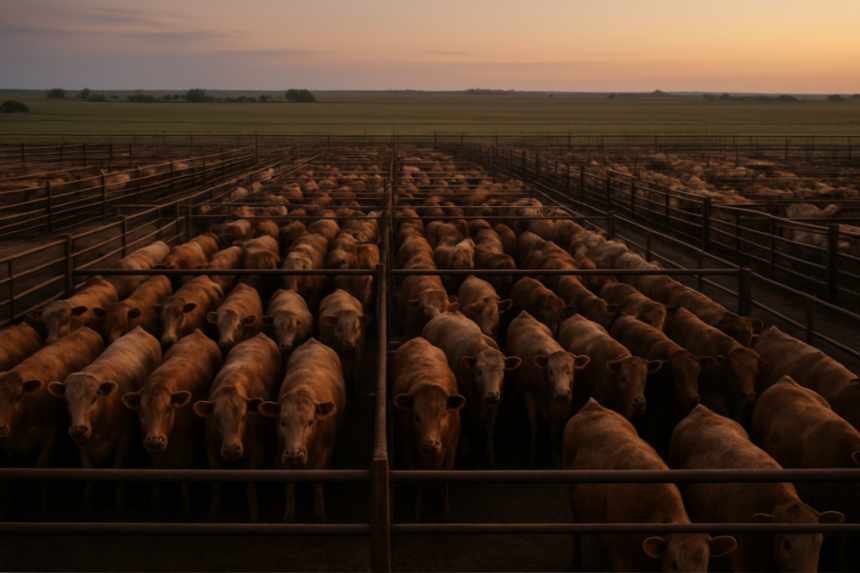
I've ridden pens at a Texas Panhandle feedyard for thirty years. I know every light a night can make. On three nights in October 2016, forty thousand head of cattle went silent and faced the east pens, and what hung there wasn't any of them.
* AI Illustration
First impression: judge by the title and the picture alone — you get the real verdict after reading.
Swear It Happened — CASE FILE #554
JURY PENDING
COLD CASE — this file never got enough jurors. Your verdict counts double here (morally).
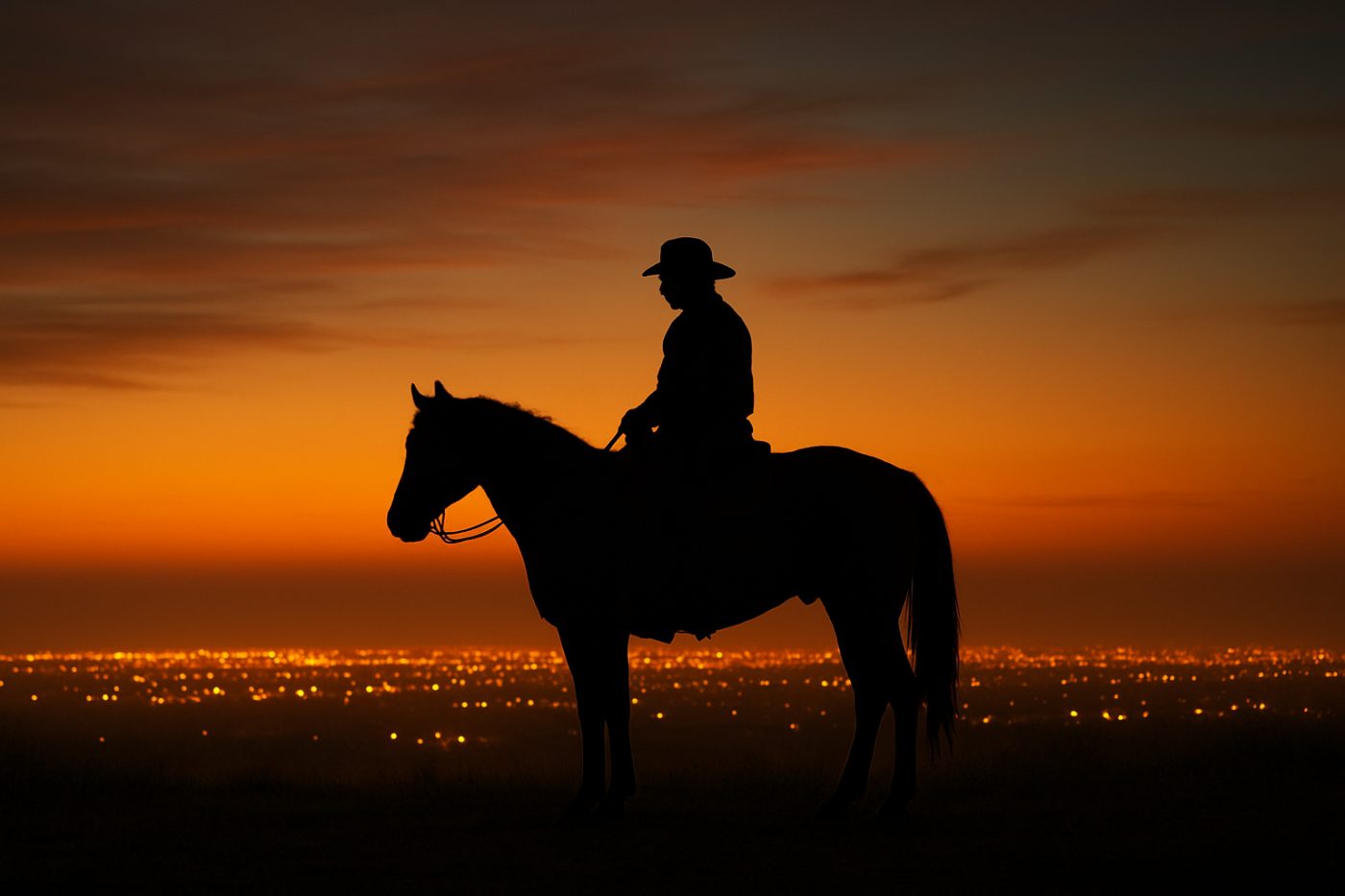
A pen rider, if you don't know, is the guy on horseback who rides through every pen of cattle every day looking for sick ones. That's the whole job description and it takes about ten years to get halfway good at it. You're reading animals. A steer that's going to be dead of pneumonia in four days doesn't look sick today, he looks five percent wrong, and your entire value to the operation is whether you can see five percent. Ears set a little low, gut a little empty, standing slightly wrong to the wind. Miss him today and you drag him out with a chain on Thursday. So when I tell you I notice things, understand that noticing is not a hobby for me. It's the mortgage.
People think fear is about monsters. In my experience fear is about inventory. You keep an inventory in your head of everything that can be in your world, and the inventory is what lets you work at 4:30 in the morning in the dark without thinking about it. The night the inventory fails is a different kind of night.
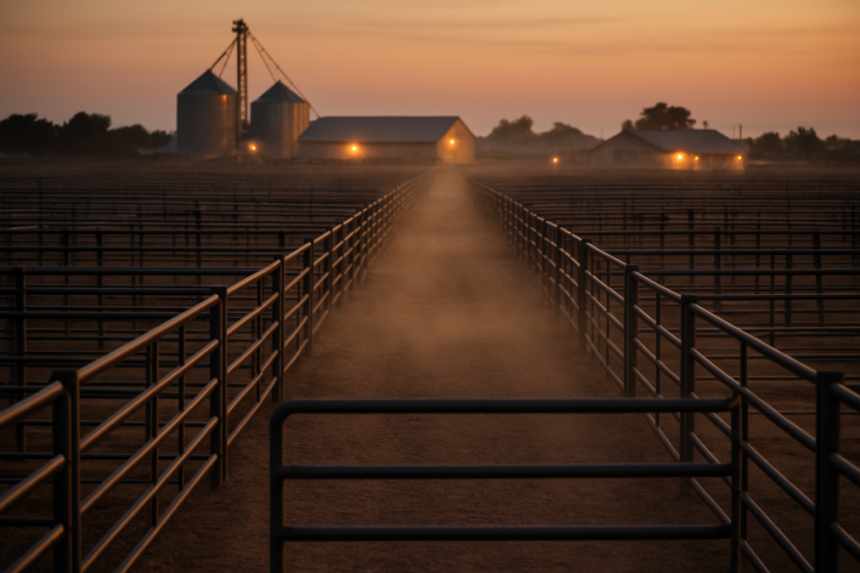
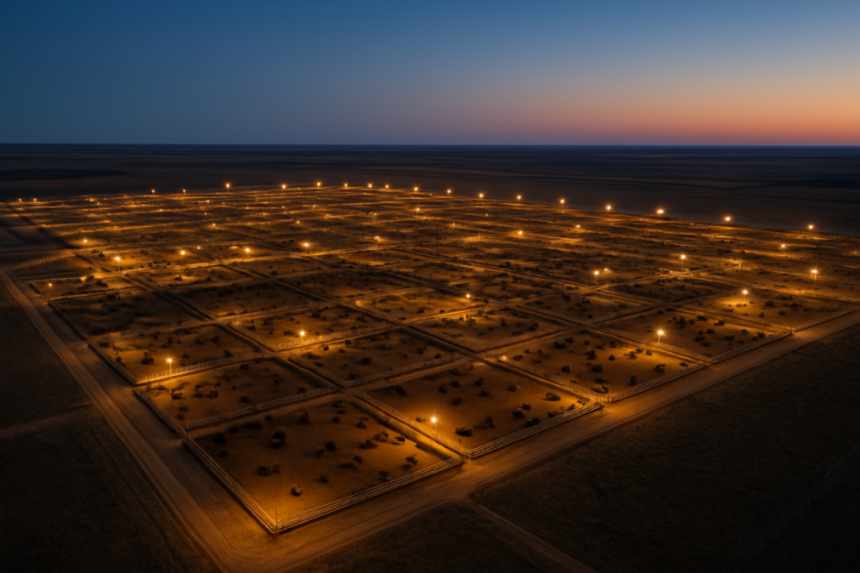
Let me give you the inventory, because it matters. At night, from horseback in the middle of our yard, here is every light a man can see, and I could recite this asleep. The mill tower, lit up like a refinery, sodium lights on the legs and a red aircraft beacon on the highest leg, which is about 140 feet. The processing barn, the office, the scale house. Yard lights on poles down the main alleys, the kind that hum. Headlights on the feed trucks, which start rolling at five, amber marker lights along the top of the box, a loaded truck at night looks like a little carnival coming at you. Southeast, the glow of Delfin, which isn't much, a caution light and a Allsup's. Due south, twelve miles, the gas plant flares out on the Bivins lease, two of them, and depending on what they're doing that week they can be little candles or they can light the bottom of the clouds orange in a way that makes strangers pull over and take pictures. Southwest and far off, Amarillo, which sits under its own dome of orange light like something burning slow that nobody's worried about. West, nothing. North, a nothing so complete that when a car comes down County Road M you notice it twenty minutes before it matters. Airplanes overhead, high, blinking. In the fall you get drones, kids from the college down in Canyon, a couple of the crop consultants, and a drone at night is a specific thing, green and red pinpricks, moves like a hummingbird, whines like a weed eater when it's low. And that's it. That's the whole sky and the whole ground, fall of 2016. Hold onto that list, because everything I'm going to tell you, I checked against it, over and over, the way you check a cinch.
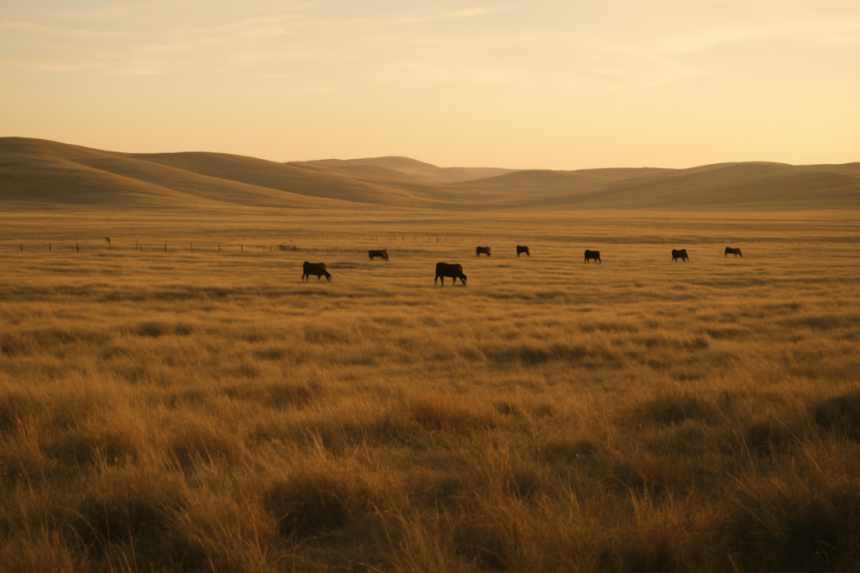
The yard's name is Bell Creek Cattle Feeders, though we only ever called it the yard, and there is no creek, there is a draw that runs wet maybe twice a year down the east side. The pens run in rows numbered from the northwest corner, and the east pens, the ones this story is about, are numbers 38 through 52, two rows out along the draw, downhill from everything else. The hospital pens and the shipping pens sit south of those. East of the east fence there's a quarter section of native grass that belongs to a family named Tillman, always has, leased out for grazing some years and empty others. In 2016 it was empty. Past that, CRP grass, dryland wheat, and, like I said, nothing until Oklahoma.
October of 2016 was dry and windy, which is not a weather report, that's just what October is. We'd had a wet spring, then the faucet shut off in July like somebody meant it, and by fall the yard was powder. Dust is the tax you pay for dry pens. Every evening around sundown, when the wind lays down and the cattle stir, the whole yard lifts its own cloud, and from the highway at dusk it looks like the place is smoldering. It gets in the phones, the radios, the computers, the coffee. I mention the dust early because it matters later, when I get to Danny's video, and I'd rather you hear it from me now than think I invented it when I needed it.
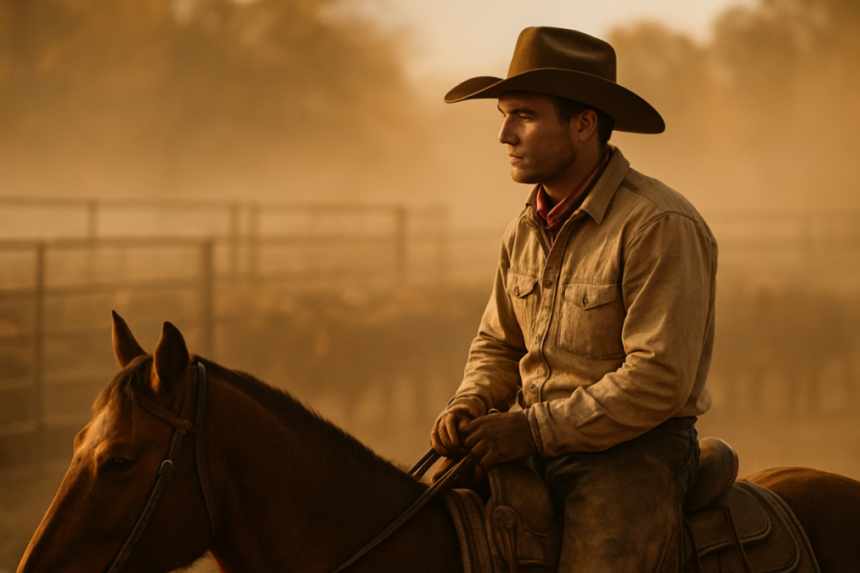
The crew that fall was me, Ruben Salas, who'd been riding pens almost as long as I had, a kid named Danny Whitmire, 24, with us not quite two years, and a fourth spot we could not keep filled, which is the natural condition of a fourth spot on a pen crew. Mill crew ran under Kenny Dodd, who I'll get to. The yard manager was Wade Kepler, eleven years running the place, and above Wade, ownership in Amarillo that none of us saw except at the Christmas dinner. My horses that year were a sorrel gelding called Rio that I'd had nine years, and a younger bay who doesn't figure in it. Rio does. Rio figures in it about as much as I do.
I'll say a word about Rio because people who don't ride don't always know what I mean when I say a horse is honest. Nothing moved him. I'd roped hospital cattle off him in forty mile an hour wind with a tin panel flapping loose beside us and he never changed his feet. Feed trucks, air brakes, dogs, a tarp, a heifer coming up the fence blowing snot, he'd cock an ear and file it. In nine years he had never once refused to go where I pointed him. Nine years, zero refusals. You'll see why I'm being a stickler about it.
The other thing you need, and then I'll get to the nights, is how the feeding works, because the feeding is the clock this story is written on. A yard that size feeds twice a day, run out of the mill by computer. Every pen has a feed call, pounds of ration, adjusted every morning by the bunk reader, who drives every bunk at daylight and scores what's left. Feed left over means the call was heavy or the cattle are off, and cattle going off feed is the first bell that rings for weather coming or sickness or something wrong. All of it gets logged, every load the mill batches, every pound dropped at every bunk, time-stamped, printed, kept. I never kept a diary but I have thirty years of my days written down anyway, in feed sheets and doctor books and shipping manifests, and that's why I can tell you exactly which nights this happened. Tuesday, October the 11th. Tuesday, October the 18th. And Monday, October the 24th. Three nights over two weeks, and I've got the paper for all three, or the yard does, or did.
Before the first night there's one more piece of ordinary business, and I'm including it because it was in my head at the time and it colored how I read things, at least early. We had a coyote problem that October, or we thought we did. Something had been coming in along the east fence at night and working the dead pile, which sits down by the draw, and twice we'd found drag marks going under the wire toward the Tillman grass. A yard dog went missing the last week of September, old blue heeler bitch that belonged to nobody and everybody, and the night watchman, Alfredo, said he'd heard yipping out east two or three nights running. So the standing joke on the crew, first week of October, was about the east side being haunted, ha ha, and Wade had told Alfredo he could keep a rifle in the truck as long as he didn't shoot toward the pens. Coyotes, everybody thought, including me. I'm going to come back to the coyotes at the end of this because I owe them an apology, sort of, and it's one of the few parts of this whole thing that closes up neat, and I notice it's the only part with nothing strange in it. Make of that what you like.
Tuesday, October 11th. I know it was the 11th because that morning we'd shipped two loads of fats out of pen 19, and the shipping paper had the date on it. The date is nailed down. That evening I was back out horseback around seven for a last ride through the hospital pens, which I liked to do myself in the fall, check the pulls from that day, make sure nothing had gone down since the doctor crew left at five. Sun was gone by 7:15. Wind was up, out of the southwest, and I can tell you exactly, because the yard has a weather station on a pole by the office, a Davis unit Wade bought after a lawsuit year, and it logs to the office computer. Sustained 28 to 31 miles an hour that evening, gusting 38. I looked it up the next day, which tells you where my head got to. Cloud deck had rolled in about sundown, high stuff, you could still make out the sky was there behind it, no rain in it, just a gray lid sliding northeast fast.
I finished the hospital pens and rode north up the east feed alley for a last pass along the outside row, 38 through 52, habit more than need, and about halfway up that alley I stopped Rio, and could not have told you at first why. Something was already wrong before I found it, and my body pulled the horse up before my head had anything. I sat there like a man who's walked into his own kitchen and can't say what's different, and then it landed on me all at once, the way those things do.
It was quiet.
Now I need you to understand what quiet means at a feedyard at 7:30 in the evening, because if you haven't lived at one you're picturing something peaceful and you could not be more wrong to. Forty thousand cattle are never quiet. There is a sound a big yard makes that runs all night, bawling and bunk-banging and coughing and the mill humming and gates, a low tide of noise you stop hearing your first month and hear again only when something changes it. Cattle bawl in the evening, at trucks, at each other, at nothing. It is a loud, stupid, living sound and it is the sound of everything being fine. And I was sitting on Rio in the east alley and the east side of the yard had gone silent. Not the whole yard. I could still hear the mill, and way off northwest a pen of new calves was carrying on same as always. Just the east side, the outside rows, closest to me. Call it four thousand head across those pens, and not one of them making a sound, and it had happened sometime in the last minutes while I rode, gradual enough that I hadn't caught the moment it happened.
I have heard that silence one other time in my career, ahead of the ice storm in 2006, the whole yard still about six hours before the front, and old man Dreyer, who trained me, told me that day that cattle listen to a bigger radio than we do. So my first thought, honest to God, was a norther. I turned in the saddle and looked northwest for it, because you can see a blue norther coming at night, it eats the stars off the horizon. Nothing. Sky the same gray lid everywhere.
Then I did the next thing a stockman does, which is look at the cattle themselves, because cattle are arrows, they point at things. A pen of cattle at rest faces every direction like spilled matches. These weren't spilled matches. Along pens 40 through 46 or so, and it's hard to be exact about pen lines in the dark, every animal I could see was standing, faced the same way, northeast, toward the far corner of the yard and the Tillman grass beyond it, heads up. Show a photo of that to any cattleman alive and he'd say there's a dog in that corner, or a man at the fence. I stood up in my stirrups and looked northeast to find whatever it was.
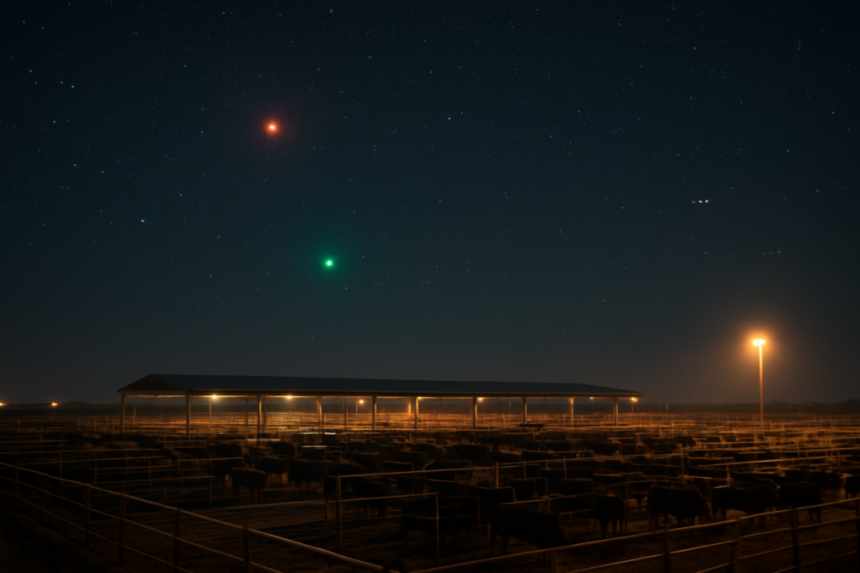
And there they were. Two lights, amber, hanging over the far northeast corner of the east pens, out past it really, over the fence line or the first hundred yards of the Tillman quarter. I want to be careful here, because judging distance and height on a point of light in the dark is a fool's game and I know it. But here's what I had to work with. I know that country, the fence line, the one hackberry on it, the corner post, and I know the mill tower behind me is 140 foot at the beacon, because I've heard Kenny say it fifty times. The lights were amber, steadier than a flame, with a slow pulse to them, like breathing if a light could do it. Maybe a hundred yards apart, or looked it, one slightly higher. Height, I'd have said somewhere between two hundred and four hundred feet. Under the cloud, well under it, and hanging still.
Still is the whole thing. It was the stillness that was wrong, and I know how weak that sounds, so let me put numbers on it, because numbers are how I got scared, actually scared, in the days after. The wind that evening, logged, was blowing 28 to 31, gusting to 38. There is nothing in my inventory that hangs still in that. A drone can't, not the ones anybody around here had in 2016, a gust of 38 puts a hobby drone in the next county. A balloon is gone at wind speed by definition, that's what a balloon is. A helicopter can hold in wind, but the wind was out of the southwest and the lights were northeast of me, I was upwind, sound going away, so fine, I'll give a lawyer that one, maybe I couldn't have heard it clear. But Rio could have. And a helicopter has a red beacon and green and white position lights, it's federal law, and these were two amber points and nothing else. No strobes. And a gas flare sits on a pipe on the ground twelve miles south, it doesn't relocate to the northeast fence.
I didn't run through all that in the moment. In the moment I did what I imagine most men do, which is grab the dullest explanation on the shelf and hold it like a rail. I thought, that's the Bivins flares reflecting off this cloud deck. Some trick of the overcast, bounced light, and the cattle are jumpy about the coyotes, and those two things are separate facts that happen to be occurring at once. That's what I told myself, sitting there, and it half worked, the way a dull explanation does. I must have sat there ten minutes. The lights didn't drift, didn't wander the way a reflection on a moving cloud deck wanders. The cloud was sliding northeast at a pretty good clip, you could tell where it thinned, and the lights sat still under it like the cloud was a river going over two rocks.
Rio stood the whole time with his ears locked northeast, and every so often a shiver went over his hide like fly season, and it was fifty degrees out.
What broke it up was the phone in my pocket going off, Ruben calling about a gate chain, the most ordinary call in the world, and I about came out of the saddle when it buzzed. I'm not proud of that. I talked to Ruben with my eye on the lights and said not one word about them, and if you want to know why, the truest answer is that saying it out loud would have made it a thing that was happening instead of a thing I was watching. While I was talking, the lower light dimmed out. Not moved off, not shot away. Dimmed, over maybe three or four seconds, like somebody easing a rheostat down, and the second one held another minute or two alone and then did the same. And the second that second light went, and I do mean within seconds, the east pens came back. A steer bawled somewhere in 44, and another one answered, and inside a minute that whole side of the yard was back to its regular stupid racket, cattle dropping their heads, moving to the bunks, done with it. Whatever channel they'd been on, it went off the air, and they changed back to the station where it's always feed and never anything else.
I rode home. I mean I rode to the barn, unsaddled, checked the hospital board, drove home, twenty minutes, ate supper with my wife, Carla, and did not tell her, and lay there that night running my list. Flares on cloud. Somebody's drone. Ag helicopter. Ranch lights on the Tillman place, except there's no power out there and hasn't been since the REA pulled the line in the eighties. Spotlighters, hog hunters, kids. A tower crew, a pipeline crew, somebody with a lift. Every one of them fell apart on the same two rocks, the wind and the stillness, and I fell asleep anyway, because I'd been up since four, and thirty years of this work gives you the ability to sleep on top of anything.
The next morning I let myself into the office before anybody else and pulled up the weather station. Wind I already gave you. The Davis also logs temperature and dew point, and here's where I show you arithmetic, because this is the part I'd want shown to me. There's a rule of thumb every pilot and half the farmers up here know for guessing cloud base. Take the spread between temperature and dew point in degrees Fahrenheit, divide by 4.4, and that's your cloud base in thousands of feet. Rough, but good enough for what I needed. At 7:30 that evening the station had 61 degrees and a dew point of 38. Spread of 23. Divide by 4.4 and you get a little over five, call it a cloud base at five thousand two hundred feet, and that squared with what my eyes had said, high gray stuff, not a low ceiling.
Now run the flare theory against that. For the Bivins flares to paint a spot on the bottom of that cloud, the spot sits over the flares, twelve miles south, or smeared downwind, which that night meant northeast, fine, give the theory its best case. A patch of flare glow on a cloud at five thousand feet, twelve miles off, sits just above the horizon and looks like what it is, a glow, soft-edged, big, breathing with the flare. I have seen it a thousand times. I saw it that very night, and this is the detail that killed the theory dead for me. Both things were visible at once. I could turn my head southeast and see the ordinary flare glow on the cloud, away off, dull orange smear, doing exactly what it always does. And I could turn my head northeast and see two amber points, hard-edged, close, low, under the cloud, holding position in the wind. A man can be fooled, I've been fooled by Venus on the horizon and by a truck on a caliche road eight miles off, but a man is not fooled between two things he is looking at in the same minute and telling apart with no effort. The flare glow was there, and the lights were also there, and they were not related, any more than the porch light is related to the moon.
The drone theory I've mostly covered. Wind. I'll add the duration. The drones around here in 2016 flew twenty minutes on a battery in dead air, less in wind, and hovering into a 30 mile an hour wind is climbing a hill that never crests. Two drones, holding station, in the dark, in gusts to 38, showing steady amber and no red or green. I put it to my neighbor's boy, who flew one commercially for a seed company, as a hypothetical that winter, and he laughed and said something like, in that wind I couldn't hold position over the hood of my own truck.
The helicopter I also covered, but I want to be fair to it, because it's the best of the bad theories and Wade leaned on it later. Sound, I was upwind, so strike the sound, a jury can have that. Lights are the problem. There is no legal configuration of aircraft lighting that looks like what I saw, and nobody had night contracts on empty grass and CRP in October. I checked. That winter I asked at the co-op and at the AgAir outfit in Dalhart, conversational, anybody spraying east of Bell Creek in October. Nothing. The Dalhart fellow looked at me a little long when I asked it, which I noted, and I'll come back to what looks mean at the end of this.
And then there's the explanation nobody wants to say out loud to a man, which is your eyes are 48 years old. I'm going to take that one head on later, because I did take it head on, in an optometrist's chair in Amarillo that December, and I'll tell you exactly what he found, and it will not make either side of this argument happy.
But here's the thing I keep circling. My eyes were not the only instrument on the scene. There were four thousand other witnesses standing in those pens, and cattle don't have theories. Whatever pulled four thousand head around to face northeast and shut their mouths was out there, in the world, physical enough for a steer to point at. I've been fooled plenty. I have never once seen the cattle fooled about whether something is present. Wrong about what it is, sure, a feed sack in the wind gets treated like a wolf. But not wrong about whether. Cattle are a whether instrument, and forty thousand pounds of whether per pen was aimed at that corner.
I told nobody. I want that on the record too, because it bears on what Danny did later and how I judged him for it and shouldn't have. Wednesday morning I rode my pens same as ever, made an excuse to ride the east outside row in daylight, and stopped at the northeast corner and sat there like a fool looking at grass. Fence tight. No tracks in the pen dust but cattle tracks, and the pens hold tracks, I can tell you where a man walked three days after he walked it. Nothing on the Tillman side but grass laid over in the wind. The one hackberry standing there with its leaves going. I don't know what I expected. A burn ring, I suppose, because you've seen the same TV I have. There wasn't anything, and I chose to hear the nothing the comfortable way, which was, whatever that was, it didn't touch down, didn't leave sign, so it can get filed as no thing at all. That's bad logic and I knew it while I was doing it. A hawk leaves no sign on a pen either, and the hawk was still there.
That week went along ordinary, and I'm going to let it be ordinary here, because the ordinary is the actual texture of this and any story that leaves it out is lying a little. We changed corn suppliers that week, which was a bigger deal in my daily life than any light in any sky. The yard had bought from the same elevator east of Stratford for years, and ownership swapped to a broker bringing trains in, and the first cars came in dirty, more fines, more broken kernel, and Kenny was on the warpath because fines change how a ration flows, and there were two solid days of meetings about corn. Grown men in a metal office, arguing about broken kernels, while whatever I'd seen sat unreported in my head. I remember sitting in one of those meetings thinking, I am the only man in this room with this, and then looking at their faces one at a time and thinking, or am I. That thought got truer later.
Also that week, Danny's custody business came to a head, and I'll spend a minute on it, not because it goes anywhere, it doesn't, but because Danny matters in this story and you should know what shape he was in. Danny had a little girl, three years old, down in Tulia with his ex, and the ex had a new boyfriend and there was a hearing that October, and Danny was driving two hours each way to see the kid on Sundays and coming in Mondays looking like a man who'd slept in his truck, which some Mondays he had. He was a good hand, I want to say that plain. Quiet kid, wore his rope out practicing on the dummy at lunch, worked cattle soft. That fall he was strung wire-tight, checking his phone at the gate between pens, and I knew about the hearing because he'd asked Wade for the day off and Wade made him find his own cover. I bring all this up so that when I tell you what Danny saw and filmed and said, you can decide for yourself what a stressed-out kid's testimony is worth. I've made my decision about it. You make yours.
The coyotes, since I promised. Alfredo kept hearing them, and mid-October a government trapper came out, set snares along the east fence and the draw, and inside a week he had three coyotes, one of them a big dog coyote with a torn ear that was probably our dead-pile artist. Drag marks stopped. That's it. That's the whole coyote thread, it was coyotes, actual coyotes, doing coyote things, and it resolved the way normal problems resolve, with a trapper and a check and everybody forgetting about it by Thanksgiving. I include it because it's honest and because it taught me something I didn't want to learn, which is that I knew the difference. The whole coyote business, start to finish, never once made the yard go quiet. Coyotes worked the east fence for a month and the cattle bawled right through it. You see what I'm saying. The cattle had a category for coyote. Coyote was in their inventory.
Tuesday, October the 18th. One week later to the night, and I didn't clock the neatness of that until later, and I don't know what to do with it now. Some things are a schedule and some things are a coincidence and I only get to see the outside.
That evening Danny and I were both on the yard late, which wasn't usual, but we'd had a wreck of a day. Two head had gone down in the processing barn that afternoon with what the vet thought was a vaccine reaction, and there was doctoring to follow up on after dark, and Danny had stayed to help me because the fourth-spot hire had quit that Friday, over wages and a girlfriend in Borger, nothing spooky, that's just what the fourth spot does. So it was me and Danny horseback in the hospital alley about eight o'clock, full dark, and the wind that night was lighter, 15, 18, still southwest, and clear. No cloud deck. I want that noted, clear sky, because the flare-reflection theory needs a cloud for a screen, and the theory was about to die a second death anyway, but the sky took away its lawyer first. Stars from fence to fence. There wasn't any moon to speak of. Cold coming, first real cold of the fall due that weekend.
The cattle went first, again. This time I knew the sound of it, or the un-sound, and my stomach knew it before my head did, same order as before. The hospital pens around us stayed normal, but the east side, out past shipping, faded out like somebody walking away from a radio, and I stopped Rio, and Danny got maybe three more steps out of his gray before he caught that I'd stopped and looked back at me, and I've thought a lot about what my face must have been doing, because that kid went white before he ever turned around to look where I was looking.
Three of them this time. Same amber, same slow breathing pulse, out over the northeast corner again but wider spread, and lower, I'd have said the lowest one wasn't three hundred feet up. And this time they moved.
I've put a lot of hours into how to describe the moving, because it's the thing I saw that I've got no category for, and every way I say it sounds either too plain or too crazy. Here's the best I've got, and I'm going to use my own work to say it because it's the only language I've got that fits. When two riders sort cattle in an alley, there's a geometry to it. One man holds position, and he's not still exactly, he's making little balancing moves, and the other man swings out and around to come in behind, and the positions trade in arcs, and the whole thing has a rhythm, hold, swing, settle, hold, swing, settle. It doesn't look like machinery. It looks like a job. Two things cooperating on a third thing. That's what the lights did. One would hold, breathing, and another would swing wide and drop and come back up, and then they'd all three be settled in a new arrangement, and then it would go again. Hold, swing, settle. I sat there with my hands crossed on the horn, some idea about looking calm for Danny's benefit, and I watched three lights over the Tillman grass do what me and Ruben do in the receiving alley every day of our lives, and the word that came up out of me, and I said it out loud without deciding to, was, they're sorting.
Danny said something like, sorting what.
And that's the question. I didn't have an answer then and I don't now. There was nothing visible under them. Grass, dark, the fence. If they were working something, it didn't show up to me, or the pattern was the whole thing, the way a man alone will practice roping a bale. I'm reporting the shape, not the purpose. The shape was work. Nobody who has done that work horseback would have called it anything else, and that unsettled me worse than the wind-stillness the first night. Random I could have lived with, lights that drift and wobble, that's weather, that's optics, that's swamp gas or whatever the magazine word is. These had intention in their geometry, and I know every argument about how a man's eye loves a pattern, I've made them all to myself at two in the morning, and the arguments are good and I don't believe them.
Danny got his phone out. Of course he did, he was 24. I remember being irritated at him for it, which shames me now, this kid's seeing what I'm seeing and my contribution as his senior man was to be annoyed about phone etiquette. He filmed, or tried to, for a couple of minutes, cussing the whole time in that steady way a man cusses at a tool, not scared cussing yet, just come on, come on, focus, and I never took my eyes off the lights to look at his screen. That part matters, write it down for the jury. I only saw the video after, so I can't testify that the screen showed black while the sky showed lights. Danny said it did. Danny, holding the phone at the sky, said the words, it's not picking them up, it's not picking anything up, and his voice went up a register on the second half of that sentence.
I've watched the video since, more times than I'll say. It's forty-some seconds. It's black. Full black, with one little smear of light low in the corner at one point that's probably the yard lights when he swung the phone, and the audio is wind, leather creaking, and Danny cussing, and about second thirty you can hear me say, clear as anything, look at the spacing, look at the spacing, which I have no memory of saying, and something about hearing your own voice on a recording saying words you don't remember, in a tone with no scare in it at all, the flat tone I'd use calling brands off a shipping list, that's worse somehow than if I'd been screaming.
Now, the video being black. Here's where I get to disappoint everybody, because I'm not going to tell you the lights were unfilmable ghost lights that cameras can't see. I don't know that. What I know is that phone cameras in 2016 were garbage at night, and phones at a feedyard are garbage, period. Dust gets into everything, and every phone on that yard had a film on the lens you could not clean off, scratched in by a thousand shirttail wipes. Danny's phone was a cracked-screen Samsung that had been dropped in a bunk at least twice that I personally witnessed. Ruben set a brush pile going one spring afternoon, big flames, near daylight, and Danny's picture of it was a brown blur. So the black video proves nothing in either direction and I've never claimed different. It's not evidence of lights and it's not evidence of no lights. It's evidence of dust and a cheap phone. The audio is the only part I put weight on, and what the audio holds is two men's voices doing something I've since decided is rarer than any light, which is describing the same impossible thing at the same time in real time with no chance to line their stories up. He says spacing before I do at one point. We were both watching the intervals. Two witnesses on the same instrument reading.
The lights worked, and I use that word on purpose, for I'd guess twenty minutes. Sort, hold, sort. Danny gave up on the phone and just sat his horse. At some point his gray got restless, pawing and wanting to back, and Rio, and this is for the record too, Rio stood like a bronze of a horse, ears locked, hide shivering now and again, but stood, and I've wondered since whether I burned up nine years of that horse's credit in those two weeks, holding him in the presence of that thing because I was too proud or too locked-up to leave. What broke it that night wasn't a phone call. All three lights went at once. Dimmed together, three or four seconds, same rheostat, and the dark where they'd been was darker than the rest of the dark for a minute, or my eyes said so, and the east pens came back on the air, the bawling rolling back in from the north end down, like the sound had a direction it returned from. I don't know what that means, it's just a reading off the instrument, and I've learned to keep the readings even when I can't use them.
Danny and I rode back to the barn without talking, ten minutes, and in the barn alley under the lights, both of us unsaddling, he finally said, so what is that, and I'll record my exact answer because I've had to live with it. I said, damned if I know, and then I said, I saw them last Tuesday too. And that kid stopped with the saddle half off his horse and looked at me the way you'd look at a man who'd watched you fight a bear and not mentioned he knew the bear. If I'd told him after the first night, he'd have had a week to get his feet under him, or we'd have watched the second night on purpose, with a good camera and something like a plan. I'm the senior man. Reading things early and saying so is my whole job, I told you that at the top, five percent wrong and you pull it that day, you don't wait for it to be down in the mud on Thursday. With the cattle I've done it for thirty years. With this I sat on a live read for seven days because saying it out loud made it real, and a man my age is supposed to be past that particular arithmetic. So that's my embarrassing thing, or the first one. There's a worse one coming, with the mill leg, and I'll get to it.
We were still standing there in the barn alley when the yard lights blinked. All of them, one hard blink, and then a second blink a beat later, and then steady. And the mill, which hums, I told you the mill always hums, the mill went quiet, and this time the quiet was the specific silence of machinery that has stopped, which at a feed mill is the sound of money. Kenny wasn't there that time of night, but the batching system runs into the evening on the last loads, and the night man up in the mill, I never can remember if it was Tommy or the other one that fall, called Kenny, and Kenny called Wade, and by the time I drove out the gate at 9:40 there were two extra trucks at the mill with headlights pointed at the control room door, and I remember thinking, with a tiredness that wasn't physical, that whatever this was, it had gotten into the part of the yard that keeps records.
Here's what happened at the mill, and I'm going to be careful to separate what I know from paper and Kenny's mouth versus what I saw myself, because this is the part of my story that has an invoice attached, and the invoice is the part people can't laugh off, so I owe it precision. The batching system, the computer that weighs and mixes every load of feed, ran on a programmable logic controller, a PLC, an Allen-Bradley unit older than Danny, and that PLC faulted that night at, per Kenny, 9:11 p.m., which was inside a few minutes of when the lights quit, though I can't tie the mill clock and my memory clock together honestly, so take that lineup as loose. When it faulted it didn't just stop, it lost itself. The recipe memory, the stored rations, all the calibration constants for the scales, gone, and the backup battery on the memory board tested fine, which Kenny said was the part that made no sense, the battery's whole job is to hold that memory through a power hiccup, and the battery was good and the memory was empty anyway.
The yard ran feed the next day and a half the way they did it in 1975, men with clipboards doing batch math by hand, and fat cattle got fed late, which at a big yard sets off its own chain of wrecks, acidosis worries, bunk chaos, garbage bunk calls for three days. I mention all that because the disruption is documented six ways, feed logs, the mill log, and the repair invoice, and when people over the years have wanted to tell me nothing happened those two weeks, that's the thing I have found myself saying, with more heat than I like hearing in my own voice, then who was the eleven thousand dollars for.
Eleven thousand four hundred and some, to be exact about it, which I saw because Wade left the invoice on the counter at the scale house, that's what ownership got billed for the emergency call, the board, the reprogramming, and the downtime doesn't even show on that paper. The tech came out of Garden City, Kansas, the next afternoon, an outfit that services mills and elevators all over the high plains, fellow about my age, and I happened to be at the mill when he had the cabinet open. He had the memory board out under a drop light, turning it over, and I heard the exchange between him and Kenny myself, I was eight feet away drinking Kenny's coffee. Kenny asked him what does that to it. And the tech said, this stays between us because I can't put it in writing, and then wrote something boring on the ticket, but standing there he said, the pattern of what's gone and what's not looks degaussed. Like it sat on a magnet. And Kenny said, it's bolted inside a steel cabinet, and the tech said, I know where it's bolted, and that was the end of the technical discussion, two men looking at a green board under a drop light, neither one willing to spend another sentence going where the sentences went.
I know what a reader's supposed to do with that, and I've done it. Old board, old mill, harmonics, a bad ground, static, the dust itself. Boards die. That board was due. All true. I'd just ask you to hold the timing in one hand while you say it. The board that was due for eleven years picked 9:11 on the second light night, within minutes of the lights quitting, to die in a way its own service tech wouldn't write down. At some point the pile of things that are each individually explainable becomes itself the thing needing explaining. I don't know where that point sits. I know which side of it I was standing on by the morning of the 19th.
And I need to flag my own crack in the paper here, because I promised you precision and this is where my dates get soft in a way a suspicious reader will enjoy. The invoice, when I saw it on the counter, was dated the 19th, service date, which is right, the tech came the next afternoon. But the fault, Kenny always said 9:11 p.m. on the 18th, and years later, the one time I got to look at a copy of the paperwork again, the fault writeup read like it had all happened on the 19th, like the mill lost its mind in the morning, not the night before. Paperwork drifts like that, whoever typed the ticket put the service date on everything. But I can't produce a document with October 18 on it that says fault at 9:11 p.m., and Kenny moved to Nebraska in 2019, so the 9:11 lives in my memory of his mouth and nowhere I can show you. Cross-examine as needed.
The crew those next days was a study. Nobody talked about it in the open, and everybody talked about it in twos. That's how a crew handles a thing like that, I've since learned, it goes binary, no group discussion ever, but you'd see two men at a tailgate with their hats tipped together and go quiet when a third walked up. Danny told Ruben, I know, because Ruben rode up beside me in the receiving alley two days after and said, without any preamble, my grandmother saw lights like that in Chihuahua when she was a girl, whole village saw them, over the church two nights, and the priest told them to quit talking about it and they did. And then he loped off to turn a heifer, and that was Ruben's complete testimony, delivered and closed. Except it wasn't quite. About a week after it was all over, Ruben mentioned, flat, the way you'd mention a gate left open, that on the first night, the 11th, driving out the east gate at seven-forty, he'd thought the yard lights were reflecting funny off something out northeast, and didn't stop to look because his supper was cold already. So my two amber lights had a second witness of a kind, an accidental one, worth exactly as much as a glance through a dirty windshield at forty yards rolling, and I offer it at that value and no higher.
Alfredo, the night watchman, is a harder case, because he saw something on a night I wasn't there, between my second and third nights, and what I know comes to this. He quit doing his east loop. The watchman's job was a truck loop around the whole yard every couple hours, logged on one of those key-station clocks bolted to posts, and there was a key station out by the east fence, and after mid-October Alfredo's clock tape stopped showing east-side punches at night, he'd do it once at dusk and once at first light and skip the dark ones, and Wade docked him over it, and Alfredo took the docking and kept skipping it, and a man taking money losses to not drive past a fence is a kind of testimony too, the kind you can't cross-examine. The one time I asked him direct, months on, at the fuel island, he looked at me longer than the question called for, and said, in Spanish, and I've got just enough Spanish for it, that he didn't discuss it, and then in English, so there'd be no mistake, he said, I did not see nothing, which grammar people will tell you means the opposite of what he meant, but I knew what he meant. And that's everything I have on Alfredo, except that he was a serious, unexcitable man, army veteran, raised turkeys, and he worked that yard until 2021 and never punched the east stations in the dark again as far as I ever heard.
Wade. I keep putting Wade off because I still don't know what I think of what Wade did. Danny, being 24 and having less sense of what losing costs, went to Wade directly that Wednesday and told him the whole thing, lights, cattle, video, and asked whether the yard ought to report it to somebody, and whether the insurance on the mill would want to know about the lights, a sharper question than I'd have thought of at his age. And Wade heard him all the way out, Danny said, didn't laugh, listened with his boots up on the desk, and at the end of it took his boots down and said, log it as weather. And Danny said, weather, and Wade said, and Danny quoted this to me the same day so I trust the wording near exact, Wade said, whatever you write down, a lawyer reads it someday. Weather. And that was the complete position of Bell Creek Cattle Feeders management on the events of October 2016, formulated in about four seconds and never revised, and I've come to think of it over the years, almost with admiration, as the purest thing anybody said in this whole business. Wade wasn't saying nothing happened. Wade never once said nothing happened, and that's the detail I'd point a sharp reader at. He was saying there is no column for it, and Wade only believed in things there were columns for.
Monday, October the 24th. Six days after the second night, not seven, so whatever schedule my head wanted to find broke its own pattern, and I note that with something like respect. The cold front had come and gone that weekend, first freeze, and Monday evening was still and clear and down in the thirties by dark. I was on the yard past eight because we had a load of hospital cattle staging to go back to their home pens the next morning and I wanted my own count on them. So I was horseback on Rio in the hospital alley, which sits, I told you, south of the east pens, and there wasn't any warning this time, no cattle fade that I caught, though I've wondered since if the hospital cattle were already quiet and I missed it, sick cattle being quieter anyway. Reading the wrong instrument because it's the one that worked last time. There's a lesson about me in that somewhere.
The light was low and it was close, and it was over the yard this time, not out over the Tillman grass, and that difference, those two hundred yards, is why the third night wins whenever I rank the three, and I do rank them, at two in the morning sometimes. One light, same amber, same breathing, sitting over the hospital pens at a height I could measure this time against something real, because it was plumb over the second hospital shade, and those shade structures are fourteen foot at the ridge, and the light sat, my best judgment, at maybe eighty or a hundred feet. Which is nothing. That's not sky. Sky is where lights belong and this wasn't in it, this was in the working airspace of the yard, in the space a man's whole body knows the contents of.
It made no sound, and this close there was no upwind excuse left, the air dead still and cold, the kind of still where you hear a gate chain a half mile off. I could hear the hospital cattle breathing and rustling. I could hear my own saddle. Nothing came off that light at all, and I was close enough that there should have been something, and I don't only mean noise. A light that size, and it looked, near as I could tell, like a soft-edged ball of amber the size of a round bale, maybe bigger, a light like that at a hundred feet should throw light, should lay a glow over the pens under it like a yard pole does. It didn't. And this is the detail I've told the fewest people, the one I usually trim out because it's the one that gets me the look. The cattle under it had shadows, and the shadows were wrong. Every animal in those pens all night has a shadow fan laid out by the yard poles and the mill lights, all pointing away from the yard's light sources, which is to say, in the hospital pens, pointing mostly east. I know those shadows the way you know your kitchen floor. The cattle under that thing had a shadow under them pointing west, back toward the yard lights, a short hard shadow directly under and west of each animal, like something above them was outshining the whole yard, except, and this is the part I can't make behave, the pens weren't lit up. No glow on the ground, no amber on the cattle's backs, just shadows laid the wrong direction by a light that didn't otherwise land on anything. I've since had a college fellow tell me that's not optically possible, shadow with no illumination, and I told him I agreed, and we looked at each other, and he'd been so pleased up to then. Now, a fair juror is going to ask how far off I was, and the answer is I never got closer than about two hundred and fifty yards, and it was night, and I'm telling you I read shadow direction under cattle at two-fifty in the dark, and you can weigh whether a man can do that, and you should. I'd weigh it hard myself in another man's story. All I can say is those pens sit under their own lights, the cattle were plain to see, and wrong is easier to see than most things. Wrong is what I'm trained on.
I said I never got closer, and here's why, and here's Rio's part, and this is the moment I've turned over more than any other, more than the lights themselves. I decided to ride up on it. Make of that what you will, I've made most everything of it at one time or another, brave, stupid, numb. I think the true engine of it was that I was tired in a way that had nothing to do with sleep, tired of being an instrument that reads and reads and never gets to grab the thing and turn it over. So I put my legs on Rio and pointed him up the alley toward the hospital shades, toward it, and Rio took two steps and stopped. And I'll tell you exactly what it felt like through the saddle. Not a spook, no jump in it, no snort and whirl, and not the sticky, cheating stop of a barn-sour horse either. He stopped the way a horse stops at the lip of a bog he's been in before. Front feet planted, weight settling back, head coming up and then, and I'd never felt this in him, trembling, the whole horse trembling in one steady tone like a truck idling. I put my legs on him again, gentle, then meaning it, then with the ends of my reins on his hip, which in nine years I had needed maybe twice ever, and that horse, that particular horse, backed. Backed and kept backing, straight and controlled, ten, twelve steps, keeping his front end faced to the thing the whole way like he wouldn't turn tail to it, and I sat up there on nine years of zero refusals while the count went to one, and I quit riding him at it. Not out of horsemanship. I want this recorded plain, because it's the closest thing to a confession this account has. I quit because the moment Rio refused, the fear jumped the gap between us like current, and it was mine now, all of it, everything I'd been holding at instrument distance for two weeks arrived in my body at once, and my hands shook on the reins, and I sat there in the cold with my heart going wrong and I did not want to be one yard closer to that thing than I already was. The horse didn't talk me out of it. The horse told the truth first, and hearing it out loud, I couldn't lie either.
We stood there, me and Rio, backed off to whatever line Rio had drawn, for I don't know how long. Minutes. The light breathed. The wrong shadows sat under those cattle like spilled ink. And then it left, and the leaving is the last thing I have and the thing I've never once described to anybody's satisfaction including mine. It did not fly away. There was no travel in it, no shrink-to-a-dot, no streak, none of the departures a thing in the sky is entitled to. One instant it was there, and then it was thinner, and then it was gone, in place, like it lost interest in being visible, and the nearest I've ever come to it in words is this. It left the way a picture leaves a screen, not the way a thing leaves the sky. You turn off a screen and the picture doesn't go anywhere. There's just a place where it was. That's what the air over the hospital shades was. A place where it was. And the cold came back into my attention, and the hospital cattle were moving again, and somewhere north the yard was bawling like always, and I realized I'd never heard it stop that night, or I'd never listened.
I rode the loop I'd come to ride. I want that in the account. Whatever else is true about me, I got my count on the staging cattle, wrote it on the card in the tack room like any night, hung my saddle, and Rio, when I turned him out, trotted to the far end of the pen and stood looking east with his head over the fence, and he was still standing like that when I drove past the horse pens leaving, black shape against the dark with his ears up, and of everything from those two weeks, that's a candidate for the picture that stays, my honest bombproof horse standing sentry in the cold, watching a piece of empty air like it owed him something.
The aftermath is mostly paper, and I'll give it to you the way the paper gave it to us. The east pens went off feed. Starting with the bunk calls the morning of the 25th, pens 40 through 46 backed off hard, feed left in the bunks day after day, calls getting cut, and it ran four days before they climbed back to normal intake, and nothing else in the yard did it, just that block, the block that had stood facing the corner. Cattle go off feed for weather, for sickness moving, for a ration change. We'd had the front, but the front was the 22nd and the whole yard rode it fine. No sickness bloomed in those pens after, we watched hard. And the corn change was yard-wide, every pen ate the same trains. The consulting nutritionist, a PhD out of Amarillo, got sent the numbers, and his email got forwarded around the office, and I read it standing at Wade's printer, and I can give it close to word for word because certain sentences file themselves. He wrote something like, I can't correlate this to ration, weather, or health records. The pattern resembles a handling event or a predator event localized to those pens, but nothing is documented on those dates. Happy to look at anything else you can send me. And Wade sent him nothing else, because what Wade had to send was logged as weather.
I made one phone call. It took me until November to do it, and I did it from the pickup at lunch with the windows up like a man doing something dirty, and I called the FAA, the regional number, out of the front of the phone book, and a woman listened to me say lights, dates, feedyard, very polite, and transferred me, and a man listened to the first half of it again and said that kind of report goes through an online form now, sir, or I could try the flight standards office, and gave me another number, and the other number rang to a voicemail with a name I didn't catch, and I sat there with my hat pushed back and my sandwich sweating on the dash, 48 years old, about to say the word lights into a stranger's voicemail, and I hung up. That's the whole federal chapter of this story. I never tried again, and the reason wasn't fear and it wasn't even the foolishness, exactly. It was that hanging up felt like getting away with something, and I took the deal.
The mill leg thing, since I promised the worse one. It ate at me that nothing had left sign, and one Sunday in November when the yard was skeleton crew, I got it in my head that from the top of the mill I might see something on the Tillman grass, a mark, a pattern, I don't know what I thought, geometry had been the whole grammar of the thing and I wanted the high look. So I started up the outside ladder of the tallest leg, 48 years old, bad right knee, no harness, a man who gives new hires the fall-protection speech, and I got maybe ninety feet, to the second rest cage, and my knee went sideways and then my nerve went with it, and I stood hugging that ladder in a cold wind for what Kenny, who happened in on it, swears was twenty minutes, while he talked me down a rung at a time like a cat out of a tree. He never asked what I was doing up there on a Sunday, which is how I knew he knew, and neither of us has mentioned it since, and that, not the lights, is the thing I'd pay money to have back.
The 1974 business came to me in February, at the co-op in Delfin, from Gerald Boyd, whose family has dryland ground east of the Tillman quarter. Gerry's dad was still alive then, past ninety, and Gerry got me by the sleeve at the counter, no hello, and said, my dad wants to know if it was over the old Tillman east pasture. First sentence out of him, which tells you what the co-op knew by February. And when I allowed that it was, Gerry said his dad and his uncle sat in a pickup on the turnrow in the fall of 1974, before the yard was ever built, two nights, he said two nights, not three, and watched amber lights stand in the wind over that same grass, and his dad's phrase, relayed through Gerry, was, they acted like they were counting something. 1974. The uncle's dead. The dad died the next year. Nobody in that family ever reported anything to anybody, and their reason, near as Gerry could put it, was the same as mine, there's no place to carry it that gives you back a receipt.
I got my eyes checked in December, told the doctor in Amarillo I was there because of my age, which was true enough. He found the start of a cataract in the left eye, small, come back in two years. So there's your card to play, and I handed it to you myself, and I'll just set beside it that Danny was 24, and Rio was a horse, and four thousand cattle don't get cataracts all at once in the same seven pens. But it's a fair card. Deal it in.
Danny lost the custody fight in the spring, moved to Tulia to be near the girl, and rides for a yard down there last I heard. We talk maybe once a year. Neither of us ever brings it up first, and one of us always brings it up. The video's gone, phone broke in 2018 and he didn't have it backed up anywhere, and I know exactly how that reads, and there's nothing I can do about how it reads.
So that's my account. Ten years next October. I'm 58, the knee's worse, and I'm still at Bell Creek, still horseback, one of the oldest pen riders anybody up here knows of, and I expect to finish out there. Nothing ever came back, or nothing I've seen. But I'll tell you what I do now, every shift, and I'd ask you to believe I'm not being dramatic about it, because it's not a ritual, it's a reading. I ride the east pens first. Every morning, dark or getting-dark, whatever the day's plan says, I swing east first, and it isn't because I want to look at that corner, most mornings I'd pay not to. It's because thirty-nine years horseback has taught me exactly one thing all the way to the bottom, which is that the cattle know before I do. And the cattle look east first. Every pen of them, every new bunch that comes in off a truck with no history here and no way to have heard, first thing they do when they settle is stand a minute facing that northeast corner, like they're taking attendance of something, and then they drop their heads and go to eating and become ordinary cattle in an ordinary yard. I've watched it a hundred times and I've quit expecting anybody to explain it, same as I quit expecting the form at the FAA. I read cattle. It's the one instrument I've got that's never lied to me yet, and every morning it points east, and so every morning, first thing, in whatever weather, that's the direction I ride.
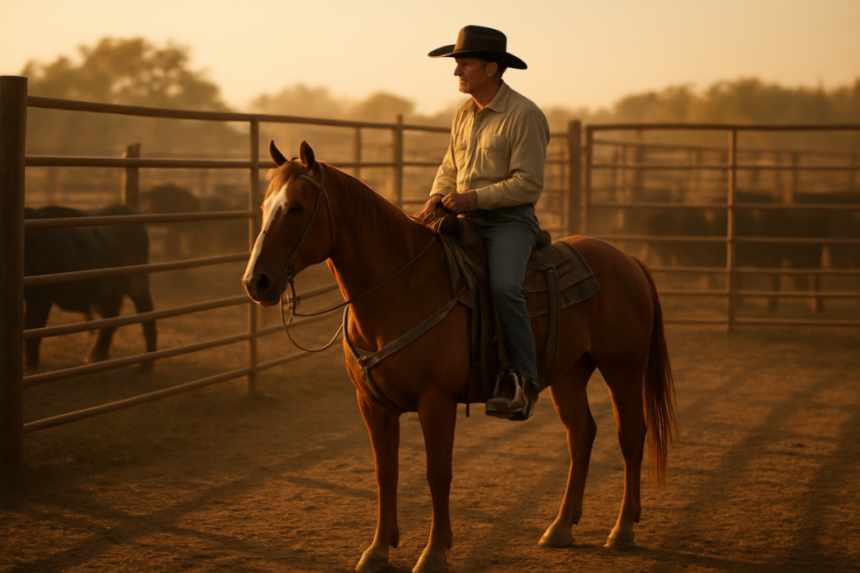
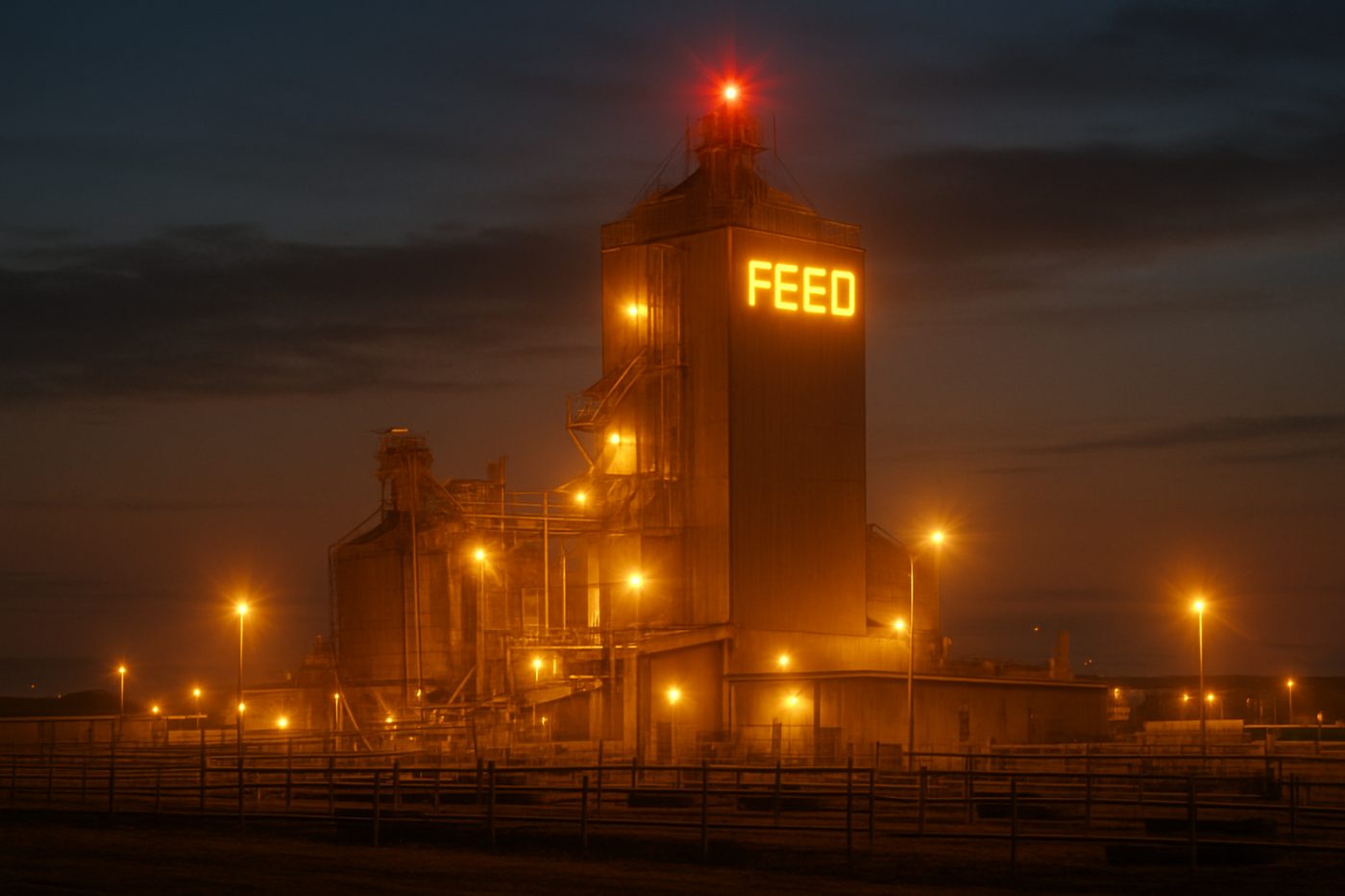
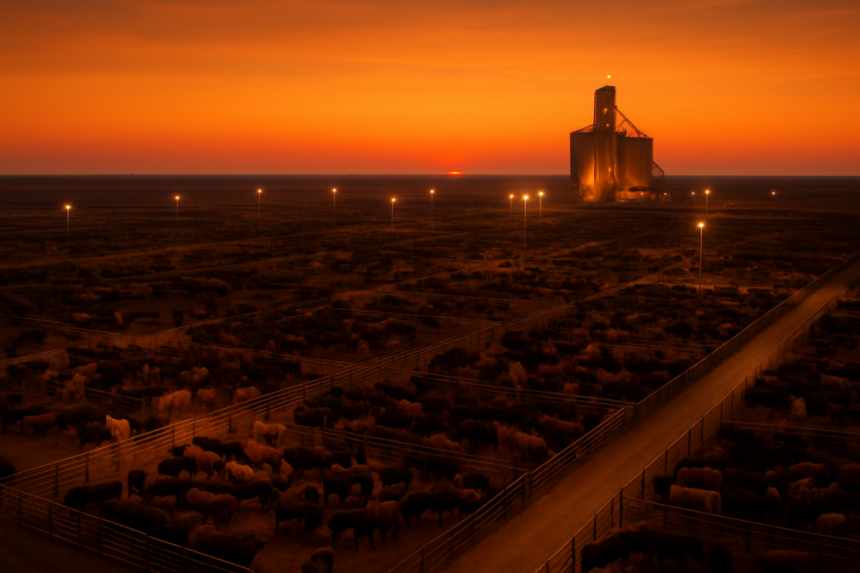

AI illustrations. Please judge the story itself. About AI images.
Filed by its author.
Before you peek: what share of readers believes this story?
50%
No votes yet
Total verdict votes: 0
Guess first! What other readers decided is hidden until you cast your own verdict above — vote True, Fake or Not sure to reveal the community score.
Changed your mind? Read the strongest arguments of the other camp below. If they convinced you — change your verdict (once).
Your new verdict:
Why did you vote that way? Pick up to two:
Noted — thank you, detective.
My case notes (private — stored only in this browser)
Saved in this browser.
True or Fake? — play the detective
How it works: cast your True/Fake verdict above and see whether you matched the reader majority. Then hit "Next case" for a random story and keep your streak going. Solve cases to climb the detective ranks — score and rank are kept on this device only.
Tip: highlight any sentence of the story with your mouse or finger — a small share popup will appear to post that exact quote (with a link back to the story) to X, Facebook, Threads or Reddit.
Something similar happened to you? Tell your version — the jury is waiting. Tell your story
Keep investigating
- More UFO Sightings cases
- More Lights in the Sky cases
- More Strange Animal Behavior cases
- A case the jury believes: Three Aircraft Asked Us What The Fourth One Was
- A case the jury believes: The Combine Died, The Lights Came, And Then The Combine Started Again
- A case the jury believes: The Radar Operator Bought Me A Beer And Told Me To Forget It
- The full UFO Stories archive
- Cases the jury cannot settle
Comments (0)
Comments here are case materials: pick a role — ask the author a question, or file your evidence FOR or AGAINST the story — and it lands in the right column. Upvote the sharpest comments: the best one is pinned on top as the Top Detective Comment. Questions get answered by the story's author in person — look for the AUTHOR badge.
No comments yet. Be the first!